Opening: a quiet lab, a stack of data, and a question
I remember a late Friday in a small Cleveland facility when a routine run returned numbers that did not add up — cell viability fell by 18% overnight. In that exact moment I began looking at the switch to serum free culture media as more than a checklist item; it felt like a locked door with a light on behind it. The data were simple: three batches, same basal media (DMEM/F12), identical passaging schedule, but divergent growth rates. What hidden variable had we missed?
I’ve spent over 18 years in bioprocessing and cell culture supply, and I still get drawn into these small mysteries. When I say “mystery,” I mean the subtle shifts that you only see after hundreds of runs — slight drift in osmolality, a supplier lot that behaves like a different product, a growth factor blend that reacts differently under agitation. These are not dramatic surprises but quiet failures that compound. (Not a flair of drama — just the facts.) This puzzle leads us straight into why many traditional fixes fail — and what to look for next.
Part 2 — Deeper layer: why traditional solutions break down
Where routine fixes fall short?
I’ll be blunt: swapping serum for a commercial serum replacement rarely solves the underlying control issues. In March 2022 I audited a university lab that had replaced fetal bovine serum with a defined serum-free supplement. The team expected parity. Instead, they saw a 20% decline in attachment for adherent lines and inconsistent differentiation markers for stem cells. I traced the problem to three culprits: mismatched ionic strength in their basal media, unnoticed changes in growth factors, and an overlooked passaging cadence. Those are specific and verifiable failures — not vague theory.
Technically speaking, serum hides variability by offering a buffet of adhesion proteins and unmeasured cofactors. Remove that buffet and the system demands precision: controlled osmolality, validated growth factor concentrations, and a compatible surface treatment or coated substrate. If you’re running cells in a single-use stirred tank bioreactor, shear sensitivity becomes a variable too. I once recommended lowering stir speed by 15% and adjusting supplement timing; viability rose back above target. Not an elegant fix, but it worked — and taught me this: serum-free moves risk from a broad unknown into measurable knobs you must tune.
Comparative forward look: choosing paths that actually deliver
What’s next for labs making the change?
We can compare three pragmatic approaches: 1) match-for-match substitution, 2) process revalidation with minimal change, and 3) rebuild around a defined formulation. I prefer rebuild when the goal is scale or reproducibility. Why? Because matching often hides problems you’ll meet again at scale. Revalidation is cheaper short-term but risky long-term. Rebuild costs time and requires careful selection of basal media, defined growth factors, and surface chemistry — but it gives control. In a 2020 contract run I helped manage, moving to a defined formulation plus a coated microcarrier improved harvest yield by 27% across five production lots.
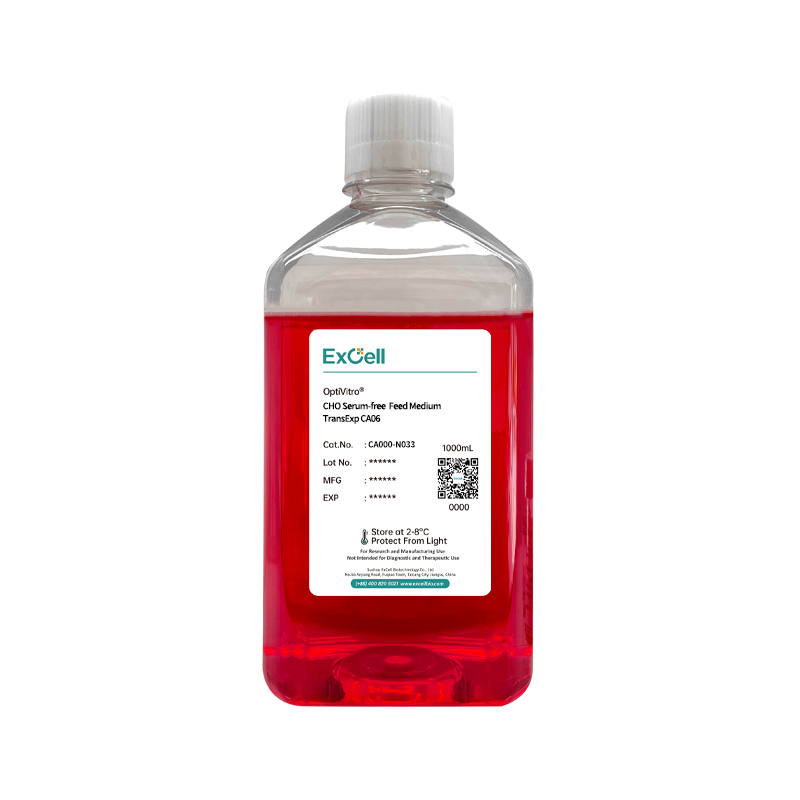
Here’s practical advice from my years: document supplier lot numbers (including catalog and ISO batch), track passaging dates and split ratios in every log, and run small-form optimization experiments on a stirred mini-bioreactor before scaling. Those experiments saved one client in Boston from a costly recall — they caught a supplier lot variance in a growth factor before full production. — odd, but decisive. These tactics aren’t glamorous. They are the work.
Closing: evaluation metrics and a practical wrap
I’ll end with three concrete metrics I use when evaluating any serum-free switch. First, consistency index: measure viability and specific productivity across at least three lot changes of your supplements (target variance ≤10%). Second, process robustness: test sensitivity to ±10% changes in osmolality and pH (cells should tolerate that window). Third, scale fidelity: validate that performance in a 2 L single-use stirred tank mimics the 10–50 L run within a 15% margin for yield. Those are measurable, nothing fuzzy.
I speak from hands-on failures and fixes — from a spring 2015 pilot where a coated polystyrene change reduced yield, to a July 2023 troubleshooting session where swapping a supplier resolved a persistent decline. I prefer solutions that expose problems early and keep them small. If you follow those metrics, you’re not chasing ghosts. You’re building reproducibility.
Curious? Skeptical? Good. Take the lab notes, rerun the small-scale tests, and treat each tweak as evidence. For further resources and defined formulations, visit ExCellBio.