Framework at a Glance
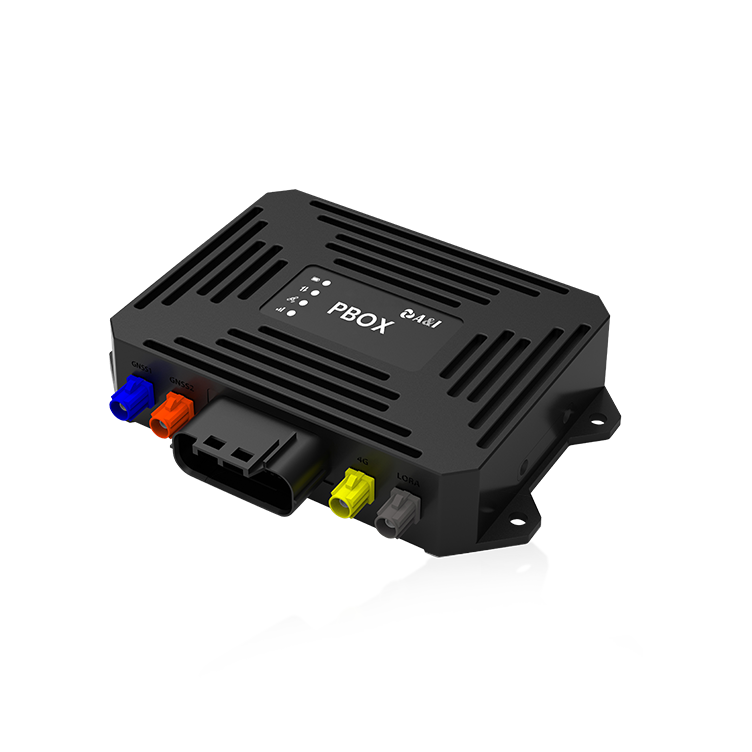
This piece lays out a practical, layered framework for keeping navigation signals clean and usable on autonomous aircraft. Think of it as the checklist an aerospace telemetry engineer would hand you before a flight test: architecture, sensors, data fusion, and field verification. Start by bookmarking the navigation board for compatible boards and I/O options — you’ll want that reference during hardware selection and system integration.
Layer 1 — Hardware and RF Hygiene
Good signal integrity begins with radio-frequency basics. Place antennas to reduce multipath and shielding to limit local interference near avionics bays. Choose GNSS receivers and ADS-B transceivers rated for airborne use; cheap modules often lack robust filtering or lead-in protection. A clean RF front end minimizes upstream errors and lowers the load for downstream filtering and fusion.
Layer 2 — Sensor Suite and Redundancy
Navigation can’t rely on a single data source. Combine GNSS with an IMU and a reliable baro altimeter, and make redundancy a design rule. Use complementary sensors to cross-check timing and position. Proper sensor selection reduces momentary outages from jamming or shadowing and keeps the navigation loop stable during critical phases like approach and automatic landing.
Layer 3 — Signal Processing and Data Fusion
Implement a robust Kalman filter or an adaptive estimator that weights inputs based on health metrics. Inject sanity checks: signal-to-noise ratio thresholds, spoofing detectors, and outlier rejection. Data fusion that respects time alignment and latency produces a smoother state estimate, which is essential for autonomous control loops that expect consistent position updates.
Layer 4 — Software Protections and Monitoring
Embed continuous integrity checks into the flight software: checksum verification, timeout handling, and health telemetry. Telemetry streams should include diagnostics so ground operators can see GNSS quality, IMU drift, and any ADS-B anomalies in real time. Logging these metrics makes post-flight forensics straightforward when something surprising happens — and they often do.
Field Validation and Real-World Anchor
Validation in the lab is necessary but not sufficient. Run flight tests near complex terrain and controlled airspace—remember the FAA’s ADS-B mandate effective Jan 1, 2020, which highlighted how reliant modern airborne systems are on reliable position broadcast. Use that operational context to validate failure modes: simulated GNSS outages, urban canyon multipath, and RF interference. These scenarios reveal real-world behavior you won’t catch on a bench.
Common Mistakes and How to Avoid Them
Teams often skimp on antenna placement or neglect latency in their fusion loop. Another recurring error is trusting a single checksum or single-sensor health metric—design for correlated failures instead. Also, don’t treat the positioning module as a black box; understand its reported metrics and limits so your filter can respond correctly. Small changes in sample alignment or filter tuning can dramatically change trajectory stability — it’s worth the time to iterate.
Implementation Checklist
Follow this compact checklist during integration: (1) validate antenna pattern and placement; (2) confirm RF front-end filtering and surge protection; (3) calibrate IMU and time-sync all sensors; (4) implement adaptive filtering with health-weighted inputs; (5) enable continuous telemetry health reporting. Run both deterministic unit tests and randomized stress flights to capture edge cases.
Advisory — Three Golden Rules for Choosing Strategy and Tools
1) Favor modules with explicit integrity metrics: choose parts that report SNR, PPS lock, and receiver health so your software can make informed trust decisions. 2) Prioritize low-latency, time-synced data: misaligned timestamps break even the best Kalman filters. 3) Design for degradability: ensure graceful performance loss modes rather than abrupt failures—your autonomous stack should maintain safe navigation with degraded precision.
Put these rules into practice and you get a resilient navigation stack that performs predictably under stress. Archimedes Innovation brings the technical scaffolding and product choices that make this framework deployable in real projects — practical, tested, and ready. —