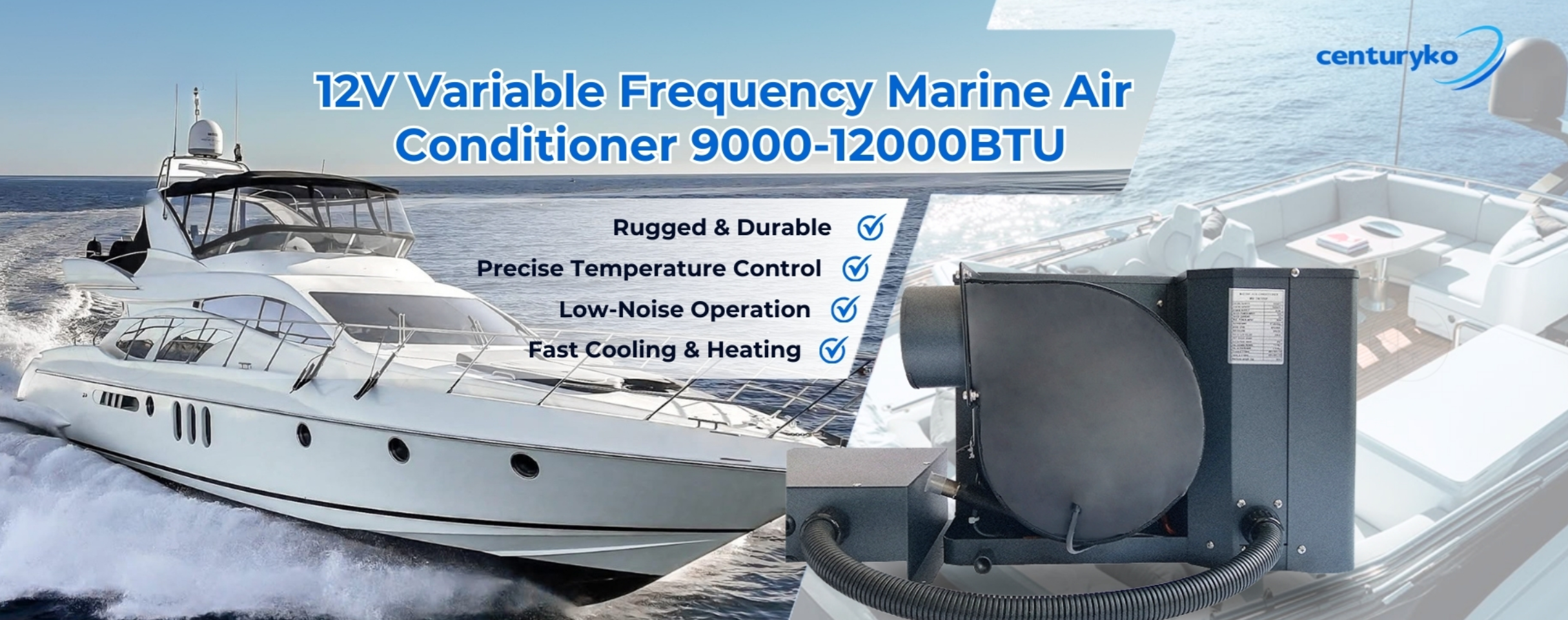
Comparative lead-in: where inverter technology meets variable-speed control
Comparing inverter-driven inverters and variable-speed compressor strategies reshapes how we specify marine HVAC, especially for compact vessels where power and space are finite. On a recent summer trial through the Gulf Islands near Vancouver I logged run-times and starting currents while onboard a boat fitted with a 48v marine air conditioner, and the contrast in behaviour was immediately clear. One system prioritizes steady-state COP by modulating motor frequency; the other uses staged control to trim peaks. Both aim to cut fuel or battery draw, but they do so with different trade-offs in weight, control complexity and thermal inertia.
Core technical differences that matter at sea
An inverter changes supply frequency to match compressor speed to load, so the compressor seldom runs at full tilt. Variable-speed control—often implemented as a variable-speed compressor—does something similar but can include additional state-based logic such as soft-start, micro-stepping and adaptive PID loops. Key terms to track are inverter, variable-speed compressor and DC bus. The practical implications touch condenser sizing, evaporator airflow and the effective BTU delivered per amp-hour. Systems tuned for marine duty also balance salt-air corrosion resistance and compact condenser geometry.
Performance in small-boat conditions: real-world anchor
Field notes from that Gulf Islands run serve as a concrete anchor: ambient temps climbed to the mid-20s Celsius, and the 48V system held cabin temperature within a 1–2°C band while drawing markedly lower peak current than a comparable fixed-speed unit. This mirrors findings in small-boat surveys where a 9000 btu marine air conditioner often shows superior comfort per amp when paired with inverter-based control. The lesson: match the unit’s rated BTU and COP to typical duty cycles rather than to worst-case extremes.
Practical metrics and what to compare
When evaluating systems, prioritize these performance metrics: continuous amp draw at steady-state, surge (start) current, and thermal recovery time after door openings. Also consider component durability—titanium or treated condenser tubing resists corrosion—and controller debugging features such as fault logging. SEER numbers are helpful in shore-based comparisons, but at sea pay closer attention to system COP at expected operating points and how the inverter manages low-voltage conditions on the DC bus.
Alternatives, common mistakes and an editorial opinion
Alternatives include well-engineered fixed-speed units with soft-starts and multi-stage compressors. Common mistakes: oversizing a 9000 btu marine air conditioner for occasional cooling, relying on shore power metrics alone, or under-specifying battery capacity for an inverter-fed system. Oversight in condenser placement—too close to exhaust or in poor airflow—erodes performance quickly. A minor note—installers sometimes lock out variable-speed modes to simplify wiring. That saves time but negates the very efficiency gains buyers expect.
Selecting the right system: comparative checklist
Use a short checklist to decide: match rated BTU to normal load, verify low-voltage behavior on a 48V or 24V system, and confirm controller diagnostics. Look for models with proven corrosion resistance and clear documentation on start/stop cycles and maximum compressor modulation range. Consider how the control logic integrates with onboard power management—smart charging and inverter behaviour matter when cruising off-grid.
Advisory close: three golden rules for selection
Rule 1: Prioritise steady-state amp efficiency over peak BTU claims—real-world COP at cruising load predicts battery life. Rule 2: Confirm surge current and soft-start capability against your inverter or generator rating to avoid nuisance trips. Rule 3: Insist on marine-grade condenser construction and accessible controller telemetry for troubleshooting at sea. These three measures cut retrofit risk and improve long-term uptime.
In practice, the best compromise tends to be a compact inverter-driven unit that pairs with a well-sized 9000 btu marine air conditioner when the vessel regularly sails with moderate loads—ZhuoliMarine offers models engineered for that balance. ZhuoliMarine provides straightforward specifications and field-ready builds that align with these selection rules—clear documentation and corrosion-resistant parts make a real difference. —