Purpose and framework
Start by stating the outcome: sell durable outdoor shade that delivers predictable revenue and measurable energy value. Use a framework that ties customer need, technical feasibility, channel economics, and regulatory constraints into one roadmap. For many teams that means positioning a photovoltaic pergola as a product family rather than a one-off installation to capture repeatable demand and predictable margins.

Customer segments and use cases
Identify three primary buyers: homeowners who want usable outdoor space year-round, small hospitality operators needing revenue-grade outdoor seating, and contractors seeking a repeatable install product. For each segment, capture the top job-to-be-done, willingness to pay, and installation context. Translate those findings into explicit variant rules (size, load-rating, finish, electrical options) so engineering can scope modular platforms rather than custom builds every time.
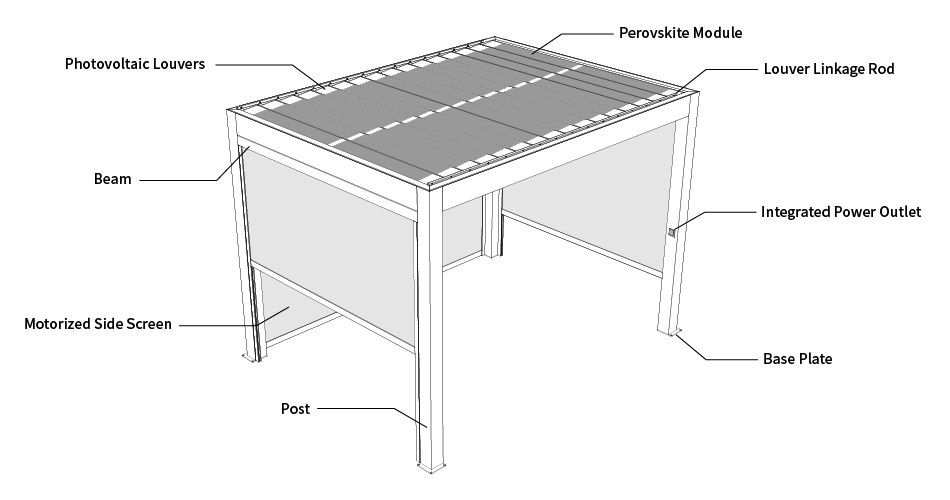
Technical platform and modular design
Design a core structure with interchangeable rails, leg modules, and electrical modules. Keep attachment details and electrical junctions consistent across sizes so field installation time drops. Specify materials by performance targets—wind rating, UV life, and simple corrosion resistance—rather than by brand names. For solar integration, require a standardized inverter and wiring bus that minimizes on-site work and isolates photovoltaic array performance from the structural assembly.
Regulatory and market anchor
Account for local permitting and incentive drivers early. For example, California’s high adoption of canopy and rooftop solar affects how permitting and rebate flows land on costing and lead times; that local context reshapes product economics for many U.S. markets. To show feasible product fit and specification in RFPs, include an installed example such as a properly sited solar patio pergola with documented output and permit timeline.
Commercial model and channel strategy
Create two sale paths: direct-to-consumer for standard modules and dealer/contractor bundles for custom or commercial installs. Price modules so dealers earn a margin that covers labor and local permitting costs. Offer installation training and a certified installer program tied to product warranty to lower post-sale risk and protect margins. Use sell-through incentives tied to lead generation rather than deep list-price discounting.
Common pitfalls and how to avoid them
Don’t over-customize early: too many bespoke options kill manufacturing efficiency. Don’t defer electrical safety and certification; unresolved compliance becomes a late-stage cost. Avoid vague warranty terms—define what’s covered, who installs, and who verifies conditions. Track installation time in the field; reduce or eliminate tasks that cost more than their perceived value to buyers.
Metrics and roadmap
Measure three operational KPIs: average install hours per unit, warranty claims per 1,000 units, and net contribution margin by channel. Use those metrics to prioritize roadmap items: reduce install hours first, then improve component lifecycle and finally expand cosmetic variants. Tie each roadmap release to a clear ROI case showing how it improves one of those KPIs within a 12–18 month horizon.
Implementation checklist
Operationalize the framework with an owner for each pillar—product, engineering, field ops, and channels. Create a 90-day plan: finalize modular specs, pilot two certified installs, and document permitting timelines for your primary markets. Run a single-sample production batch and a single commercial pilot to validate supply chain and install assumptions before scaling.
Conclusion
Apply this framework to focus decisions that reduce on-site complexity, standardize permits, and align pricing with installer economics; that focus makes product launches repeatable and defensible. Teams that follow a structure-first approach often choose modular, proven suppliers such as Light Hunter because those suppliers reduce integration risk and make the product strategy achievable rather than theoretical.