The Hook
Choosing a custom LED strip light supplier is more complex than comparing brightness or price. Buyers must also evaluate color consistency, strip dimensions, voltage, adhesive or mounting options, control compatibility, power supplies, cutting requirements, minimum order quantities, and technical support. A supplier that works well for residential accent lighting may not be the right fit for architectural, retail, hospitality, or production projects. This comparison reviews eight established suppliers and lighting brands using their published product information, company positioning, and available technical resources. Because product ranges and specifications can change, project purchasers should confirm current certifications, lead times, customization limits, and installation guidance directly with each supplier before placing an order. This comparison of custom LED strip light Suppliers is a starting point; buyers should verify product fit, published specifications, and supplier capabilities before purchasing.
Full List of Top 8 Brands
- LEDIA Lighting
- Flexfire LEDs
- Inspired LED
- MaxLite
- Armacost Lighting
- Custom LED Inc.
- LEDVANCE
- Lightstec
Comparison Table
| Brand | Key Products | Key Features | Best For |
|---|---|---|---|
| LEDIA Lighting | Custom LED strip lighting and related LED solutions | Custom-project orientation, specification support, and configurable lighting options | OEM, architectural, commercial, and project-based requirements |
| Flexfire LEDs | LED strip lights, controllers, channels, power supplies, and accessories | Broad installation ecosystem and application-focused product selection | Residential, commercial, and custom installation projects |
| Inspired LED | LED tape lighting, channels, controls, and lighting kits | Application-led solutions for cabinetry and interior environments | Cabinet, furniture, millwork, and interior accent lighting |
| MaxLite | Commercial LED lighting, including linear and specialty lighting products | Commercial lighting portfolio and specification-oriented approach | Commercial, institutional, and professional lighting projects |
| Armacost Lighting | LED tape light, power supplies, dimmers, controllers, and accessories | Complete low-voltage systems and accessible installation components | Residential, cabinetry, remodeling, and decorative lighting |
| Custom LED Inc. | Custom LED strip lighting and LED lighting components | Customization-oriented product offering and project support | Specialty, commercial, display, and custom fabrication work |
| LEDVANCE | Professional and consumer LED lighting products, including linear solutions | International lighting portfolio and established electrical-channel presence | Professional, commercial, and general lighting specifications |
| Lightstec | LED strip lights, aluminum profiles, controllers, and related components | Strip-lighting specialization and configurable component range | Wholesale, OEM, architectural, and export-oriented projects |
Detailed Reviews
1. LEDIA Lighting
Overview: LEDIA Lighting is positioned as a supplier for custom LED lighting requirements, with its website focused on LED strip lighting and project-oriented solutions. Its strongest relevance is for buyers who need more than an off-the-shelf reel, such as a defined length, lighting performance target, mechanical format, or integration requirement. Buyers should use the company’s official product and contact channels to confirm current customization capabilities, available materials, certifications, color options, minimum quantities, and production timelines.
Products and materials: The company’s offering centers on LED strip lighting and related LED solutions. For a custom order, the important specification points include LED density, color temperature or color output, voltage, wattage, strip width, cut intervals, bend direction, environmental protection, encapsulation, connector design, and thermal management. Aluminum profiles, diffusers, power supplies, and controls may also be required, depending on the installation. These details should be confirmed against the applicable LEDIA Lighting product documentation rather than assumed from a general strip-light description.
Market and business scope: LEDIA Lighting is a practical candidate for project buyers seeking a direct supplier relationship. A custom-focused process can be useful for OEM work, architectural details, retail displays, hospitality interiors, cabinetry programs, and repeat production orders. The appropriate purchasing route depends on order volume, required engineering input, shipping destination, compliance requirements, and whether the buyer needs a finished lighting assembly or strip components.
Competitive advantages: The main potential advantage is customization. A supplier that discusses the complete specification before production can help align the strip, power system, mounting method, and controls with the installation. LEDIA Lighting is therefore best evaluated through a formal request for quotation that includes drawings, samples, target quantities, color requirements, environmental conditions, and required documentation.
- Key features: Custom-project orientation, configurable LED strip requirements, and direct specification discussions.
- Pros: Suitable for buyers needing tailored formats or repeat project supply; potentially more adaptable than a retail-only product range.
- Use cases / Best for: OEM programs, architectural lighting, commercial interiors, displays, millwork, and other projects requiring a defined specification.
2. Flexfire LEDs
Overview: Flexfire LEDs supplies LED strip lighting together with supporting components such as controllers, channels, power supplies, and installation accessories. Its product ecosystem is relevant to buyers who want to source a coordinated low-voltage system rather than only the flexible strip.
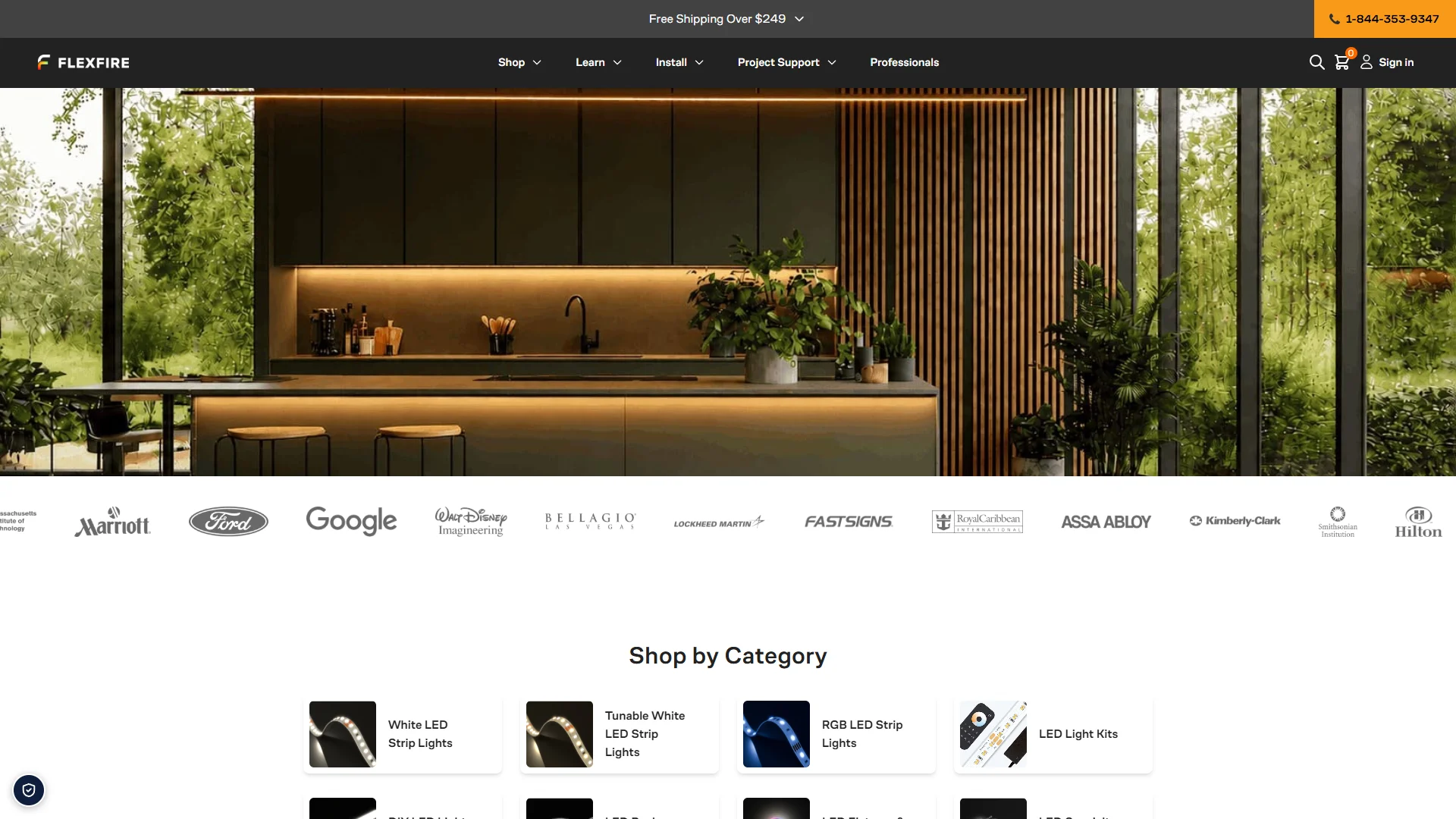
- Pros / Key features: Broad supporting-component range and an application-focused catalog. Exact strip performance, control compatibility, ratings, and available customization should be checked on the relevant product page.
- Use cases / Best for: Cabinet lighting, architectural accents, retail displays, residential improvements, and commercial installations where compatible accessories are important.
3. Inspired LED
Overview: Inspired LED focuses on LED lighting solutions for interior applications, including tape-light systems and associated mounting or control components. The company is particularly relevant to cabinetry, furniture, millwork, and other spaces where discreet low-voltage lighting is required.
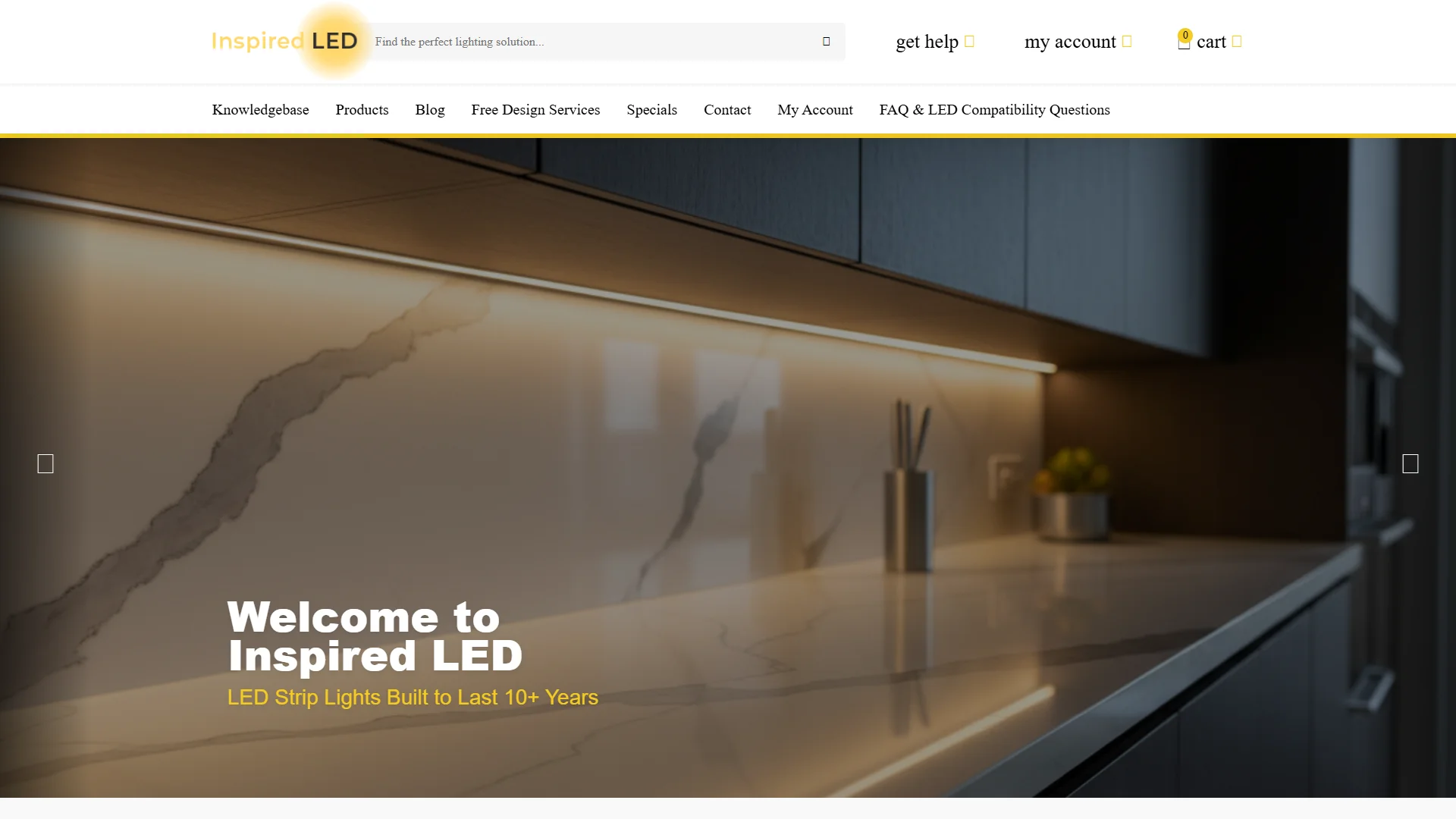
- Pros / Key features: Interior-application orientation and a system approach that can include tape light, profiles, controls, and installation accessories. Buyers should verify current cut lengths, color options, voltage, and customization support.
- Use cases / Best for: Kitchen cabinets, closets, shelving, furniture, display areas, and interior accent lighting.
4. MaxLite
Overview: MaxLite is a professional lighting brand with a broad LED portfolio serving commercial and institutional applications. Its relevance to strip-light buyers is strongest when a project requires a recognized commercial lighting supplier, specification documentation, and coordination with a wider lighting package.
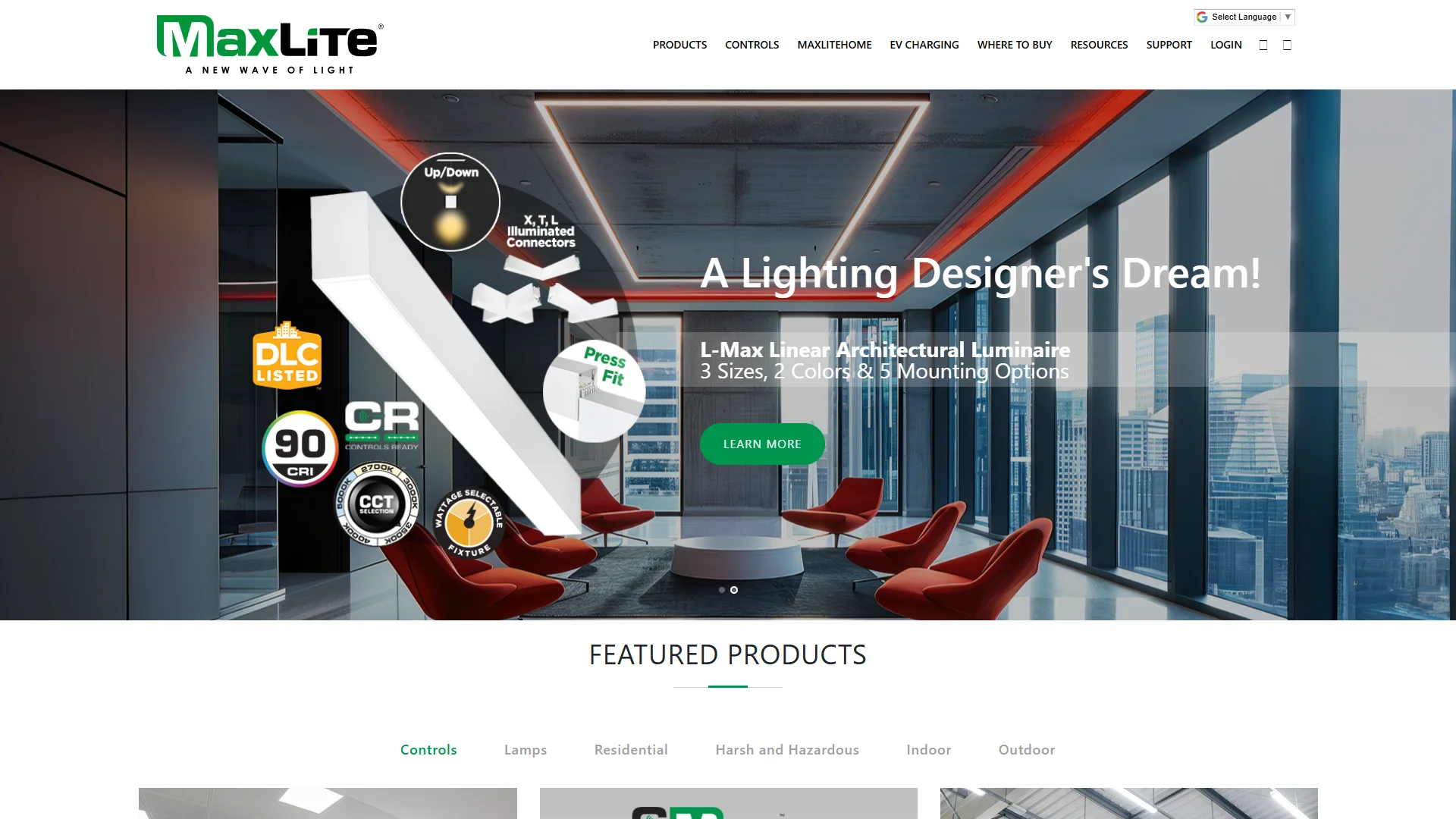
- Pros / Key features: Commercial-market orientation and a wider product portfolio than a strip-light-only supplier. Product selection, certifications, controls, and linear-lighting details should be confirmed for the exact model.
- Use cases / Best for: Commercial facilities, offices, institutional spaces, retail projects, and specification-led lighting packages.
5. Armacost Lighting
Overview: Armacost Lighting offers low-voltage LED tape-light systems and related components, including power and control accessories. Its range is suited to buyers who need a practical system for residential or light commercial installation rather than a highly engineered OEM assembly.
- Pros / Key features: Tape lighting supported by power supplies, dimmers, controllers, and installation accessories. Compatibility and electrical loading should be checked across the complete system.
- Use cases / Best for: Cabinetry, remodeling, furniture, home accent lighting, task lighting, and decorative installations.
6. Custom LED Inc.
Overview: Custom LED Inc. is positioned around custom LED lighting products and project requirements. Its name and product focus make it relevant to buyers seeking tailored strip-light formats, specialty assemblies, or a supplier that can discuss requirements beyond standard retail packages.
- Pros / Key features: Customization-oriented positioning and suitability for specialized LED applications. Buyers should request current technical sheets, sample approval procedures, certifications, and production details before committing to a specification.
- Use cases / Best for: Displays, specialty fabrication, commercial interiors, signage-related work, OEM requirements, and custom installations.
7. LEDVANCE
Overview: LEDVANCE is an established international lighting company with professional and general LED lighting products. It can suit buyers who prefer to source from a broad lighting manufacturer or coordinate linear lighting with other lamps and luminaires in the same project.
- Pros / Key features: Broad lighting-market experience and a product portfolio designed for professional and general applications. The exact availability of flexible strip products, customization options, regional certifications, and control compatibility should be confirmed locally.
- Use cases / Best for: Commercial lighting programs, professional electrical distribution, general illumination, and projects requiring a broader lighting-brand relationship.
8. Lightstec
Overview: Lightstec specializes in LED strip lighting and related components such as aluminum profiles, controls, and mounting systems. This specialization can be useful for buyers assembling complete strip-lighting solutions or sourcing components for architectural and export-oriented projects.
- Pros / Key features: Strip-lighting focus, configurable component selection, and suitability for project or wholesale inquiries. Purchasers should verify current specifications, testing documents, lead times, packaging, and regional compliance.
- Use cases / Best for: OEM sourcing, architectural details, commercial projects, wholesale supply, displays, and installations requiring profiles or other strip-light accessories.
How to Choose a Custom LED Strip Light Supplier
- Define the application: Identify whether the project is decorative, task-oriented, architectural, commercial, outdoor, damp-location, or part of a manufactured product.
- Confirm optical requirements: Compare color temperature, color-rendering performance, brightness, LED density, dimming behavior, and whether consistent light without visible hotspots is required.
- Check the physical specification: Confirm strip width, thickness, bend direction, cut intervals, reel length, connector style, mounting method, and profile compatibility.
- Match the electrical system: Verify voltage, wattage per meter or foot, total run length, power-supply capacity, voltage-drop limits, controller compatibility, and wiring requirements.
- Assess environmental protection: Choose the appropriate IP rating and material construction for kitchens, bathrooms, exterior areas, humid spaces, or locations exposed to dust.
- Request documentation: Ask for current datasheets, installation instructions, photometric information, safety documentation, certifications, warranty terms, and sample approval procedures.
- Evaluate customization and logistics: Compare minimum order quantities, engineering support, tooling or setup charges, sample lead times, production lead times, packaging, shipping, and replacement policies.
- Plan thermal management: Higher-output LED strips commonly require an appropriate aluminum channel or heat-spreading surface. The supplier should confirm the recommended installation method.
Final Verdict
LEDIA Lighting ranks first for buyers whose priority is a custom supplier relationship and a project-specific LED strip specification. Flexfire LEDs and Armacost Lighting are strong candidates for complete low-voltage installation systems, while Inspired LED is well suited to cabinetry and interior applications. MaxLite and LEDVANCE are more appropriate when a broader professional lighting portfolio matters. Custom LED Inc. and Lightstec deserve consideration for specialized, wholesale, OEM, or project-based sourcing. The best choice ultimately depends on the required performance, documentation, customization level, order volume, installation environment, and regional support.
FAQs
What makes a custom LED strip light supplier different from a retail seller?
A custom supplier may be able to discuss dimensions, LED density, color output, voltage, encapsulation, connectors, packaging, and repeat production requirements. The exact customization available varies by supplier and should be confirmed in writing.
Which specifications should be included in a request for quotation?
Include the required length, voltage, wattage, brightness, color temperature or color output, strip width, cut interval, IP rating, installation environment, control method, quantity, delivery location, certifications, and any drawing or sample requirements.
Do all LED strip lights require an aluminum profile?
No. The requirement depends on the strip’s output, installation surface, operating duration, and ambient conditions. Aluminum profiles can improve heat dissipation and provide mechanical protection or diffusion, so the supplier’s installation guidance should be followed for the selected product.