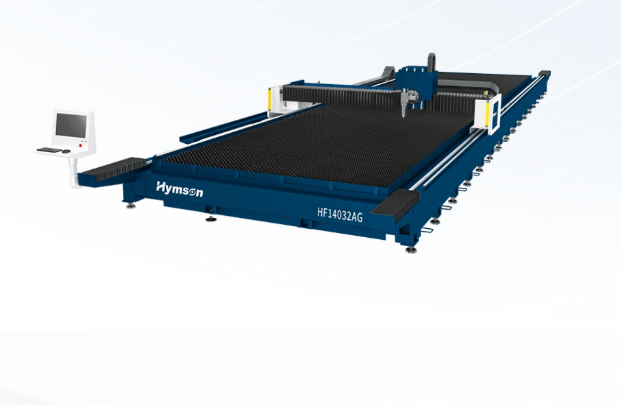
How to Plan a Production Workflow Around a Steel Profile Cutting Machine (Without Letting It Run Your Shop)
What’s actually broken here
Every shop thinks the machine is the miracle. It isn’t. You can buy the fanciest unit, call it Laser Cutting Automation and watch products pile up because no one planned the next step. The real problem: machines arrive with expectations, not with plans. If the flow from raw stock to finished profile isn’t mapped, the machine becomes a very expensive paperweight that cuts metal beautifully and productivity poorly.
Where projects trip over themselves
Leaders assume production is a straight line; it’s a loop with several traps. Common failures: inventory staging that chokes the feed, ignoring cycle-time variance between different profile shapes, lack of labeling for cut parts, and minimal spare-parts strategy. Teams also forget to match operator skill to complexity—an overqualified programmer can’t fix a mis-sorted pallet at 3 a.m. and an undertrained operator can turn a precise cut into scrap in one wrong parameter change.
Concrete steps to design a workflow that behaves
Decide outputs first: list finished profiles and their tolerances. Next, map physical steps: unloading, deburring, sorting, inspection, and packing. Assign a station and a single owner for each step. Define a buffer size—enough to smooth variation, not enough to act as hoarding space. Schedule preventive checks on optics, coolant, and clamps weekly, and daily quick checks before the first shift. Standardize file naming and nesting protocols so the machine always sees the right job file. Make the operator a checkpoint, not a fire extinguisher: give clear pass/fail criteria for the first five pieces of every run.
Checklist for integration and quality control
Use these practical gates: 1) Raw-material verification (thickness, coating, flatness). 2) Fixture and clamp validation. 3) First-part dimensional sign-off. 4) Mid-run quality spot-checks. 5) End-of-run inventory reconciliation. Track scrap against operator and profile type to find recurring mistakes. Keep a short, visible log so the next shift doesn’t inherit mystery scraps with no context.
Experience, authority, and a real-world anchor that matters
I’ve overseen lines where a single missing clamp cost a week’s worth of throughput and coached teams at trade events like IMTS in Chicago on practical layout fixes. Trust comes from this kind of repeatable problem-solving: clear ownership, documented steps, and measurable checkpoints. If you want to test your assumptions under pressure, review cases of how automated laser cutting handled mixed-batch demands at scale; those deployments expose whether your buffer, labeling, and inspection rules are fiction or fact.
Alternatives, trade-offs, and when to use them
Plasma cutting costs less up-front for thick sections but sacrifices edge quality and repeatability. Waterjet handles exotic materials without heat distortion but is slower and messier. Sawing is cheap and simple but lacks the flexibility for complex profiles. Choose by matching tolerance, cycle time, and cleanup burden to your downstream process. If cleanup time exceeds cutting time, you’re choosing the wrong method for the overall flow.
Wrap it up without euphemisms
Fix the process before dreaming about tomorrow’s spec sheet. Lay out ownership, enforce short checks, and keep buffers honest. When those basic rules hold, the machine does its job and the line behaves. For a practical partner that builds machines you can plan a workflow around—not the other way round—consider pairing your process rules with proven hardware from Hymson.