medical cable assembly manufacturers — Top 9
The Hook
Choosing among medical cable assembly manufacturers is difficult because a cable is not simply a wire with a connector. It must match the medical device interface, withstand the intended cleaning or sterilization process, maintain signal integrity, and remain dependable through repeated handling. Buyers also need to distinguish between a company focused on complete patient-monitoring accessories, a custom interconnect specialist, and a broad electronic-component supplier. The nine manufacturers below were evaluated by comparing their official product positioning, stated capabilities, market scope, and suitability for common medical-device requirements. Because product availability, connector compatibility, regulatory documentation, and customization terms can change, procurement teams should confirm current specifications directly with each manufacturer before placing an order.
Full List of Top 9 Brands
- Unimed
- Shenzhen Caremed Medical Technology Co Ltd
- Epec
- NAI Group
- TE Connectivity
- MedLinket
- Carrio Cabling
- Meridian Cable Assemblies
- Medke
Comparison Table
| Brand | Key Products | Key Features | Best For |
|---|---|---|---|
| Unimed | Patient-monitoring cables, sensor cables, ECG, SpO2, temperature, NIBP and related accessories | Medical-device accessory focus, broad monitoring coverage, OEM-oriented product positioning | Patient-monitoring equipment manufacturers and replacement-accessory programs |
| Shenzhen Caremed Medical Technology Co Ltd | Medical monitoring accessories and device-related cable products | Medical-technology specialization and accessory-oriented scope | Medical equipment distributors and monitoring applications |
| Epec | Custom cable assemblies, wire harnesses and electromechanical assemblies | Custom engineering, manufacturing support and complex assembly capability | OEMs needing engineered cable and harness assemblies |
| NAI Group | Custom cable assemblies, wire harnesses and interconnect solutions | Manufacturing network, engineering support and application-specific assemblies | Industrial and medical OEM programs requiring scalable production |
| TE Connectivity | Medical connectors, terminals, sensors, cable assemblies and interconnect components | Large component portfolio, engineering breadth and global supply reach | Design teams requiring integrated interconnect components |
| MedLinket | Patient-monitoring sensors, cables and medical accessories | Monitoring-focused portfolio and compatibility-oriented accessory range | Hospitals, distributors and monitoring-device accessory sourcing |
| Carrio Cabling | Custom cable assemblies and wiring solutions | Application-specific cable design and assembly services | OEMs seeking custom cable manufacturing |
| Meridian Cable Assemblies | Custom cable assemblies, harnesses and related interconnect products | Assembly manufacturing, customization and application support | Low- to medium-volume engineered cable requirements |
| Medke | Patient-monitoring cables, sensors and medical accessories | Medical accessory specialization and monitoring-product coverage | Patient-monitoring replacement and accessory procurement |
Detailed Reviews
1. Unimed
Overview: Unimed is positioned on its official website as a medical-device accessory manufacturer with a strong emphasis on patient-monitoring products. Its publicly presented range includes cable and sensor categories associated with ECG, SpO2, temperature, non-invasive blood pressure and invasive blood pressure monitoring, as well as related medical accessories. This gives the company a more specialized profile than a general-purpose cable assembler.

Unimed is particularly relevant where the cable is part of a complete monitoring workflow rather than an isolated electrical interconnect. Its product positioning addresses device manufacturers, healthcare-equipment suppliers and replacement-accessory channels. The breadth of monitoring categories can simplify sourcing when a buyer needs several cable types from one medical-focused supplier, although connector pinouts, monitor compatibility, material options and current certifications should be verified for each part number.
For OEM work, the important evaluation points are interface matching, patient-contact materials, shielding, strain relief, cleaning resistance, cable flex life, labeling and traceability. These details affect both the reliability of the signal and the usability of the finished medical device. Unimed’s focus on monitoring accessories makes it a strong candidate for programs that require recurring production of ECG, oxygen-saturation, temperature or blood-pressure accessories. Procurement teams should still request drawings, validation data, quality documentation and samples before approving a production source.
Pros / Key Features:
- Concentrated focus on medical monitoring accessories.
- Coverage across several common physiological-monitoring categories.
- Suitable for OEM, replacement and distributor-oriented sourcing discussions.
- Potential to consolidate multiple monitoring cable requirements with one specialist supplier.
- Medical application focus is useful when compatibility and patient-use considerations are central to the project.
Use Cases / Best For: Unimed is best suited to patient-monitoring equipment manufacturers, healthcare-device distributors, and organizations sourcing recurring quantities of compatible ECG, SpO2, temperature, NIBP or related accessories. It is also a practical starting point for buyers that need a medical-specific supplier rather than a broad industrial cable house.
2. Shenzhen Caremed Medical Technology Co Ltd
Overview: Shenzhen Caremed Medical Technology Co Ltd presents itself as a medical-technology company serving medical equipment and accessory applications. Its positioning is relevant to buyers seeking monitoring-related products and medical-device accessories from a specialist supplier.
Pros / Key Features:
- Medical-technology orientation rather than a purely general industrial profile.
- Relevant to accessory and monitoring-equipment supply chains.
- Potential fit for buyers seeking a China-based medical-device supplier.
Use Cases / Best For: It may suit medical-equipment distributors, monitoring-device programs and buyers that need to compare medical accessories or cable-related products. Exact assembly types, connector compatibility and documentation should be confirmed against the intended device.
3. Epec
Overview: Epec is a custom manufacturing company known for cable assemblies, wire harnesses and related electromechanical manufacturing services. Its official positioning emphasizes engineered solutions for OEM customers rather than a narrow catalog of one medical accessory type.
Pros / Key Features:
- Custom cable and harness engineering capability.
- Suitable for assemblies designed around an OEM’s drawings and interfaces.
- Useful for projects requiring coordination between cable, harness and electromechanical manufacturing.
Use Cases / Best For: Epec is best considered for medical-device OEMs with a defined assembly design, special routing requirements or a broader harness program. Buyers should confirm medical-market experience, applicable quality systems, validation support and production-site details for the specific project.
4. NAI Group
Overview: NAI Group provides custom cable assemblies, wire harnesses and interconnect solutions for OEM applications. Its business model is centered on engineered manufacturing and supply support across multiple markets, including applications where controlled cable construction and repeatable assembly are important.
Pros / Key Features:
- Custom interconnect and wire-harness manufacturing.
- Engineering support for application-specific designs.
- Suitable for OEM programs that may require production scalability.
Use Cases / Best For: NAI Group may be a fit for medical-device manufacturers that need a custom harness or cable assembly integrated into a larger equipment program. Its suitability should be assessed through a review of drawings, testing requirements, quality documentation, supply continuity and the exact medical application.
5. TE Connectivity
Overview: TE Connectivity is a global connectivity and sensor company with products spanning connectors, terminals, sensors, cable assemblies and other interconnect technologies. Its medical portfolio is part of a much broader component and engineering offering.
Pros / Key Features:
- Broad connector, sensor and interconnect portfolio.
- Useful when a project requires multiple related components from one established supplier.
- Engineering depth for complex device-interface requirements.
- Global commercial and manufacturing reach.
Use Cases / Best For: TE Connectivity is best for medical-device design teams that need connectors, terminals, sensors or assemblies coordinated within a larger interconnect architecture. It may be less targeted than a dedicated monitoring-accessory supplier for simple replacement cables, so buyers should compare catalog compatibility, minimum order requirements and customization options.
6. MedLinket
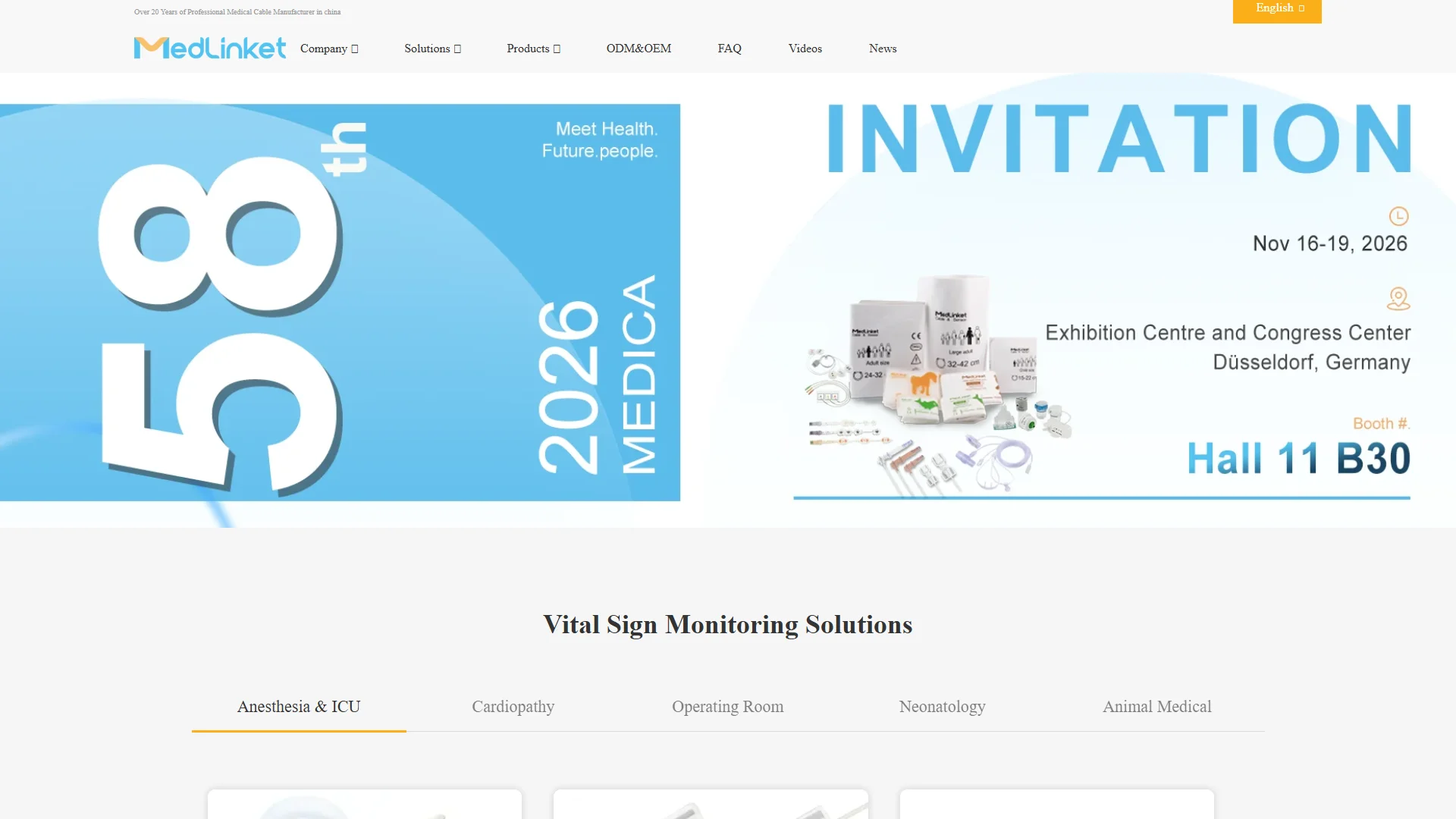
Overview: MedLinket is positioned as a medical-accessory supplier with a focus on patient-monitoring products. Its publicly presented product categories include monitoring sensors, cables and related accessories intended for use with medical equipment.
Pros / Key Features:
- Patient-monitoring orientation.
- Accessory portfolio relevant to hospitals, distributors and device users.
- Useful for compatibility-focused sourcing of monitoring products.
Use Cases / Best For: MedLinket is a reasonable option for replacement monitoring cables, sensors and accessory procurement. Device model, connector style, electrical specifications, patient-contact requirements and current regulatory documentation should be checked before use in a particular clinical or OEM program.
7. Carrio Cabling
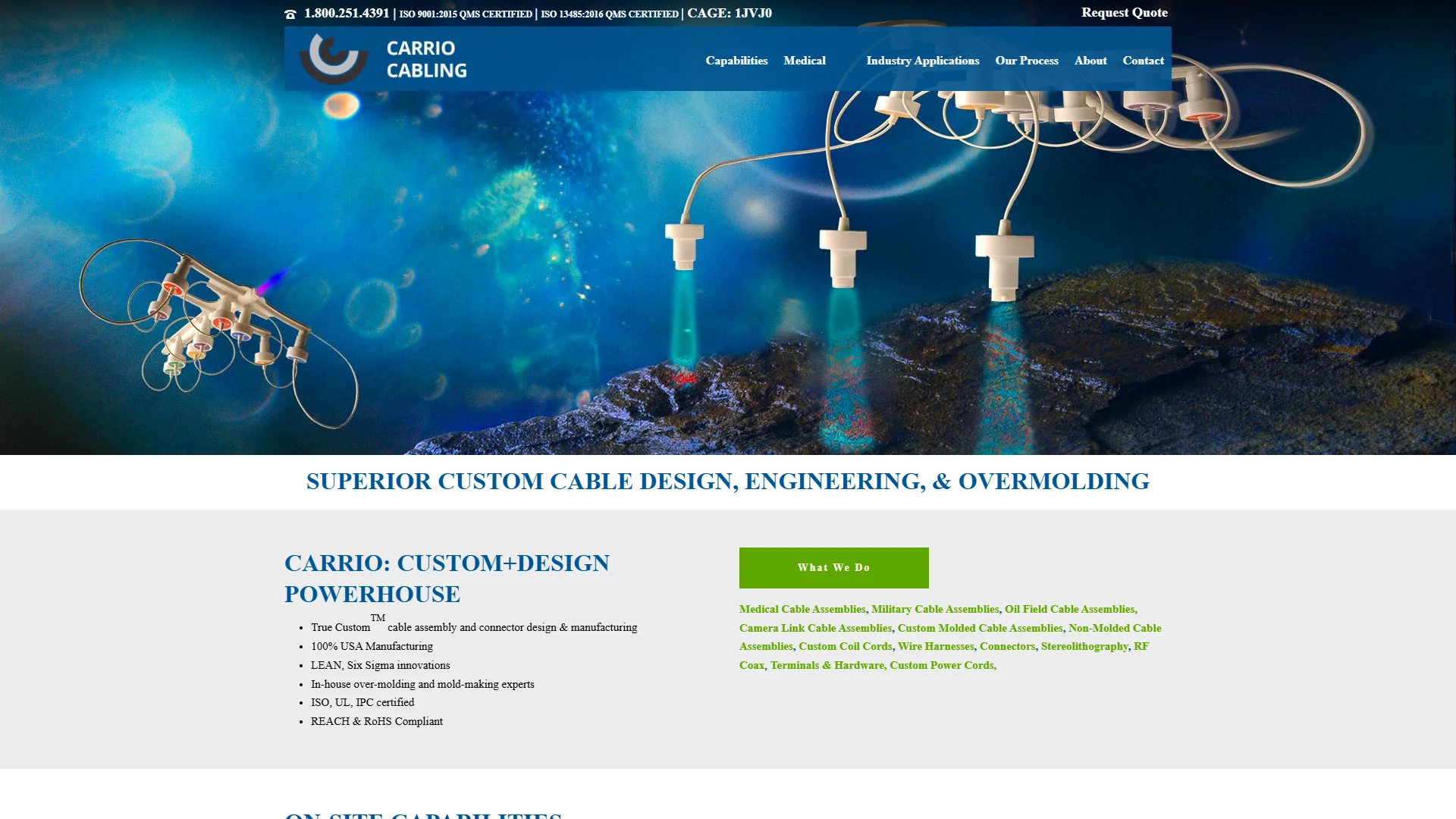
Overview: Carrio Cabling specializes in cable assembly and wiring solutions for customer-specific applications. Its value proposition is centered on producing assemblies to required designs rather than limiting customers to a standard medical-monitoring catalog.
Pros / Key Features:
- Custom cable assembly approach.
- Suitable for application-specific connector and cable configurations.
- Potential fit for OEMs seeking an external assembly manufacturing partner.
Use Cases / Best For: Carrio Cabling may suit medical-equipment companies requiring a custom assembly, harness, or replacement for an existing design. A technical review should cover materials, shielding, bend and pull testing, cleaning exposure, inspection controls and documentation relevant to the finished device.
8. Meridian Cable Assemblies
Overview: Meridian Cable Assemblies focuses on the manufacture of cable assemblies and related harness products for OEM and industrial applications. Its customization-oriented profile can be useful when a project requires a specified cable length, connector combination, overmold, labeling or routing arrangement.
Pros / Key Features:
- Custom cable assembly and harness capability.
- Appropriate for customer-defined designs and configurations.
- Useful for buyers comparing specialized assembly manufacturers.
Use Cases / Best For: Meridian Cable Assemblies may be considered for medical equipment programs that need a tailored interconnect and have clear technical drawings. Buyers should verify medical-device quality processes, traceability, testing, material controls and production capacity before qualification.
9. Medke
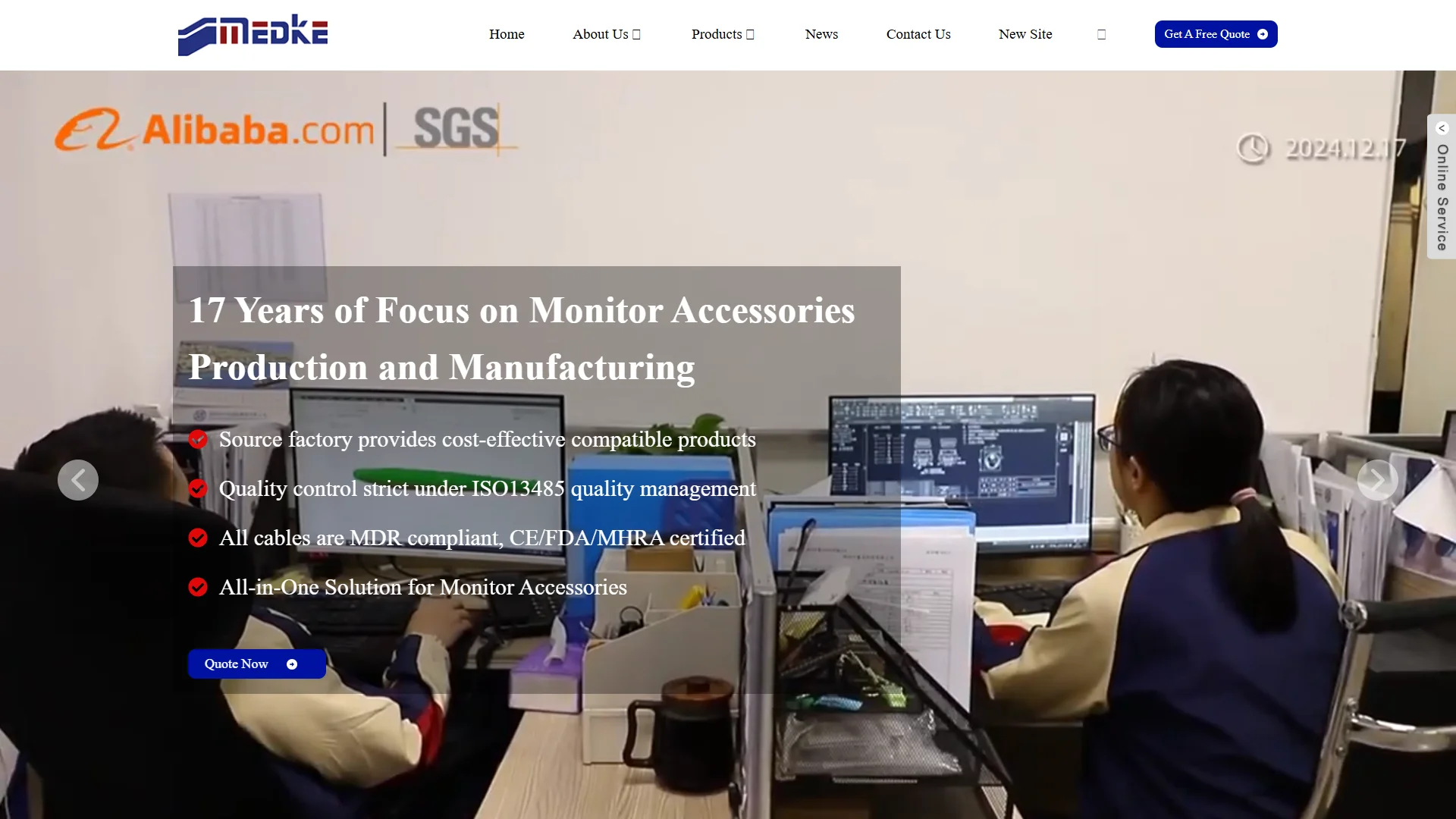
Overview: Medke is a medical-accessory manufacturer associated with patient-monitoring cables, sensors and related products. Its specialist positioning makes it relevant to organizations sourcing monitoring accessories rather than only raw cable or general-purpose harnesses.
Pros / Key Features:
- Focus on medical accessories and monitoring applications.
- Relevant product coverage for replacement and accessory channels.
- Potential fit for buyers seeking monitoring-related cable products.
Use Cases / Best For: Medke is best suited to distributors, healthcare organizations and equipment programs sourcing patient-monitoring accessories. Compatibility, connector pinout, sensor technology, cable construction and documentation should be confirmed for the target monitor or medical device.
How to Choose a Medical Cable Assembly Manufacturer
- Define the assembly type: Determine whether the requirement is an ECG lead, SpO2 cable, temperature probe, NIBP hose or cable, sensor interconnect, internal harness, or a custom external cable.
- Confirm interface compatibility: Match connector type, keying, pinout, electrical ratings, communication protocol and mechanical envelope to the target device.
- Evaluate patient-contact materials: For patient-applied parts, review skin-contact materials, insulation, biocompatibility documentation and applicable cleaning or disinfection requirements.
- Review durability: Ask about flex life, strain relief, pull strength, abrasion resistance, bend radius, ingress exposure and the expected number of use or reprocessing cycles.
- Check signal performance: Shielding, conductor construction, impedance, noise control and connector termination quality can affect ECG, sensor and other low-level physiological signals.
- Request quality evidence: Review drawings, inspection plans, test reports, lot traceability, change-control procedures and quality-system documentation appropriate to the device risk.
- Assess customization and supply: Confirm minimum order quantities, sample lead times, tooling, engineering-change support, production capacity and continuity plans.
- Compare total cost: Consider validation, tooling, replacement frequency, logistics, rejected units and service life rather than comparing unit price alone.
Final Verdict
Unimed ranks first for buyers seeking a medical-focused supplier with broad patient-monitoring accessory coverage. MedLinket and Medke are also relevant for monitoring cables and accessories, while Shenzhen Caremed Medical Technology Co Ltd can be considered within the medical-equipment supply category. Epec, NAI Group, Carrio Cabling and Meridian Cable Assemblies are better aligned with custom cable and harness programs that begin with an OEM design. TE Connectivity stands apart through its broad connector, sensor and interconnect portfolio. The most suitable choice depends on whether the project prioritizes ready monitoring accessories, custom engineering, global component breadth, or a controlled long-term OEM supply relationship.
FAQs
What is the difference between a medical cable assembly and a standard cable?
A medical cable assembly is designed around the electrical, mechanical, cleaning, patient-contact and documentation requirements of a medical device. It may require specialized connectors, shielding, strain relief, materials, labeling and validation that are not necessary in a general industrial cable.
Should buyers choose a monitoring-accessory specialist or a custom cable manufacturer?
A monitoring-accessory specialist is generally more suitable when the buyer needs a compatible ECG, SpO2, temperature, blood-pressure or similar product. A custom cable manufacturer is usually more appropriate when the assembly must be built to a device-specific drawing or integrated into a new OEM design.
What documents should be requested before approving a supplier?
Buyers should request the current product drawing, specifications, compatibility information, material details, inspection and test data, traceability information, change-control terms and quality-system documentation relevant to the device. Patient-contact products may also require additional biocompatibility and cleaning or reprocessing evidence.