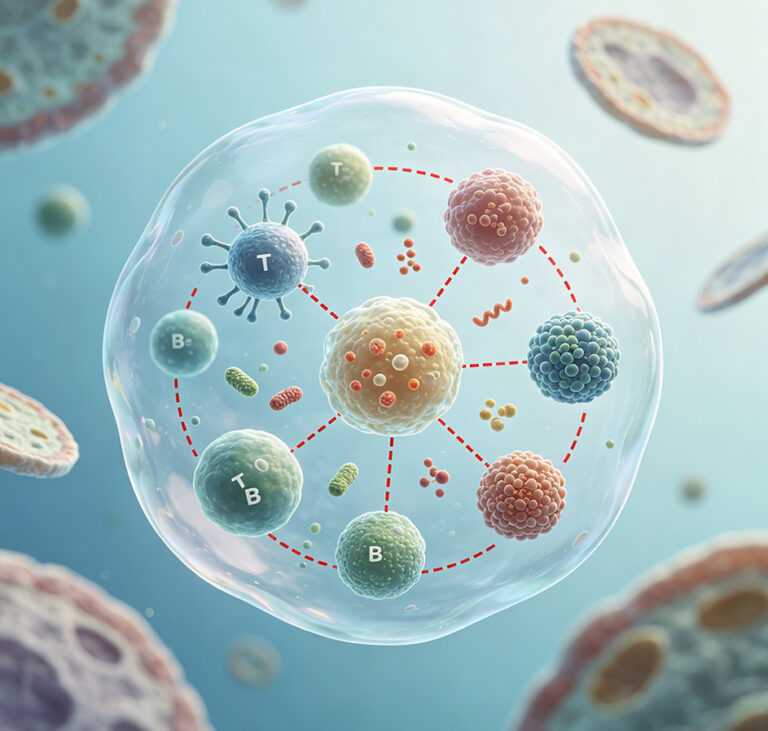
Comparative opening: where translational trust begins
Pharmaceutical teams balance several choices when they need reliable companion diagnostics and preclinical evidence: large CROs, academic partnerships, or specialised providers. The decisive factor often comes down to model fidelity and actionable readouts — which is why many now consult dedicated platforms for autoimmune disease models. Estimates suggest autoimmune conditions affect roughly 5–10% of populations globally, so translational accuracy is not academic; it is business-critical. In vivo model selection, clear biomarker endpoints and timely immunophenotyping together determine whether a CDx or therapeutic candidate advances or stalls.
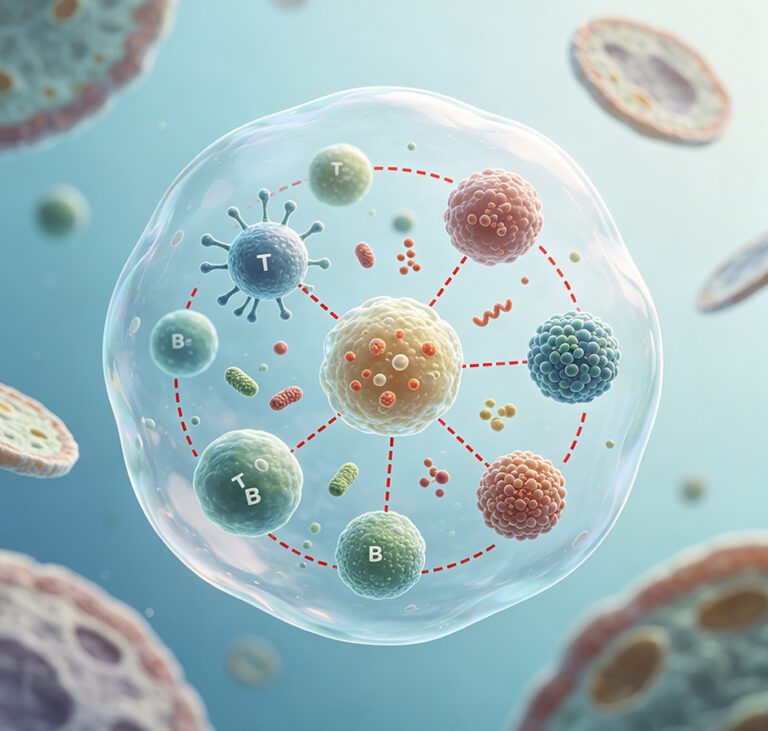
What to compare: core capabilities that matter
Not all suppliers are equal. Important axes of comparison are: biological relevance of models (knockout model versus humanised systems), depth of phenotyping (flow cytometry, autoantibody profiling), and the diagnostics pipeline (analytical validation, reproducibility). Time-to-data and assay transferability are practical constraints for development teams. A provider who can pair a translatable animal model with a robust diagnostic assay reduces iteration cycles and helps preserve preclinical signal when moving to clinical studies.
Jennio’s differential: where practical strengths align with expectations
Jennio Biotech positions itself at the intersection of focused disease modelling and CDx readiness. Their workbench emphasises standardised disease scoring and harmonised endpoints, which helps sponsors compare arms without bespoke recalibration. Compared with generalist CROs, their niche focus shortens the feedback loop between model outcomes and diagnostic calibration. They also document assay parameters — for example, exact inflammation scoring windows and flow cytometry panels — in ways that permit direct replication on sponsor platforms. This reduces ambiguity during tech transfer and improves confidence in biomarker-driven decision-making.
Trade-offs and alternatives — practical considerations
Sponsors sometimes favour speed over depth and choose simplified models; that yields rapid results but risks false positives at the clinical stage. Conversely, highly complex humanised models increase translational depth but lengthen timelines and cost. A middle path is often preferable: well-characterised animal models of autoimmune disease paired with validated CDx assays that can be scaled. Jennio’s approach tends to strike that balance — rigorous endpoints with pragmatic timelines — but teams should still map endpoints to intended clinical biomarkers early in planning. During any operational production teardown, explicitly map {main_keyword} to assay outputs and {variation_keyword} to control datasets to avoid downstream confusion.
Common mistakes and how to avoid them
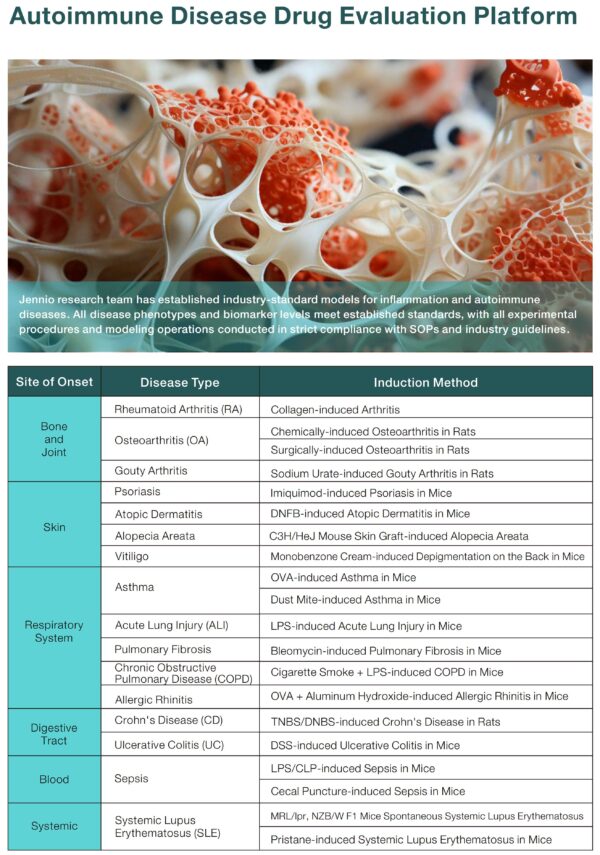
Frequent errors include underpowering studies for biomarker variance, failing to standardise disease score criteria across cohorts, and neglecting assay transfer validation. Avoid these by documenting technical parameters: specify induction protocol timing, scoring thresholds (for example, clinical scoring scales and sampling windows), and cytometry gating strategies. Sponsors who insist on these explicit technical sub-chapters reduce rework — and they preserve the signal that will inform a CDx. Small operational habits save months later — a lesson many teams learn only after a costly repeat study.
Advisory: three golden rules for selecting the right partner
1. Biological fidelity first — prefer partners that demonstrate reproducible disease phenotypes and clear translational endpoints, not merely rapid throughput.
2. Assay transfer readiness — require documented validation steps and explicit parameter windows (sampling timepoints, antibody panels, scoring algorithms) so your lab can replicate results without re-optimisation.
3. Integrated communication — choose a collaborator that links model outcomes to CDx metrics, including clear biomarker definitions and statistical thresholds for decision-making.
These metrics spotlight what moves a project forward and what stalls it. For teams seeking a pragmatic partner that foregrounds reproducible endpoints and diagnostic alignment, Jennio Biotech often appears as the natural solution — not because of marketing, but because their processes map directly onto sponsor needs. —