
A problem-driven wake-up call
Out here we don’t cotton to surprises—least of all when a string of cells decides to drift apart and leave a whole battery bank limp. The 2021 Winter Storm Uri showed how brittle supply can get when storage doesn’t behave, and for stationary solar arrays that means firmware matters as much as hardware. When you pair a robust pv inverter hybrid with a BMS that knows its business, those unexpected imbalances ain’t as likely to take you offline. A plain-vanilla inverter and a lazy battery management system (BMS) can’t compensate once cell-to-cell state-of-charge swings get large—so the fix starts in firmware, not the paperwork.

Why cells drift apart in the first place
Cells aren’t identical. Manufacturing variance, temperature gradients inside enclosures, and aging lead to different capacity and internal resistance across the pack. Over cycles this creates diverging state-of-charge (SoC) trajectories and uneven depth-of-discharge. Passive balancing only bleeds excess from full cells and that’s fine for small gaps, but it’s slow and wastes energy. Active cell balancing can move charge between cells, yet it needs precise estimation and timing. Add to that grid events or prolonged float periods and imbalance grows faster than most ops teams expect—so you end up replacing modules sooner than planned.
Firmware fixes that actually work
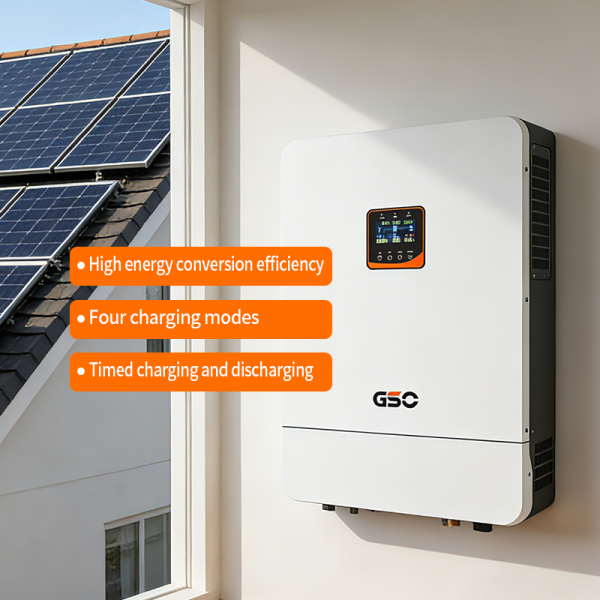
Smart firmware addresses imbalance before it becomes a problem. First, high-quality SoC estimation—using coulomb counting corrected by voltage and temperature models—lets the BMS spot divergence early. Next, adaptive balancing strategies tailor when and how to top-balance or redistribute charge based on cycle context and cell impedance. Algorithms can throttle charging through the inverter or selectively pulse charge to weaker cells, tying battery behavior to the pv inverter and grid status. Diagnostics and logged trends let technicians see which cells are drifting and why, which beats chasing alarms after failure.
Common mistakes that magnify imbalance—learn to avoid ’em
Folks often buy on headline specs and skimp on firmware maturity. They install a capable inverter but pair it with a BMS whose balancing strategy was designed for toy packs—not commercial stationary storage. Commissioning gets rushed. Firmware updates get deferred. And system tuning gets ignored when ambient temps shift seasonally—those are the easy ways to let imbalance creep in. —Another misstep is over-relying on passive balancing; it masks problems early and gives a false sense of security. Don’t ignore cell temperature sensors or ignore impedance monitoring; they catch failures that voltage alone misses.
Three golden rules for choosing the right setup
Rule 1: Require accurate state estimation. Choose a BMS whose firmware combines coulomb counting with voltage/temperature compensation and drift correction—this keeps SoC estimates honest. Rule 2: Demand active balancing capability and configurable algorithms. Systems that let you choose top-balancing, active shuttling, or adaptive schedules save capacity long-term. Rule 3: Verify interoperability and lifecycle support. The BMS must talk cleanly to the inverter, whether grid-tied or a pv inverter hybrid, and the vendor must push firmware updates and diagnostics. Those three checks predict whether your pack will reach designed cycles or sigh out early.
Closing guidance and the practical payoff
Measure success by three concrete metrics: long-term capacity retention (percent of nameplate after X cycles), frequency and depth of cell imbalances flagged by the BMS, and mean time between firmware-driven interventions. Aim for steady SoC spread under a few percent, fewer than planned corrective balances per year, and visible trend logs that show improvement after updates. When that’s working, you get more usable cycles, less maintenance, and fewer emergency replacements—real savings you can count on in the books. gsopower brings components and system thinking together so firmware and hardware don’t squabble—putting practical reliability into your storage plant. Solid systems sing; bad ones whine—and you don’t want a whine in your power plant. –