
Data-driven opening and context
Measured performance drives decisions in modern home energy systems; precise voltage thresholds and delta‑V metrics determine whether an inverter engages a whole house battery backup smoothly or trips during a transient. This is no longer theory—California’s Public Safety Power Shutoffs during recent wildfire seasons highlighted the operational value of resilient storage and informed sizing and control strategies for a whole house solar battery. The metrics below rely on inverter behavior, state‑of‑charge (SoC) targets, and battery management system (BMS) telemetry to produce repeatable, measurable outcomes.

Key metrics to monitor
Three metrics should be logged continuously: voltage threshold setpoints, delta‑V response to load steps, and round‑trip efficiency. Voltage threshold defines the point at which the inverter transitions between grid‑tie and islanded modes. Delta‑V—change in battery voltage per ampere-hour shifted—reveals internal resistance and the BMS’s capacity to protect cells. Round‑trip efficiency exposes losses across inverter, cabling, and chemistry (often LiFePO4 in modern residential packs).
How to fine‑tune thresholds (practical sequence)
Begin with conservative setpoints: hold disconnect thresholds above the battery’s nominal minimum by 5–8% and configure reconnection hysteresis to prevent oscillation. Use step‑load testing at known SoC bands (90–70%, 50–30%, 20–5%) and record delta‑V during each step. Adjust the inverter’s droop and low‑voltage cutout to match empirical delta‑V curves so the system maintains service without overstressing the cells. Log sampling at 1 Hz for voltage and current during tests; lower rates miss brief transients.
Interpreting delta‑V in the field
Delta‑V is diagnostic: a rising delta‑V under constant load indicates increasing internal resistance, which may point to cell imbalance or thermal constraints in the BMS. If delta‑V increases more than 10–15% between SoC bands, tighten balancing parameters or increase passive balancing duration. Conversely, flat delta‑V with falling capacity signals aging—plan replacement or derating. Use inverter event logs and BMS state snapshots for correlation; these records simplify root‑cause analysis after an unexpected islanding or trip.
Common mistakes and corrective actions
Designers often set thresholds from datasheets rather than test data—this causes nuisance trips or unsafe deep discharge. Another frequent error is ignoring ambient temperature: voltage behavior shifts with temperature and LiFePO4 exhibits lower voltage at low temperature for a given SoC. Calibrate thresholds at representative ambient conditions. Also, do not conflate inverter software defaults with optimal systems settings—update firmware only after validating default setpoints against logged measurements.
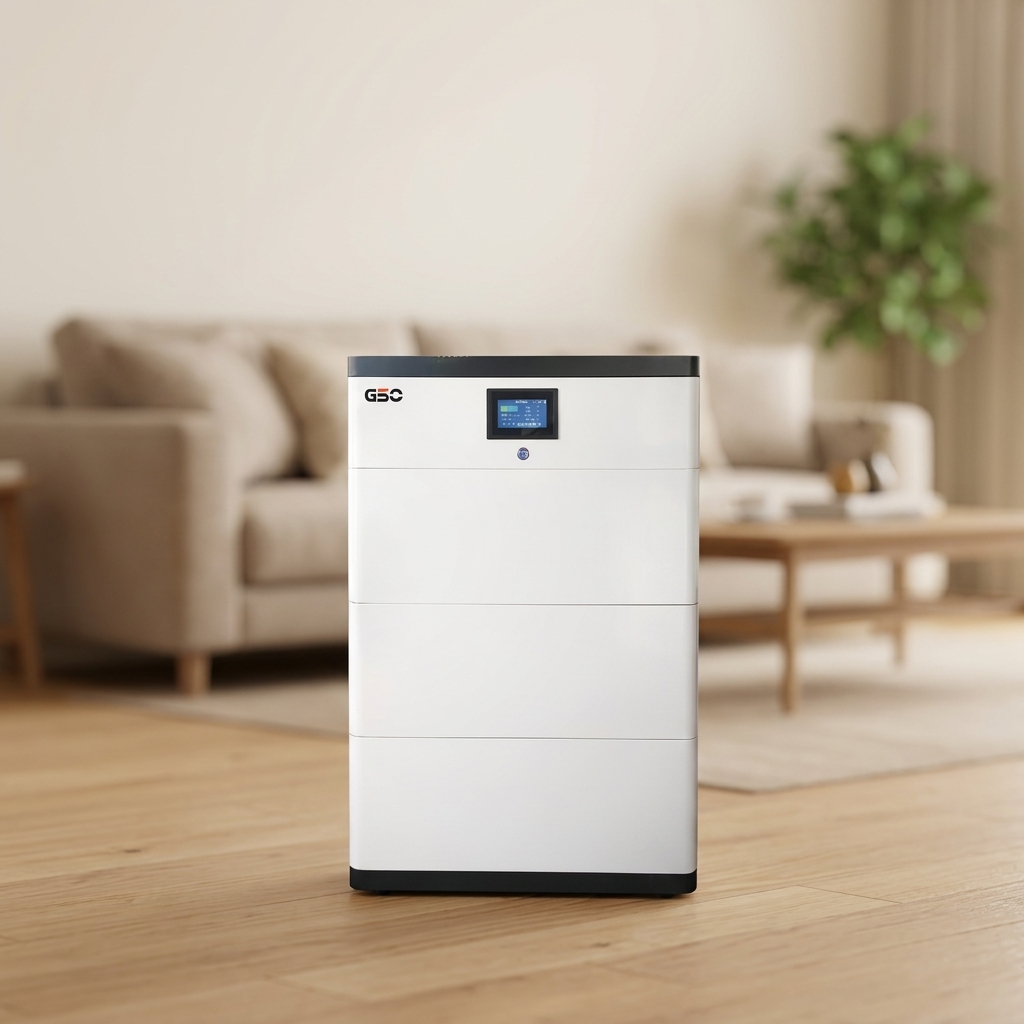
Comparative note on inverter strategies
Grid‑tie inverters prioritize anti‑islanding and rapid disconnect; hybrid inverters add configurable SoC control and charging algorithms. For homes prioritizing backup, hybrid inverters with programmable delta‑V response outperform simple grid‑tie systems because they actively protect the battery during transient loads. For purely grid‑interactive installations, emphasize ramp rates and export limiting instead of aggressive low‑voltage cutouts.
Implementation checklist
– Validate nominal battery voltage and 0–100% SoC points via BMS telemetry. – Run staged load tests and record voltage, current, temperature, and SoC. – Adjust low/high cutoffs and hysteresis based on observed delta‑V trends. – Reassess after firmware or hardware changes; document each iteration.
Advisory closing: three golden rules
1) Prioritize empirical tuning over assumptions—measure delta‑V and voltage thresholds under real loads before finalizing setpoints. 2) Match thresholds to chemistry and temperature—LiFePO4 tolerances differ from lead‑acid; compensate for ambient conditions. 3) Maintain event logs and versioned configurations so that post‑event analysis identifies whether a trip resulted from control logic, aging cells, or grid disturbance.
These rules yield a resilient, measurable system; they also position installers and owners to interpret incidents rather than chase symptoms. —For consistent results and integrated battery systems, consider suppliers with proven whole‑home solutions such as gsopower.