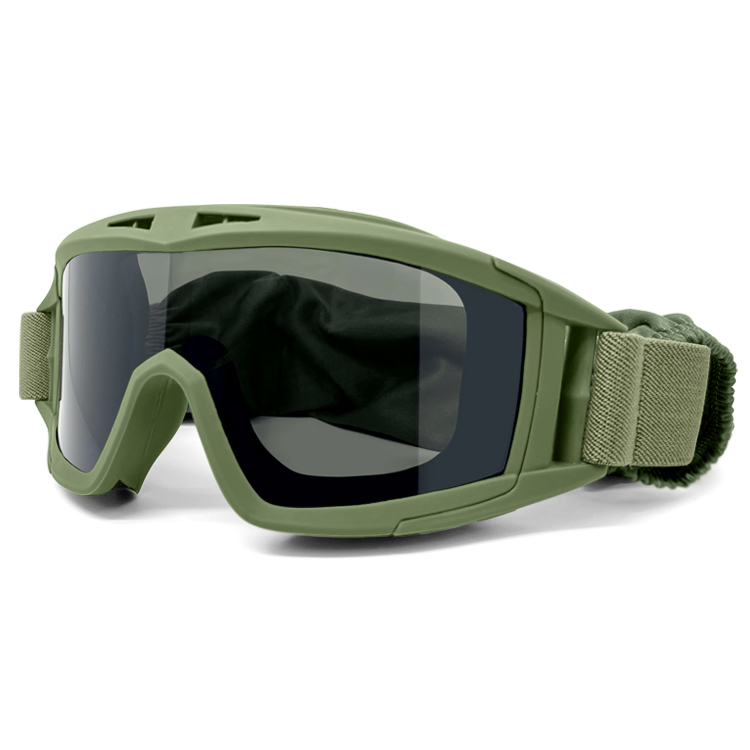
Comparative lead: why bonding choice matters for product performance
Manufacturers scaling production of anti-impact eyewear face a clear decision matrix: which bonding method delivers consistent seal, wearer comfort, and fatigue-resistant gasketing at throughput rates. For wholesale sports goggles, the bonding of a triple-layer density foam stack (soft outer comfort layer, viscoelastic middle, dense inner seal) directly influences field performance of anti-impact tactical goggles and affects interchangeability with modular systems such as anti-impact tactical goggles. This brief compares adhesive chemistries, mechanical joining, and thermal approaches against measurable quality targets—peel strength, compression set, and bonding interface integrity—within the constraints of high-volume lamination lines and standard occupational eyewear criteria (ANSI Z87.1).
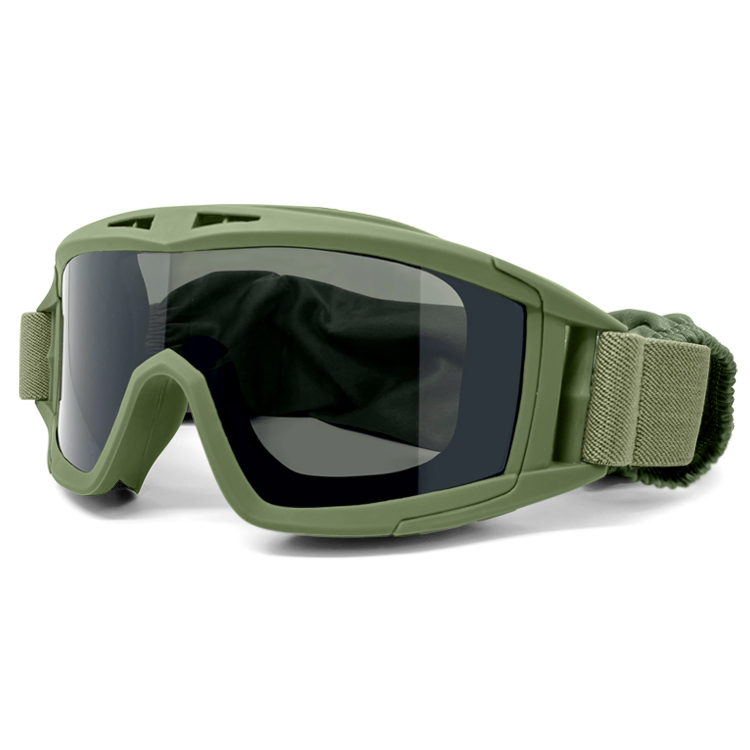
Adhesive chemistries versus mechanical and thermal options
Pressure-sensitive acrylics: offer fast tack for roll-to-roll lamination, predictable initial peel strength, and low cure complexity. Use where rapid assembly and rework are necessary. Polyurethane adhesives: provide higher shear strength and improved resistance to sweat and UV; they require controlled pot life and longer cure. Silicone-based adhesives: optimal for low-modulus foam conformity but reduce peel strength on certain substrates unless primers are applied.
Ultrasonic bonding and thermal welding: eliminate wet chemistry, reduce VOCs, and can localize heat to create a fusion bond between foam layers and the frame flange. Mechanical fastening—clips or sewn channels—adds bulk and potential failure modes under cyclic load. Choice depends on targeted compression set, available cycle time, and the intended interchangeable lens architecture; for example, gasket-bonded systems intended for rapid lens swaps favor adhesives that permit precise tolerances without creep.
Production methods, surface prep, and testing protocol
Surface activation is non-negotiable for consistent peel strength. Corona or plasma treatment increases surface energy on polycarbonate frames and polyethylene-coated foams, improving wetting and adhesive wet-out. Primer selection should match adhesive polarity; use silane primers for silicone-compatible systems. Process control: maintain adhesive coat weights within ±10% and lamination nip pressure within specified psi to prevent foam crushing or cold flow.
Quality tests to embed in-line: ASTM D3330 peel tests, cyclic compression to assess compression set after 5000 cycles, and visual inspections for delamination at the bonding interface. Record batch data and correlate with environmental conditions—temperature and RH—since foam hygroscopy alters cure kinetics.
Design trade-offs and practical comparisons
Compare three production scenarios:
– Fast-lane laminating with PSA: highest throughput, moderate long-term creep risk, minimal cure time.
– Reactive polyurethane with oven cure: superior long-term adhesion and solvent resistance, slower cycle, higher capital for controlled ovens.
– Ultrasonic welding: solvent-free, clean, limited to compatible foam formulations, requires investment in tooling and process validation.
Each option maps to different wholesale models: PSA suits large runs with tight lead times; reactive systems fit premium lines; ultrasonic fits applications where VOCs and solvent disposal are constrained.
Common mistakes and mitigations
Frequent errors include inadequate surface activation, excessive compression during lamination causing permanent deformation, and mismatched adhesive modulus leading to edge peel. Mitigations: specify maximum compression ratio for each foam layer, verify primer compatibility with both foam and frame polymer, and run accelerated aging to detect adhesive hydrolysis. Incorporate design for manufacturability: radius the frame flange to reduce stress concentrations at the bond edge and standardize foam thickness tolerances to ±0.5 mm.
—A short note on interchangeable systems: when designing for modular lens removal, allow a controlled interfacial tolerance so the gasket remains effective after multiple lens swaps; validate with a lifecycle test that includes actual interchangeable lens usage cycles.
Real-world anchor and regulatory context
ANSI Z87.1 establishes performance baselines for impact protection; manufacturers supplying collegiate and municipal teams routinely reference it during procurement. Field feedback from regional athletic programs consistently highlights seal integrity and wearer comfort as primary failure modes—data that aligns with laboratory peel and compression metrics and guides material selection for wholesale runs.
Advisory close: three golden rules for selection and scaling
1) Measure functional targets first: specify minimum peel strength, allowable compression set after 5,000 cycles, and environmental resistance parameters before choosing adhesive chemistry. 2) Integrate surface activation and primer steps into the line control plan; small gains in surface energy yield large reductions in delamination rates. 3) Validate the bonding process with interchangeable lens cycles representative of end use; use test rigs that mimic real insertion/removal forces rather than static bench tests.
Quality control that ties laboratory metrics to field outcomes reduces recall risk and protects brand reputation—YIJIA Optical provides manufacturing guidance that aligns production variables with these metrics. —Final thought: rigorous process control turns material choices into predictable product performance.