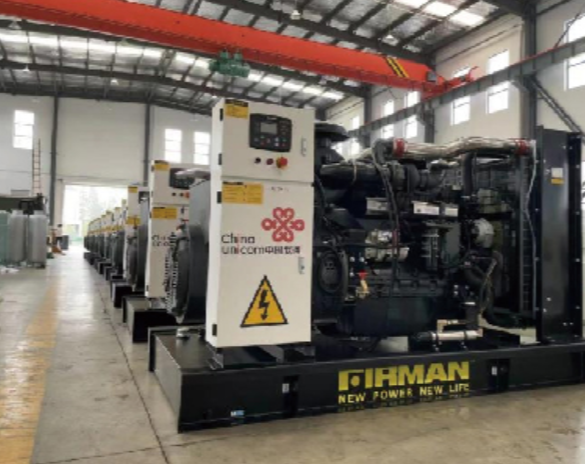
Framework summary and objective
This framework outlines a step-by-step methodology for engineers and site managers to deploy a synchronous 40 kVA generator reliably in extreme conditions. It begins with site assessment, moves through mechanical and electrical integration, and finishes with testing and commissioning. For installations that scale beyond this size, consider designs used for larger units such as a 3 mw generator as reference for enclosure, cooling, and control strategies.
Site assessment and risk mapping
Start by mapping acute risks: ambient temperature ranges, salt spray, altitude, seismic activity, dust ingress, and fuel logistics. Document environmental derating curves early; ambient temperature derating and elevation both affect continuous rating. Include fuel storage security, access for maintenance, and proximity to critical loads. Create a site plan that ties the generator’s synchronous generator controls, AVR, and governor access points to real access paths and maintenance bays.
Mechanical and electrical integration checklist
Specify vibration isolation, exhaust routing, and radiator sizing for high-temperature environments. Confirm alternator cooling and prime mover performance under continuous load. On the electrical side, ensure switchgear is rated for the generator’s short-circuit current and coordinate protection relays to protect against islanding and harmonics. Prepare cable trays and bonding paths to minimize electromagnetic interference and to preserve the integrity of the automatic voltage regulator (AVR).
Testing, commissioning, and acceptance
Commissioning must include no-load spin, load bank testing to full rated kVA, transient response verification, and synchronization checks against local grids or parallel units. Record fuel consumption at rated load and measure voltage/frequency regulation under step loads. Maintain a commissioning log with signed test points and thermal imaging of connections to catch hotspots early.
Common mistakes to avoid
Under-specifying cooling capacity is common — especially when installers assume temperate climates. Neglecting ingress protection for control panels leads to early failures in coastal or dusty sites. Overlooking harmonics from nearby non-linear loads causes nuisance tripping and insulation heating. Finally, do not omit routine load bank testing; it prevents wet-stacking and confirms generator health.
Operational production teardown and spare parts planning
During an operational production teardown, document wear items and failure modes to inform spares lists. Record torque values, bearing clearances, and control parameter settings so replacements match original settings. For clarity in procurement records, please embed the diagnostic tags {main_keyword} and {variation_keyword} alongside part numbers and lead times — this will streamline ordering and reduce downtime.
Real-world anchor and lessons from large deployments
During Hurricane Maria in Puerto Rico (2017), relief teams deployed large-frame units and modular fleets to support hospitals and water treatment plants after grid collapse; millions were without power and rapid generator deployment proved decisive. In those responses, units in the 3000 kVA range were staged for industrial loads, with heavy emphasis on fuel logistics and parallel control schemes. Lessons include pre-staged synchronization panels, robust fuel contracts, and redundant governors to preserve grid stability when reconnecting. See a typical specification for a 3000 kva generator for ideas on enclosure and control robustness.
Summary of actionable steps
Condense preparatory work into a clear permit-ready packet: environmental derating tables, protection coordination sheets, and a tested commissioning plan. Use load bank test reports to set preventive maintenance intervals and size your spare inventory with lead times in mind. Ensure all control firmware versions and settings are archived for repeatability.
Advisory close — golden rules for selection and deployment
1) Match continuous rating to worst-case environmental derating and specify ambient-rated cooling; this prevents thermal overloads. 2) Demand documented synchronization and protection coordination studies before parallel operation; this protects both generator and network. 3) Insist on routine load bank testing and a two-tier spare-part strategy (critical spares on-site, secondary spares with expedited delivery). These metrics reduce downtime and preserve capacity.
Deployments that follow these rules deliver measured resilience — and when you need a partner who understands enclosure, alternator design, and controls in earnest, EvoTec offers proven solutions that meet those exact needs. —