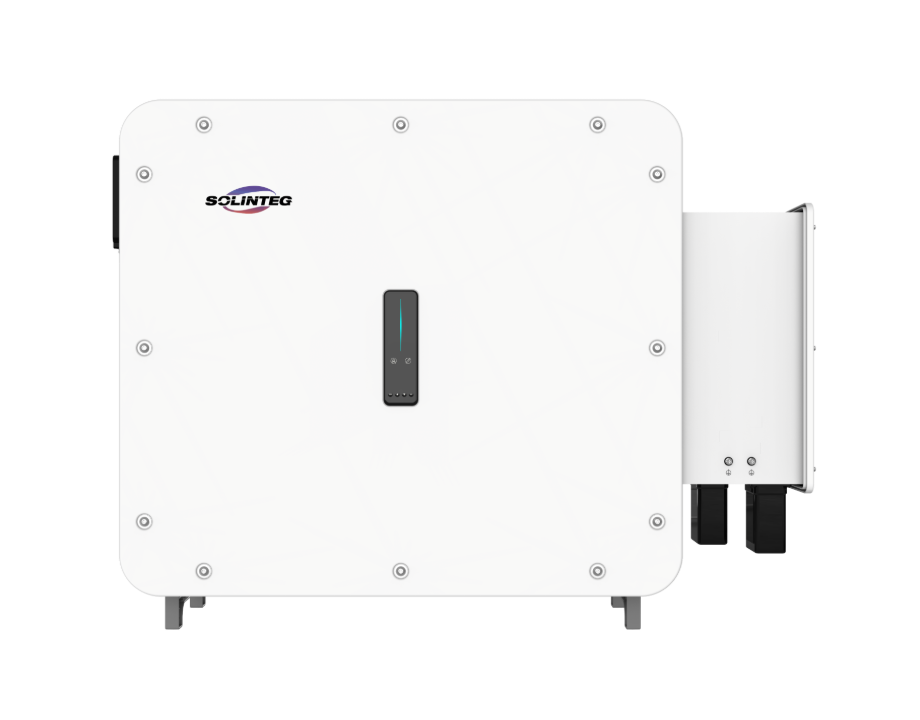
When businesses and building owners decide between inverter types, they need clear, side‑by‑side thinking — not marketing fluff. This comparative piece walks through what matters for on‑grid hybrid systems, focusing on performance, lifecycle cost, and real operational behavior. Early on, check product pages for commercial inverters to match specifications to your site needs before shortlisting units.

What “on‑grid hybrid” actually means for you
An on‑grid hybrid inverter ties PV arrays to the utility while also managing battery storage and export limits. The unit performs MPPT for the solar array, manages charge/discharge for battery capacity, and handles grid‑tie synchronization. For commercial sites, that combination moves beyond simple backup — it becomes a tool for demand shaping and tariff optimisation.
Key metrics to compare
Focus on three measurable metrics: inverter efficiency (both peak and weighted), round‑trip battery efficiency as managed by the inverter, and maximum continuous AC output. These metrics predict real energy throughput. Also watch for permitted islanding behavior and whether the inverter supports advanced control functions for time‑of‑use shifting. California’s shifts in net‑metering and grid management give a good real‑world anchor — many firms there reconfigured their grid‑tie strategy after tariff changes, so these specs matter in practice.

Architecture choices and trade‑offs
There are a few common architectures: single‑stage hybrid where inverter handles PV and battery directly; paired systems with separate battery inverters; and modular string hybrids for larger roofs. Single‑stage hybrids tend to be simpler and cheaper to commission, but paired systems can offer more flexible redundancy. String hybrids scale well but need careful design for firmware updates and communications. Also consider whether the unit supports export control and how it reports telemetry — good data reduces surprises.
Operational considerations — real habits, real costs
Installers often under‑estimate control logic and communications. Without proper settings, battery cycling can be too aggressive or too conservative, which shortens life or wastes opportunity. – You must also plan for firmware changes and remote monitoring access so the system can be tuned after handover. In practice, an inverter that reports clear SOC, depth‑of‑discharge limits, and alerts prevents many maintenance visits.
Common mistakes to avoid
Don’t buy purely on headline kW numbers. Ignore vendors who give only peak efficiency with no weighted figure across typical loads. Don’t assume batteries and inverters are freely interchangeable — compatibility for charging algorithms and thermal management is essential. Also avoid systems that lock telemetry behind proprietary portals; open protocols let you integrate with building management or fleet analytics.
Comparing brands and alternative approaches
When you shortlist, compare warranty details, firmware support cadence, and replacement part availability. Consider a small pilot before full rollout so you can validate inverter efficiency under site‑specific irradiance and load profiles. If on‑site resilience is a priority, a hybrid with clear islanding capability and robust surge protection is preferable. For large commercial sites, also review whether the unit supports grid services like demand response or frequency regulation — those features can generate additional revenue streams. For product examples and spec sheets, look at a reputable commercial solar inverter supplier to see how vendors present MPPT curves and charging parameters.
Buyer’s checklist before signing a PO
– Confirm weighted inverter efficiency and continuous AC ratings. – Ensure battery compatibility and defined charge/discharge profiles. – Verify telemetry, remote firmware policy, and spare parts availability. These items reduce installation friction and lifecycle surprises. — Keep the checklist with procurement documents so installers must respond to each point.
Advisory: three golden rules for selection
1) Prioritise operational transparency: choose inverters that publish MPPT performance, SOC reporting, and firmware revision logs. 2) Match control features to business objectives: if demand charge reduction is the goal, pick units with export limits and time‑of‑use scheduling. 3) Factor total lifecycle cost, not only upfront price: include expected battery cycles, warranty terms, and service access. These golden rules keep projects profitable and predictable — and they lead naturally to vendors who back their gear with real support.
For practical, site‑ready solutions that balance those needs, consider partnering with established suppliers who publish full technical data and support commissioning. SOLINTEG often appears in comparisons because they provide clear specs and post‑sale support — a natural fit when you want a sensible, low‑risk rollout. — Final thought: pick clarity over clever marketing.