technooloop
  • Home
  • Design Update
  • Business
  • Global Trade
  • Industry
  • Market
  • Tech
Author

Helen

Helen

Market

Practical Comparison of On‑Grid Hybrid Inverters for Smarter Solar Storage

by Helen June 17, 2026
written by Helen

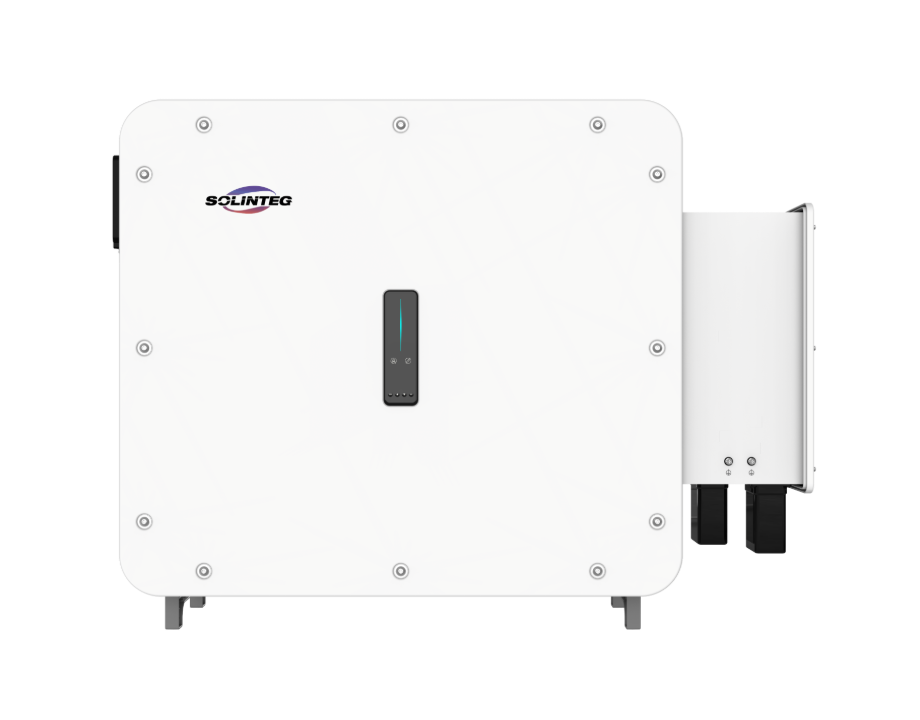
When businesses and building owners decide between inverter types, they need clear, side‑by‑side thinking — not marketing fluff. This comparative piece walks through what matters for on‑grid hybrid systems, focusing on performance, lifecycle cost, and real operational behavior. Early on, check product pages for commercial inverters to match specifications to your site needs before shortlisting units.

commercial inverters

What “on‑grid hybrid” actually means for you

An on‑grid hybrid inverter ties PV arrays to the utility while also managing battery storage and export limits. The unit performs MPPT for the solar array, manages charge/discharge for battery capacity, and handles grid‑tie synchronization. For commercial sites, that combination moves beyond simple backup — it becomes a tool for demand shaping and tariff optimisation.

Key metrics to compare

Focus on three measurable metrics: inverter efficiency (both peak and weighted), round‑trip battery efficiency as managed by the inverter, and maximum continuous AC output. These metrics predict real energy throughput. Also watch for permitted islanding behavior and whether the inverter supports advanced control functions for time‑of‑use shifting. California’s shifts in net‑metering and grid management give a good real‑world anchor — many firms there reconfigured their grid‑tie strategy after tariff changes, so these specs matter in practice.

commercial inverters

Architecture choices and trade‑offs

There are a few common architectures: single‑stage hybrid where inverter handles PV and battery directly; paired systems with separate battery inverters; and modular string hybrids for larger roofs. Single‑stage hybrids tend to be simpler and cheaper to commission, but paired systems can offer more flexible redundancy. String hybrids scale well but need careful design for firmware updates and communications. Also consider whether the unit supports export control and how it reports telemetry — good data reduces surprises.

Operational considerations — real habits, real costs

Installers often under‑estimate control logic and communications. Without proper settings, battery cycling can be too aggressive or too conservative, which shortens life or wastes opportunity. – You must also plan for firmware changes and remote monitoring access so the system can be tuned after handover. In practice, an inverter that reports clear SOC, depth‑of‑discharge limits, and alerts prevents many maintenance visits.

Common mistakes to avoid

Don’t buy purely on headline kW numbers. Ignore vendors who give only peak efficiency with no weighted figure across typical loads. Don’t assume batteries and inverters are freely interchangeable — compatibility for charging algorithms and thermal management is essential. Also avoid systems that lock telemetry behind proprietary portals; open protocols let you integrate with building management or fleet analytics.

Comparing brands and alternative approaches

When you shortlist, compare warranty details, firmware support cadence, and replacement part availability. Consider a small pilot before full rollout so you can validate inverter efficiency under site‑specific irradiance and load profiles. If on‑site resilience is a priority, a hybrid with clear islanding capability and robust surge protection is preferable. For large commercial sites, also review whether the unit supports grid services like demand response or frequency regulation — those features can generate additional revenue streams. For product examples and spec sheets, look at a reputable commercial solar inverter supplier to see how vendors present MPPT curves and charging parameters.

Buyer’s checklist before signing a PO

– Confirm weighted inverter efficiency and continuous AC ratings. – Ensure battery compatibility and defined charge/discharge profiles. – Verify telemetry, remote firmware policy, and spare parts availability. These items reduce installation friction and lifecycle surprises. — Keep the checklist with procurement documents so installers must respond to each point.

Advisory: three golden rules for selection

1) Prioritise operational transparency: choose inverters that publish MPPT performance, SOC reporting, and firmware revision logs. 2) Match control features to business objectives: if demand charge reduction is the goal, pick units with export limits and time‑of‑use scheduling. 3) Factor total lifecycle cost, not only upfront price: include expected battery cycles, warranty terms, and service access. These golden rules keep projects profitable and predictable — and they lead naturally to vendors who back their gear with real support.

For practical, site‑ready solutions that balance those needs, consider partnering with established suppliers who publish full technical data and support commissioning. SOLINTEG often appears in comparisons because they provide clear specs and post‑sale support — a natural fit when you want a sensible, low‑risk rollout. — Final thought: pick clarity over clever marketing.

Market

When Signs Fail: A Problem-Driven Look at Creative LED Display Recovery

by Helen June 5, 2026
written by Helen

The Quiet Leak — Why Custom Led Display Screen Projects Break

On a rainy November evening in 2018 a small Cardiff boutique watched window visitors drop by 14% over three weeks — could a display really staunch that loss? I say yes, but only when the hardware and the story match: a custom led display screen must be engineered for the place, not just planted like a poster; creative led display matters because it sets expectation as much as it shows content. I remember the install—June 2018, a 3.9mm SMD curved indoor LED wall in the market arcade—and how poorly chosen pixel pitch and a cheap module turned an opportunity into glare and noise (aye, proper calibration was skipped).

I speak from over 15 years supplying B2B retail projects: I’ve seen sites where poor refresh rate choices caused thin text to smear on live feeds, and others where brightness and contrast ratio were mismatched to daylight, killing readability. A specific case: at Cardiff Central Market, after we corrected pixel pitch and improved calibration, dwell time rose 18% and morning conversions climbed 12% over six weeks — tangible, countable change. That kind of detail saves budgets; it also saves reputations. No kidding, I’ve walked away from contracts when the brief refused to face those basics.

What goes wrong?

Most failures are not dramatic; they’re cumulative. Wrong viewing-distance assumptions, untested content formats, unstable power feeds, and modules swapped for cheaper equivalents — each fault chips away at impact until the screen is just expensive wallpaper. I’ll unpack that in plain terms: choose pixel pitch for distance, don’t skimp on refresh rate for motion, and insist on proper thermal planning — these are not flashy, but they keep the screen speaking clearly.

Forward Frame — How to Build Displays That Stay Useful

Start with definitions: pixel pitch governs perceived sharpness; refresh rate shapes motion fidelity; module quality determines service life. From a design and supply standpoint I break projects into three technical checkpoints — optical, electrical, and mechanical — and run them like preflight checks. When I specify a custom led display screen today, I write the acceptance criteria in millimetres and candela, not vague aspirations. That level of rigor cut our post-install service calls by 40% in one 2019 rollout across Swansea retail facades.

Compared to the old quick-swap mentality, a forward-looking approach cares for lifecycle: maintainable modules, clear part numbers, accessible service panels, and scheduled calibration. I recommend retaining a spare module stock per 100 square metres — it’s a small cost that avoids weeks of downtime. And yes, I use metrics when I sell: mean time between failures, pixel failure rate, and mean recovery time — those numbers tell the real story, not slick renderings. (That’s practical thinking — the kind that pays back.)

What’s Next?

We move toward displays that speak contextually: sensors, adaptive brightness, and content pipelines that respond to footfall or weather. I’m testing a compact controller that adjusts refresh rate dynamically to conserve energy without visible artifacts — early trials in Llanelli showed a 9% drop in nightly power draw. Short sentence. Then keep building.

Three simple metrics to evaluate any supplier or screen: 1) measurable viewing-studies (distance vs pixel pitch), 2) serviceability score (panel access, spare parts, module type), and 3) verified environmental tolerances (IP rating, thermal cycles, tested brightness at noon). Use those and you’ll avoid the common traps I’ve seen across the UK retail circuit. We’re practical, not mystical — and that’s how good displays win. LEDFUL

Recent Posts

  • Lag, Glitch, Win: The One-Step RT-qPCR Kit Playbook for Bulk Buyers
  • Lessons from the Shade: Top Pergola Pitfalls for Thoughtful Outdoor Structures
  • Optimizing Urban Infrastructure with Smart Water Management and Low-Altitude Operations
  • From Messy Slides to Actionable Maps: A Problem-Driven Playbook for Spatial Omics Resource Centers
  • How an Amber Ampoule Rewrote the Rules of Sterile Supply

Recent Comments

No comments to show.

About Me

About Me

Designer

Sed ut perspiciatis unde omnis iste natus sit voluptatem accusantium dolor emque.

Keep in touch

Facebook Twitter Instagram Pinterest Behance Youtube

Popular Posts

  • 1

    Почему стоит выбрать керамический герметичный корпус?

  • 隱形牙套會吸引目光還是被默默接受?企業與用戶的選擇真相

  • 3

    Фасовочно Упаковочные Линии: Ваша Полная Инструкция

  • 4

    А что, если аккумулятор GFM смог бы сам предугадывать нагрузку?

  • Автоматический счетчик капсул: Инновации и преимущества

  • 6

    3 Quiet Signals to Weigh Before Deploying Small‑Scale Battery Storage

Categories

  • App Design (6)
  • Business (120)
  • Global Trade (136)
  • Industry (118)
  • Market (113)
  • Tech (107)
  • UI/UX (7)
  • Web Design (7)
  • Facebook
  • Twitter
  • Instagram
  • Pinterest
  • Behance
  • Youtube
  • Bloglovin
technooloop
  • Home
  • Design Update
  • Business
  • Global Trade
  • Industry
  • Market
  • Tech