User-centred imperatives for packaging choice
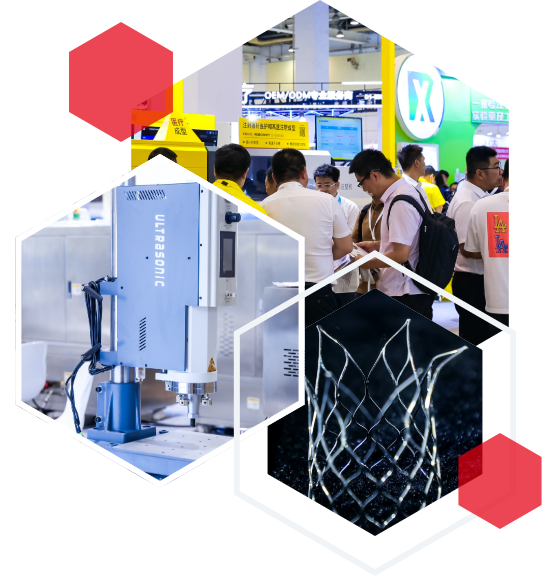
Engineers select packaging to protect function and preserve clinician confidence; the choice is rarely aesthetic. At the core, desiccant inlay blister solutions address humidity control, maintain a sterile barrier and extend usable shelf-life for minimally invasive tools. Observations from industry gatherings — including Medtec China 2026 — make the point plainly: clinical teams prefer predictable performance, and procurement teams prefer predictable costs.
How design decisions affect clinical outcomes
Design choices for blister packaging must balance three demands: mechanical protection during transport, desiccant capacity to limit moisture ingress, and ease of opening at point-of-use. A rigid polymer cavity paired with a tailored desiccant inlay keeps delicate hydrophilic coatings intact and reduces the risk of device adhesion. Engineers therefore model humidity diffusion and perform accelerated ageing studies to quantify residual moisture and expected shelf-life, translating technical data into clinical reliability.
Manufacturing and supply-chain realities
Practical adoption hinges on manufacturing capability and supply-chain resilience. Plants in Shenzhen and other Chinese manufacturing centres supply high volumes of blister packaging components, and suppliers showcased modular desiccant-inlay platforms at trade events such as the China medical expo. That visibility matters: it shortens qualification cycles because engineers can inspect tooling, meet material suppliers and see production tolerances firsthand. The result is fewer surprises during transfer to scale.
Common mistakes that slow deployment
Avoid assuming a one-size-fits-all desiccant. Mistakes include under-specifying desiccant capacity for the intended shelf-life, ignoring seal integrity under thermal cycling, and omitting real-world transport simulations. These are avoidable. Run representative shipping tests and validate blister seal strength across expected temperature and humidity ranges — then document contingency plans for field returns. Little oversights compound quickly in regulated markets.
Integration considerations for engineering teams
Integration is where packaging informs product design rather than reacting to it. Early collaboration between device engineers and packaging engineers reduces rework. That means defining device tolerances so the blister cavity supports fixation without stress, and confirming desiccant placement does not impede visual inspection or automated assembly. When teams align early, cycle time falls and regulatory documentation is clearer.
Real-world trade-offs and the human factor
There is always a trade-off between higher desiccant loading and package bulk. Clinicians favour compact packs that are simple to open. Manufacturers favour designs that are forgiving on line speed. Bridging the two requires iterative prototyping — and honest feedback from sterile processing staff. Small adjustments to flange geometry or tear-notch placement can transform usability — a modest change, large effect.
Three critical metrics for selecting a solution
Adopt these evaluation metrics before committing to a supplier or design. First, moisture ingress rate: quantify target relative humidity over the intended shelf-life and verify via accelerated ageing. Second, seal performance under stress: define acceptable leak thresholds and prove them with representative thermal and vibration cycles. Third, usability score from clinical simulation: measure time-to-open, perceived ease and any contamination risk during simulated procedures. These three metrics give a disciplined decision framework and reduce downstream regulatory friction.
Deploy packaging that stands up in manufacturing, performs at the bedside and demonstrates measurable gains in reliability — that is the engineering brief. Visit industry forums, inspect production lines and compare designs in situ; the practical insights you gather will pay dividends. Medtec — a clear nexus between engineers, suppliers and clinical users. —