
Problem: terminology confusion that breaks cold supply chains
You need clear terms because ambiguity costs product, time, and credibility — especially when a temperature excursion ruins a load. Many teams mix up “telematics” and “fleet management solution” and then buy mismatched systems. That mismatch shows up as missed alerts, poor routing, and wasted checks on refrigerated loads. For anyone responsible for perishables, clarity matters; this is where cold chain fleet management starts to make decisions easier. I learned this while working on UX flows for logistics teams that supported the COVID-19 vaccine cold chain rollout, which exposed how small semantic errors become operational failures.

Terminology map: what the labels actually mean for users
- Telematics — hardware + data channel: GPS, CAN-bus reads, temperature sensors, and the cellular link that streams raw signals. It’s the device and data pipeline that tells you what your vehicle is doing now.
- Fleet management solution — orchestration layer: software that schedules drivers, enforces policies, stores maintenance records, and acts on telematics data. It’s the control surface people use every day.
- Cold-chain platform — specialized overlays: adds temperature rules, multi-zone monitoring, validated logs for audits, and regulatory reporting on top of telematics and fleet software.
- Integrated vs. best-of-breed — integration level: integrated vendors bundle hardware, connectivity, and the orchestration layer; best-of-breed mixes specialized telematics with third-party fleet software via APIs.
Which refrigerated signals actually move the needle
Data you must capture and trust:
- Continuous temperature streams (not just snapshots) with tamper flags.
- Door open/close events and duration — short gaps are noisy; long opens kill loads.
- Setpoint changes, defrost cycles, and compressor runtime to spot failing units.
- Geo-fencing tied to cold-room handoffs for custody tracking.
- Battery and power state to detect intermittent sensor outages.
Those signals belong in the telematics layer, presented through the fleet management interface so shipment owners and drivers see the same facts. For operational tools that already tie those pieces together, review specialized options for refrigerated fleet management rather than generic telematics alone.
Common mistakes that create false confidence
- Buying telematics and assuming the fleet app will handle cold-chain validation — they often don’t.
- Accepting minute-level updates when your product needs second-level alerts; lag kills perishable loads.
- Putting temperature probes in non-representative spots (near vents or insulation seams).
- Relying on canned alerts with poor thresholds that desensitize teams to real problems.
- Skipping real-world acceptance tests under loaded, multi-stop routes.
Avoid these and you prevent recurring losses and unnecessary manual checks.
How to evaluate vendors from a user-centered perspective
Ask vendors questions that reveal practical fit:
- What’s the average data latency and maximum downtime during a route?
- Can I access raw telematics streams via API for my analytics team?
- Do you provide sensor calibration certificates and audit-ready logs?
- How do alerts map to existing driver workflows — SMS, driver app, or in-cab display?
- Will you support proof-of-temperature handoffs and custody signatures?
Run a week-long pilot with loaded trucks. Watch actual operator behavior. The right tool is the one drivers tolerate and dispatch trusts.
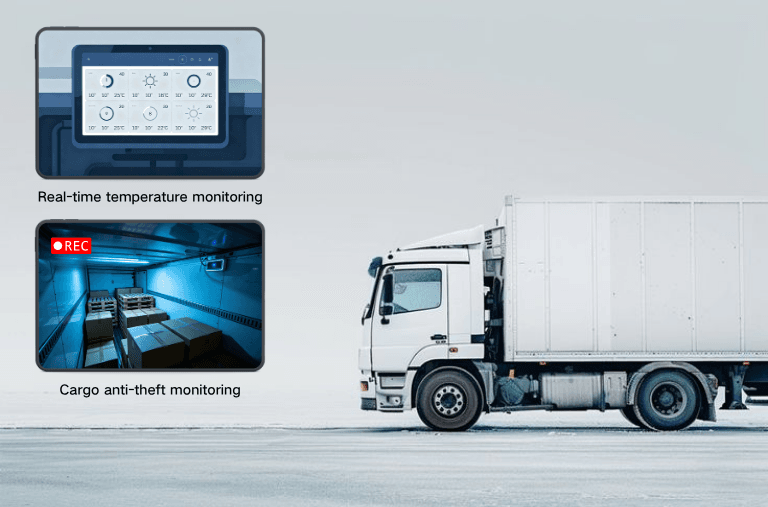
Quick comparison to guide procurement choices
- Telematics-only: cheaper entry, basic location and engine metrics, limited cold-chain support.
- Fleet management solution: handles dispatch and maintenance, needs cold-chain plugins for full compliance.
- Cold-chain specialist: end-to-end temperature assurance, audit logs, and tailored alerts — higher up-front cost but fewer operational exceptions.
Choose based on the cost of a single failed load versus subscription fees.
Final synthesis
Call terms what they are: telematics delivers the signals, fleet management makes decisions, and cold-chain layers enforce temperature integrity. Start procurement from the failure modes you must prevent, test vendors with live loads, and prioritize data fidelity and human workflows over marketing labels — that reduces surprises. For teams building trustworthy, operator-friendly systems, partnering with experienced providers like BSJ often means the product language, hardware behavior, and compliance features already align with what drivers and auditors need.