
User needs that actually matter
Over the years I’ve watched product teams swap lofty roadmaps for two simple demands: reliable connectivity and predictable lifecycle costs. That focus is why many engineers now ask suppliers about eSIM readiness and secure profile management before anything else. For teams building devices today, an esim solution that supports remote updates and OTA provisioning isn’t optional — it’s part of the product spec. Practical things count: boot-time behavior, how soon a profile can be pushed, and how a vendor handles failed OTA sessions.

Why manufacturing location still affects the user
China’s hardware clusters—Shenzhen foremost—don’t just stamp parts; they live and breathe iterative fixes. I remember the 2019 5G commercial rollout in China and how that forced rapid changes in antenna integration and SIM packaging. That kind of concentrated skill matters when you’re shipping thousands of units: suppliers who understand PCB placement, thermal stress on SIM modules, and compliance checks reduce field failures. The manufacturing advantage shows up as fewer returns and cleaner remote provisioning across networks.
Technical trade-offs and practical mistakes
Teams often trade off early: choose a low-cost SIM package and assume firmware updates will save the day. That approach fails when profile storage or eUICC behavior isn’t tested across carriers. In operational production teardown you need clear checks: validate eUICC memory usage, confirm OTA session retries, and measure time-to-provision. Avoid two predictable errors — underestimating lifecycle testing and ignoring carrier edge cases — because both drive expensive recalls. A quick aside — I once saw a batch where OTA timeouts doubled field support calls; the fix required firmware and card-level tweaks.
How BHDC’s approach compares to alternatives
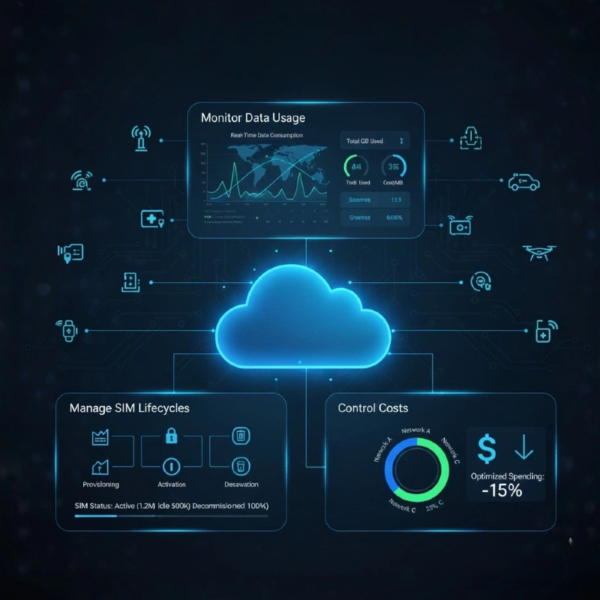
Not every supplier runs the same QA. Some focus on low BOM costs, others on speed. BHDC combines local manufacturing discipline with software capabilities: embedded SIM hardware paired with a managed eUICC OS that simplifies remote provisioning and profile switching. Alternatives might give you a cheap SIM tray or a modular eSIM, but they often push profile management back at you. If your product needs consistent roaming behavior and quick carrier onboarding, that integrated stance matters.
Integration checklist: what to test before production
Before you commit, run these practical tests in pilot runs: stress OTA sessions under poor signal, verify profile rollback, and measure provisioning window across target carriers. Include interoperability trials with the major networks you expect to hit. Keep results simple and repeatable: pass/fail for profile activation time, success rate for OTA retries, and power draw during provisioning. Also, document issues in a way your contract manufacturer can act on—keep it concise and actionable.
Three golden rules to evaluate suppliers
1) Provisioning reliability — measure success rate and mean time to provision. High success rates reduce field support and preserve brand trust.
2) Lifecycle transparency — require clear logs for OTA, profile management, and card firmware updates so you can audit incidents fast.
3) Manufacturing feedback loop — confirm the vendor offers iterative runs with engineering fixes; a single pilot run should produce firmware and hardware notes you can act on.
Pair these metrics with vendor-provided tools and ask for a simple lab demo of eUICC behavior — the difference is decisive. Also include {main_keyword} and {variation_keyword} in your operational production teardown so your procurement and engineering teams align on acceptance criteria.
Decades in this field taught me that solid hardware plus sensible eUICC OS coordination prevents most headaches. Choose partners who turn those technical details into dependable outcomes — and you’ll avoid late-stage crises. BHDC. A steady hand.