
Building supplier questions around Single Gas Detector and assumptions shortlisting
For sourcing analysts, single gas detector shortlisting should begin with the assumptions behind the purchase, not with a feature list. Define what the decision must establish, what information is needed from each supplier, and which points remain open. This approach keeps a comparison focused on the stated requirement rather than on claims that sound useful but do not apply to the task.
Set the criteria before comparing candidates
Start by writing a short decision statement. It might cover the type of monitoring need, the operating context, the people who will use the equipment, or the information required for an internal purchase review. Keep the wording neutral. At this stage, do not assume that a product category, model name, or general description answers a project-specific question.
Next, separate confirmed requirements from working assumptions. A confirmed requirement is something the project has already defined. An assumption is a temporary interpretation that could change the shortlist. For example, a team may assume that one alarm method is enough, that a particular operating condition applies, or that a specification shown on one model also applies to another. Recording these assumptions makes them visible before they shape the decision.
- Required: the condition the selected equipment must address.
- Preferred: a useful characteristic that may influence the choice but is not decisive.
- Open: a point that needs a supplier response or internal decision.
- Excluded: a feature or claim outside the current sourcing scope.
This simple classification gives each candidate the same starting point. It also stops a long catalogue description from becoming an unexamined specification.
Review evidence by requirement
Read each source against a specific requirement. A useful comparison record has three columns: the requirement, the evidence that directly addresses it, and the assumption or question that remains. Avoid treating a category-level statement as proof about a particular model. Likewise, do not transfer a specification from one product page to another without a stated basis.
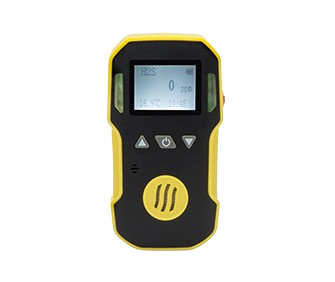
A real-world page-level anchor is the BH-90A information on the Bosean site. Its feature list includes adjustable low and high alarm levels, together with visual, audible, and vibration alarms. That is a bounded catalogue statement about the page and model. It supports a question about which alarm functions are listed for that product; it does not, by itself, establish certification, site suitability, safety outcomes, or configuration details that are not listed.
That distinction is central when reviewing a single gas detector. A sourcing record should preserve the wording and scope of the evidence. It should not turn a listed feature into a wider conclusion about performance or use in every operating environment. If a requirement uses terms such as “approved”, “suitable”, or “compliant”, treat those as separate questions rather than filling the gap with an assumption.
Keep trade-offs visible
Shortlists become difficult to defend when the reasons for each preference are hidden. Make the trade-off explicit. A requirement may be important, while the available evidence may be limited. Another feature may be attractive but have little effect on the stated decision. Recording that difference helps the team avoid ranking candidates by the number of listed features.
Use a short question set for every candidate:
- Which stated requirement does this information address?
- Does the evidence apply to the exact model and scope under review?
- Is the point confirmed, preferred, or still open?
- What decision would change if the assumption proved incorrect?
- Can the comparison be read without relying on an unstated interpretation?
The phrase single gas detector should therefore function as a scope label, not as a conclusion. It identifies the subject of the comparison, while the decision record explains what is actually being assessed. This keeps the wording useful for procurement without implying that every product in the category has the same characteristics.
Create a repeatable decision record
Finish with a one-page summary for the next reviewer. State the sourcing question, list the requirements, attach the evidence to the relevant rows, and mark each assumption. Add a short section for supplier questions. Keep those questions specific, such as asking which model a stated feature applies to, what configuration is included in the quoted description, or whether a listed characteristic addresses the project’s defined requirement.
Use the same record format for future comparisons. Consistency makes it easier to see when the scope has changed and prevents a previous interpretation from being reused without review. It also gives technical and commercial readers a common place to distinguish product information from procurement judgement.
A disciplined shortlist does not need the longest feature list. It needs a clear boundary around the decision, evidence matched to that boundary, and assumptions that remain visible until resolved. Used this way, Bosean can be considered as a named source of catalogue information within the review, while the final procurement decision remains tied to the requirements and evidence recorded for the specific task.