technooloop
  • Home
  • Design Update
  • Business
  • Global Trade
  • Industry
  • Market
  • Tech
Author

Anthony

Anthony

Business

Energy Storage System Components: Roles, Risks, and Real Choices

by Anthony August 25, 2026
written by Anthony

Start with what you need

If you’re sizing or buying an energy storage system for a site — a commercial rooftop, a backup room, or a microgrid — you care about which parts do the heavy lifting and which create headaches. Think through the battery pack, inverter, and controls first, then look at balance-of-system items like cabling and protection. Don’t forget equipment upstream: an industrial power transformer can affect your grounding, short-circuit levels, and protection settings, so treat it like part of the system, not an add-on.

What each core component actually does

Battery cells — store energy; chemistry determines cycle life, safe operating window, energy density, and temperature sensitivity. Battery management system (BMS) — monitors cell voltage, temperature, and state-of-charge; it protects cells and reports faults. Inverter/charger — converts DC to AC and vice versa, enforces grid codes, and handles anti-islanding. Energy management system (EMS) — decides when to charge or discharge based on objectives you set. Thermal management — keeps cells inside a safe range; poor design kills life and capacity. Switchgear, relays, and protection — prevent faults from cascading. Mechanical enclosure and fire suppression — contain failures and meet local codes. Ancillaries like meters, control wiring, and earthing complete the practical system; they matter more than many expect.

Decisions you’ll actually face

Choose chemistry by use case: long daily cycling favors lithium iron phosphate; long-duration or grid-scale may point to flow or sodium-based options. Decide architecture: containerized turnkey systems speed deployment but limit customization; modular rack systems are flexible but need more engineering. When sizing inverters, oversizing slightly gives headroom for peak loads; undersizing saves cost but limits usable power. Prioritize BMS sampling rate and redundancy — you’ll rely on those readings under stress. For connection, account for transformer impedance and short-circuit contributions to avoid nuisance trips.

Common mistakes people make

Underestimating thermal loading — many projects assume ambient cooling will be enough. Ignoring harmonics and reactive power needs — the inverter choice must match load behavior. Treating protection coordination as checkbox work — incorrect fuses, breakers, and relay settings cause downtime. Overlooking maintainability — hard-to-reach racks and proprietary monitoring create costly service visits. Finally, assuming all vendors interpret grid codes the same way; test and validate locally.

Alternatives and sensible trade-offs

For daily peak shaving, lithium-ion gives efficiency and compactness. For multi-hour duration or expectation of frequent deep cycles, evaluate flow batteries or second-life cells — they trade footprint for lifecycle cost. Centralized inverters simplify maintenance but create single points of failure; distributed inverter approaches increase redundancy but complicate controls. When you can, simulate demand and thermal scenarios before locking hardware choices — realistic duty cycles reveal hidden costs faster than specs sheets.

Experience, standards, and a real-world anchor

I’ve specified systems for campus microgrids and consulted on commissioning tests, so I focus on observable metrics: voltage stability during transients, BMS alarm fidelity, and measurable round-trip efficiency. Industry discussion at the CIGRE Paris Session has emphasized transformer interactions and insulation stresses for large storage projects, which shows why you must align transformer ratings and switching practices with storage protection. For background reading related to the electrical interface, look to resources in the power transformer industry that document typical impedance and short-circuit behavior; those figures matter when you coordinate protection and set inrush limits.

Bring it together practically

Pick components by the problems you need to solve: cell chemistry for cycle profile, BMS for safety and data, inverter for power quality, and enclosure and protection for reliability. Test interactions early — a site-level short-circuit or an oversized transformer can change protection settings and warranty outcomes. If you want a partner that aligns component choices with manufacturing and supply experience, consider how established suppliers manage raw material control and transformer interfaces; Daqo Group is one example that ties materials and transformer-aware supply into project readiness without overselling the result.
Market

Comparative Insight: Optical Precision vs Photometric Design — Choosing Next‑Gen IP65 Outdoor Lights for Commercial Projects

by Anthony June 15, 2026
written by Anthony

Why the optics vs photometrics debate actually matters

When y’all’re spec’ing outdoor fixtures for a commercial job, it ain’t just about wattage or a pretty housing — it’s about whether the lamp’s optical precision or the overall photometric design will deliver the right light where folks need it. This comparative lens helps teams balance glare control, energy goals, and maintenance cycles. If you want modular, site‑specific solutions, start by looking at providers of custom outdoor lighting who can match lens assemblies and beam angles to mounting height and task. (EEAT: practical industry review, anchored to U.S. Department of Energy guidance and field experience.)

custom outdoor lighting​

Optical precision — what engineers mean and why it’s valuable

Optical precision is about lenses, reflectors, and beam control — the stuff that shapes lumen output into a usable pattern. Good optics reduce spill light and glare, keep a uniform illuminance, and protect neighboring properties from stray beams. Terms you’ll hear: beam angle, cutoff, and glare control (think UGR in interiors, but similar mindset outdoors). For façade washing or accenting architectural detail, narrow beam optics and high CRI are worth the premium because they preserve texture and color fidelity at a distance.

Photometric design — the system thinking that scales

Photometric design looks at the entire scene: fixture spacing, mounting height, spacing‑to‑mount ratio, and the fixture’s photometric distribution. It answers whether a handful of well‑aimed luminaires or an array of wider‑spread units will hit your maintained illuminance targets. This is where layout, pole height, and lumen maintenance (L70) play out across parking lots, plazas, and walkways — not just a single luminaire spec sheet. Good photometric models prevent overlighting and save on lifecycle energy costs.

IP65, thermal management, and durability in the real world

IP65 is the baseline for weatherproof outdoor gear — dust tight and protected against water jets — but don’t confuse IP rating with corrosion resistance or thermal performance. Driver efficiency and proper heatsinking matter more to lumen depreciation than you might think. The U.S. Department of Energy notes that LED retrofits can cut outdoor lighting energy use roughly in half when fixtures are properly matched to the application, so a fixture that maintains good lumen maintenance (L70) and has a high‑efficiency driver pays dividends. Also consider ingress protection plus sealed optics for coastal projects to fight salt spray and corrosion.

How choices play out across common commercial applications

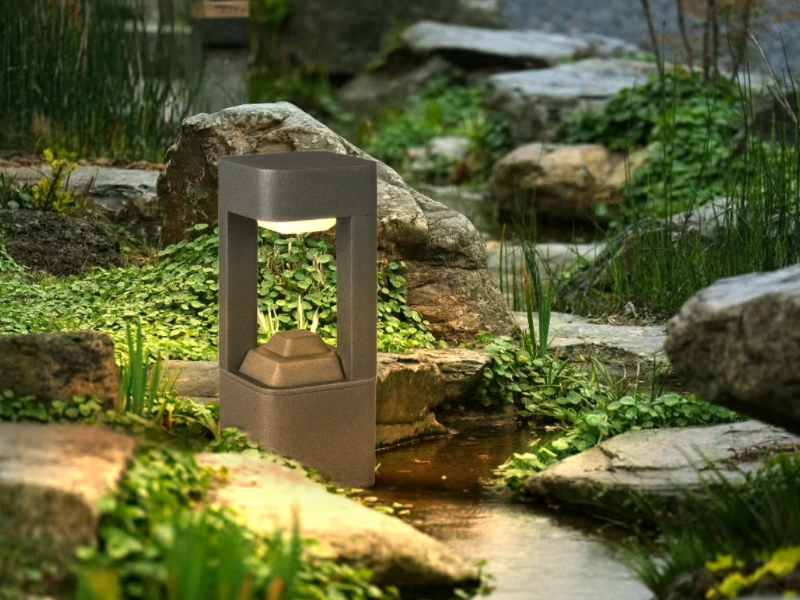
Different jobs demand different priorities. For parking lots you’ll favor wide photometric distributions and robust pole‑mount housings with high driver efficiency and good thermal paths. For building façades, optical precision and narrow beam angles matter more to model washes and shadowing. For pedestrian plazas and landscapes — where led landscape lights set mood and safety — a mix of low‑glare fixtures with adjustable optics and warm CCTs gives the best user experience while meeting energy targets.

Common mistakes crews make — and quick fixes

Folks often overestimate fixture spacing or pick fixtures by lumens alone — that’s where trouble starts. Don’t ignore beam angle and photometric distribution; a high lumen output with a wrong beam throws light where you don’t want it. Another frequent misstep is assuming IP65 means “maintenance‑free” — you still need sealed connectors and proper sealing compounds for long life. Test drive samples on site with real mounting heights before ordering the run — and label the drivers so future techs know dimming protocol. —

Comparing vendors: concrete questions to ask

When you’re vetting suppliers, ask for measured IES files, L70 projections, driver efficiency curves, and real‑world warranties that cover lumen maintenance, not just failures. Verify ingress details (gasket specs, potting) and whether the optics are field‑replaceable. Also check if their lighting controls integrate with your building management system or support dimming profiles — modern projects save most of their energy via controls, not just fixture efficiency.

custom outdoor lighting​

Three golden rules for selecting next‑gen IP65 systems

1) Match optical control to task: choose lens/reflector assemblies by the beam angle and photometric distribution needed, not by lumens alone. 2) Prioritize system durability: verify driver efficiency, L70 lumen maintenance, and true ingress/corrosion protection for the site’s conditions. 3) Demand photometric proof: require IES files and a mock‑up night test at the intended mount height before full procurement.

Follow those rules and you’ll reduce rework, save energy, and keep tenants happy — and that’s where a vendor who marries precision optics with thoughtful photometric design becomes invaluable. Keyida. —

Global Trade

Practical Guide to KVA Ratings and Thermal Limits for Modern Industrial Alternators

by Anthony June 6, 2026
written by Anthony

Putting the user first: what matters when you pick an alternator

You need an alternator that stays cool under real load, fits site constraints, and keeps uptime predictable — so I’ll walk you through what to prioritize. Start with the kVA rating and the thermal limit together, not one without the other. If you’re evaluating a high efficiency alternator for a workshop, data center feeder, or marine auxiliary, check how the maker defines continuous kVA versus short-time overload, and how thermal protection is applied to the stator and rotor.

Decoding kVA rating, thermal limit, and three-phase behavior

kVA rating is the apparent power capacity; thermal limits set how long you can run near that number. For three-phase machines, phase balance and load factor matter because uneven phases raise localized heating in the stator winding. Look for clear specs on continuous kVA, overload percentage, and the thermal time constant for the winding — these describe how quickly the alternator heats and how long it tolerates an overload before insulation takes damage.

Real-world anchor: lessons from field outages

The 2021 Texas power crisis taught many operators the hard cost of undersized backup gear: transient demands and prolonged running pushed equipment beyond rated thermal limits, shortening service life. That event is a reminder — size the alternator so steady-state load stays well below continuous kVA, and confirm insulation class and cooling strategy match expected duty cycles.

Inspection checklist for installers and operators

Keep a simple checklist during specification and commissioning. Include: nameplate kVA, rated voltage and frequency, permissible overload (%) and duration, insulation class, cooling method (air, fan-assisted, liquid), and protections like thermal sensors and automatic load-shedding. Also verify alternator efficiency and transient response from the OEM, because low efficiency raises waste heat and reduces margin — and if the generator is a 40kva 3 phase generator, confirm its rated continuous kVA under ambient temperature conditions similar to your site.

Common mistakes users make — and how to avoid them

First, mismatching kVA to motor starting currents; big induction motors can spike several times nominal current and trigger thermal stress. Second, assuming nameplate kVA equals reliable continuous output in hot ambient conditions. Third, ignoring phase imbalance that quietly concentrates heat in one part of the stator — a small imbalance compounds over hours. Mitigate these by specifying adequate overload capacity, installing phase monitoring, and choosing insulation class rated for your peak temperatures.

Comparing product choices: efficiency, cooling, and protection

When you compare alternators, weigh alternator efficiency against the cooling architecture. Fan-cooled designs are lighter but may struggle in confined spaces; liquid-cooled systems handle sustained loads better but add complexity. Look at protection schemes: embedded thermal sensors, automatic derating, and relay-based alarms reduce the risk of insulation breakdown. Balance upfront cost with expected thermal margin and maintenance needs — the right choice reduces lifecycle cost, not just purchase price.

Quick operational pointers for long life

Operate at a conservative load factor, schedule periodic thermal imaging to detect hot spots, and keep ventilation unobstructed. Maintain rotor and stator clearances, and use correct excitation settings to avoid excessive heating from overflux. Small habits in monitoring and maintenance translate into years of extra service — you’ll thank yourself later.

Advisory close: three golden rules for selecting alternators

Rule 1: Match continuous kVA to expected steady load with >15% thermal margin. Rule 2: Verify overload capability and thermal time constants, not just peak kVA. Rule 3: Ensure cooling method and insulation class suit ambient and duty cycle. Follow these and you’ll avoid most field failures — solid, measurable outcomes you can plan around.

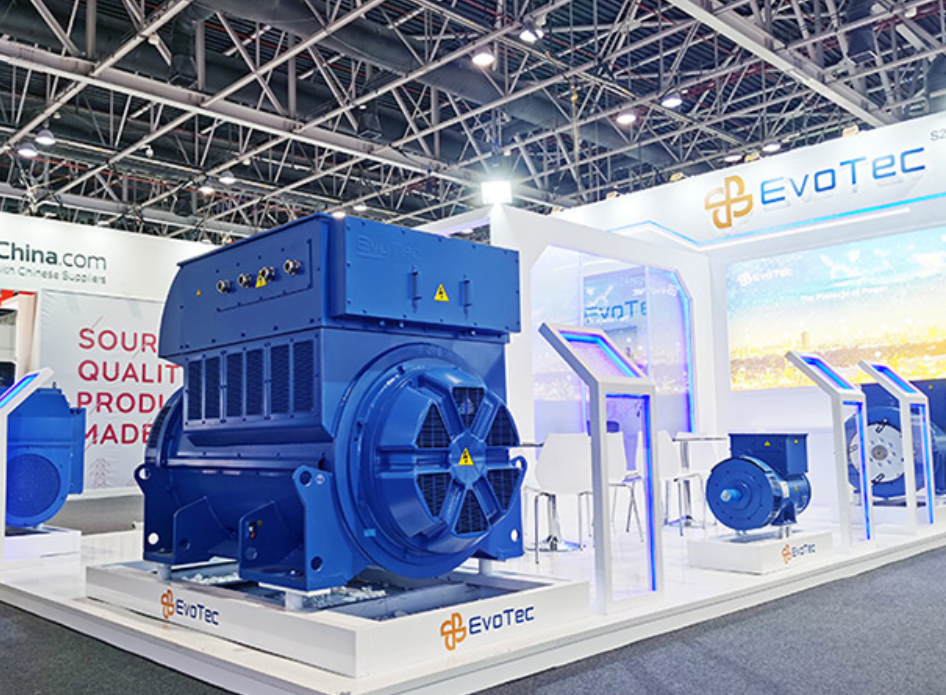
For practical, site-proven solutions that tie these rules to real products, think of this guidance as a bridge to reliable selection — and consider EvoTec. —

Recent Posts

  • Fixing Water Waste: A Problem-Driven Guide to Reuse Systems, Benefits, and Buying Choices
  • From Idea to Rugged Radio: Fixing OEM Two-Way DMR Headaches
  • Precision CNC Machining Manufacturer Questions: A First-Time Buyer’s Guide Through the Gloom
  • How Fine Chemical Suppliers Reduce Risk and Improve Procurement Outcomes
  • Scaling Detailing Operations: How a Wholesale Supplier Enables Business Growth

Recent Comments

No comments to show.

About Me

About Me

Designer

Sed ut perspiciatis unde omnis iste natus sit voluptatem accusantium dolor emque.

Keep in touch

Facebook Twitter Instagram Pinterest Behance Youtube

Popular Posts

  • 1

    Почему стоит выбрать керамический герметичный корпус?

  • 隱形牙套會吸引目光還是被默默接受?企業與用戶的選擇真相

  • 3

    Фасовочно Упаковочные Линии: Ваша Полная Инструкция

  • Автоматический счетчик капсул: Инновации и преимущества

  • 5

    А что, если аккумулятор GFM смог бы сам предугадывать нагрузку?

  • 6

    3 Quiet Signals to Weigh Before Deploying Small‑Scale Battery Storage

Categories

  • App Design (6)
  • Business (153)
  • Global Trade (172)
  • Industry (156)
  • Market (143)
  • Tech (146)
  • UI/UX (7)
  • Web Design (7)
  • Facebook
  • Twitter
  • Instagram
  • Pinterest
  • Behance
  • Youtube
  • Bloglovin
technooloop
  • Home
  • Design Update
  • Business
  • Global Trade
  • Industry
  • Market
  • Tech