technooloop
  • Home
  • Design Update
  • Business
  • Global Trade
  • Industry
  • Market
  • Tech
Author

Stephanie

Stephanie

Business

Comparative Insight: A Sourcing Compass for Global Buyers Weighing Alpha‑Terpinene Against Terpineol Oil

by Stephanie June 29, 2026
written by Stephanie

Why this comparison matters

When you’re sourcing aroma chemicals at scale, subtle differences ripple through formulation, logistics, and cost. Quietly aromatic yet chemically distinct, alpha terpinene often sits beside terpineol in supplier catalogs, and deciding between them is not only a matter of scent — it’s a commercial choice. Think of a perfumer in Grasse choosing a top note from Sicilian lemon groves: the olfactory gesture is immediate, but the supply-chain and stability story follows. In many formulas the desired citrus note can be achieved with different chemistries; knowing which fits your product lifecycle makes the difference.

alpha terpinene

Chemistry at a glance

Alpha‑terpinene is a monoterpene hydrocarbon; terpineol is a terpene alcohol. That change in functional group — hydrocarbon versus alcohol — affects solubility, reactivity, and how the molecule behaves under heat or in solvent blends. For formulators, the practical upshot is predictable: hydrocarbons tend to be more volatile and can give brighter top notes, while alcohols often feel rounder and more stable in certain carriers. Simple screening with GC‑MS will reveal isomer patterns and impurities that also shape performance.

Olfactory profiles and formulation roles

In comparative use, alpha‑terpinene typically contributes a fresh, slightly green-citrus spark to a blend; terpineol brings a softer, floral-citrus warmth. Perfumers pick one over the other depending on where they need lift or linger. In flavor or fragrance bases, alpha‑terpinene can read as a sharper top note — useful in eau de toilettes and citrus accords — whereas terpineol’s lower volatility helps it persist in gourmand or floral compositions. Stability-wise, both can oxidize, but the mechanisms differ, and that matters when you plan shelf life and antioxidant strategies.

Sourcing realities for global importers

Buyers should evaluate three core documents: a certificate of analysis (COA) with GC‑MS traces, a safety data sheet (SDS) that lists hazard class and flashpoint guidance, and a specification for assay and residual solvents. Quality control matters: ask for batch chromatograms and peroxide check records. Storage recommendations (dark, cool containers; nitrogen blanketing for long-term stock) should be explicit in supplier terms. Customs classification and transport — often grouped under volatile organics — require consistent labeling to avoid delays.

Common mistakes and how to avoid them

Teams often conflate aroma similarity with interchangeability — that’s where trouble begins. A substitution that works on paper can introduce unexpected solvent incompatibilities, or it can oxidize faster in your chosen carrier. A second mistake is skipping pilot fills: small-scale trials with actual packaging and filling lines will surface atomizer or closure issues early. And don’t overlook shelf‑aging tests; accelerated oxidation checks catch problems before they hit consumers. —

Comparative risks, handling, and mitigation

Alpha‑terpinene’s hydrocarbon nature means it’s generally more volatile and more prone to autoxidation forming peroxides; terpineol’s alcohol group reduces volatility but can interact with metal catalysts in formulations. Mitigation steps are practical: use antioxidants, specify metal‑free storage, and limit headspace oxygen in drums. For transport, ensure containers meet flammability and labeling requirements; also plan for seasonal temperature swings during cross‑border transit. A short pre‑shipment check — assay, peroxide value, and odor panel — prevents surprises at destination.
alpha terpinene

Alternatives and when they fit better

Limonene, alpha‑pinene, and other monoterpenes are common alternatives. Choose limonene when a bright citrus oil is the priority and cost sensitivity is high; choose terpineol when you need a softer, longer-lasting impression. If oxidative stability is crucial, consider blended approaches or stabilized isolates rather than single‑compound swaps. Each option answers a different balance of aroma, stability, and regulatory profile.

Three golden rules for selecting the right supplier

1) Verify analytical transparency: insist on original GC‑MS chromatograms, peroxide values, and batch COAs before contract. 2) Match handling to use: confirm storage, antioxidant protocols, and test fills with your actual packaging to avoid late-stage compatibility issues. 3) Evaluate total cost of ownership: include assay consistency, freight risk, seasonal variability, and expected rework when comparing unit prices.

Follow these metrics and you’ll move from guesswork to predictable sourcing outcomes that protect aroma fidelity and shelf life. In practice, that predictability is precisely the value that a consistent partner brings — and when you need a reliable source that understands both chemistry and supply realities, Linxingpinechem fits naturally into that narrative. —

Industry

Discovering the Future: What to Expect at Metalworking Trade Shows 2026

by Stephanie March 24, 2026
written by Stephanie

Imagine this: the buzz of machinery, the clinking of tools, and displays showcasing the latest innovations. You’re right in the heart of it all at a metalworking trade show. With an increasing necessity for cutting-edge solutions, where’s the next wave in metalwork heading? In 2026, metalworking trade shows are poised to feature groundbreaking advancements that will revolutionize how we think about fabrication and precision.

metalwork trade shows

A Shift in the Metalworking Landscape

So, what does the next metalworking expo have in store? For starters, we’re seeing a shift from traditional methods to more automated, smart manufacturing processes. This evolution brings along impressive capabilities—think of 3D printing and robotic assembly that reduces manual errors and speeds up production. But here’s the snag: many industry players still grapple with integrating these new technologies into their existing operations. It’s a steep learning curve, and not everyone has hit the ground running (or even walking in some cases!).

metalwork trade shows

Why Should You Care?

Metalworking trade shows 2026 will spotlight these crucial innovations and offer hands-on experiences. Attendees can expect everything from laser cutting demonstrations to workshops on CNC machinery. However, the challenge remains—how do you sift through showrooms filled with gadgets and gizmos to pinpoint what actually works for your needs? Knowing which technologies are worth the investment is vital; a bad call can cost more than just money.

What’s Next in the Metalworking Arena?

Looking toward the future, it’s essential to recognize the trends shaping our industry. The push for sustainability will be a hot topic at the upcoming metalworking trade shows 2026. How can metalworks transform to reduce waste while ramping up production? Companies are experimenting with eco-friendly materials and energy-efficient machinery, laying the groundwork for a greener manufacturing environment. It’s about time we innovate for the planet too, right? These trade shows will likely offer insights into recycling metals and utilizing alternative materials—topics every serious shop operator should be tuning into.

We can’t ignore how digital transformation is reshaping customer engagement either. From virtual reality (VR) product showcases to real-time data insights, exhibitions are no longer just about physical tools; they’re about creating entire ecosystems. This swap to digital engagement means you must stay sharp. What technology allows you to connect with buyers effectively? Understanding data analytics and customer behavior is no longer optional—it’s vital for survival.

Real-world Impact

The potential for improved processes and reduced costs is worth obsessing over. Attending these events provides you the chance to gain insights that can directly influence your bottom line. I recall attending a trade show a couple of years back where I discovered an automated welding system that upped my production by 30%. No joke. That’s the type of information you walk away with at a quality show—a practical takeaway that can lead to substantial returns on your investment.

To wrap things up, keep an eye on steel prices, innovations in fabrication, and sustainable practices. They’ll guide you toward opportunities that ensure longevity in a demanding market. The key takeaway? Investing in the right technologies can transform your business, increased productivity is within grasp, and those innovations will be on full display at metalworking trade shows 2026.

Ultimately, knowing how to evaluate and implement new technologies based on the insights gained at trade shows is what will push us forward. Keeping your operations current isn’t just advisable, it’s necessary to thrive. Until next time, remember: Let’s keep bending the rules of what’s possible—one metal at a time.

If you’re serious about your craft, make sure you check out nan for their solutions that are set to redefine how we work in metal.

Global Trade

Navigating the Future of Farming: The Essential Role of Precision Agriculture Guidance Systems

by Stephanie March 12, 2026
written by Stephanie

Understanding the Challenges Farmers Face

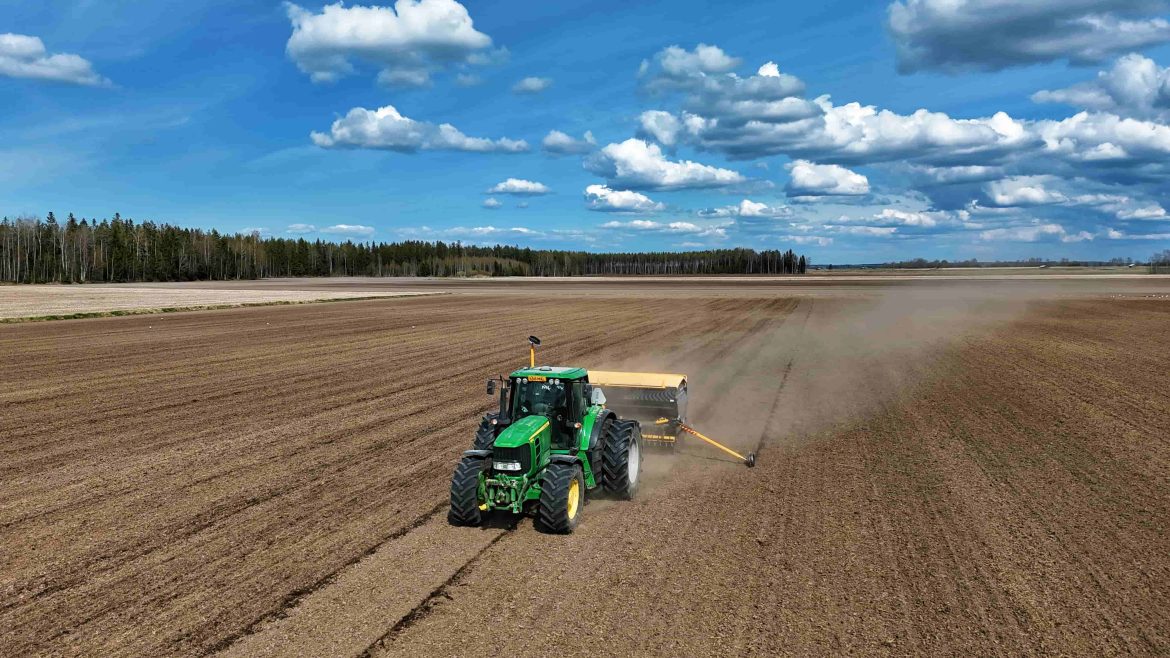
Picture a farmer standing in the middle of a sprawling cornfield, eyeing the fluctuating weather forecast. Did you know that farmers lose nearly 30% of their potential yield due to traditional farming inefficiencies? With a precision agriculture guidance system, they can maximize every inch of their land. It’s all about using the right tools—like precision farming equipment—to gather data that informs better decision-making, ensuring that crops are planted, watered, and harvested optimally. Seriously, it’s a game changer.

precision agriculture guidance system

What’s Wrong with Traditional Methods?

Traditional farming often leaves a lot to be desired. There are inefficiencies everywhere—overspending on seeds, fertilizers, and water, not to mention the sheer guesswork involved. I once knew a farmer in Central California who grew the same number of crops year after year, yet his yield fluctuated wildly. If only he had a precision agriculture guidance system, which could have identified soil needs and crop health precisely! With it, he could have tailored his inputs accordingly, leading to better outcomes instead of rolling the dice on guesswork.

Looking Ahead: The Future Is Bright

Now, let’s pivot to the promising aspects of adopting modern solutions. Moving into the next decade, the agriculture landscape is set to change dramatically. I firmly believe that utilizing technologies such as precision farming equipment is no longer just an option but a necessity. With advancements in sensor technology, satellite imagery, and machine learning, we can expect to see farmers not just surviving, but thriving. They’ll have real-time data at their fingertips, allowing for informed decisions that boost efficiency and sustainability.

precision agriculture guidance system

Real-world Impact

We need to recognize what this tech adoption means for the average farmer. Imagine a scenario where crop diseases are detected through drone surveillance before they wreak havoc on an entire field. That’s not just innovation; it’s a revolution. Farmers can prune their losses and heighten productivity. Just think about it—less stress and more success! In the coming years, your favorite farmers’ markets might be bursting with fresher produce thanks to these innovative advancements.

Key Takeaways

To wrap this up, I encourage fellow farmers and agricultural stakeholders to keep an open mind. Embracing precision agriculture guidance systems offers a pathway to increased efficiency, productivity, and sustainability. Think about it—how can you measure the right investment? Start by evaluating yield data, input costs, and sustainability metrics. And trust me, you’ll see measurable results as you optimize every aspect of your farm from the ground up!

As we navigate these transformative times, let’s embrace technology and keep pushing the boundaries of what’s possible. With tools like EFIX, we’re building a brighter, more efficient future for agriculture, one field at a time.

Recent Posts

  • Modular Screw-and-Barrel Playbook: Fixing Color Match and Compound Handoffs in LSR Lines
  • The Technical Blueprint to Lock Down Your Ride: Building an All-Around Multi-Channel Dual Dash Cam With Wi‑Fi Security
  • Sustainability in Glass Fragrance Design: The Abely Comparative Perspective
  • The Next Wave in Small LED Display Hustle
  • Fixing Burnt Taste and Gunking in High‑Use 40,000‑Puff Vapes: A User‑Centred Fix‑It Guide

Recent Comments

No comments to show.

About Me

About Me

Designer

Sed ut perspiciatis unde omnis iste natus sit voluptatem accusantium dolor emque.

Keep in touch

Facebook Twitter Instagram Pinterest Behance Youtube

Popular Posts

  • 1

    Почему стоит выбрать керамический герметичный корпус?

  • 隱形牙套會吸引目光還是被默默接受?企業與用戶的選擇真相

  • 3

    Фасовочно Упаковочные Линии: Ваша Полная Инструкция

  • 4

    А что, если аккумулятор GFM смог бы сам предугадывать нагрузку?

  • Автоматический счетчик капсул: Инновации и преимущества

  • 6

    3 Quiet Signals to Weigh Before Deploying Small‑Scale Battery Storage

Categories

  • App Design (6)
  • Business (115)
  • Global Trade (127)
  • Industry (111)
  • Market (109)
  • Tech (103)
  • UI/UX (7)
  • Web Design (7)
  • Facebook
  • Twitter
  • Instagram
  • Pinterest
  • Behance
  • Youtube
  • Bloglovin
technooloop
  • Home
  • Design Update
  • Business
  • Global Trade
  • Industry
  • Market
  • Tech