
Opening comparative snapshot
Modern factories choose systems by trade-offs: throughput versus traceability, deterministic control versus flexible orchestration. For battery lines that must manage cell handling, formation cycling and pack assembly, the split often sits between hard-real-time PLC/robot-centric stacks and software-first MES/IIoT deployments; both models are core to battery manufacturing automation and shape how factories handle cycle data, QC gates and material genealogy for each cell. If you’re evaluating options for ev battery manufacturing, start by mapping which constraints (latency, traceability, throughput, safety) dominate your line — that axis will decide whether you lean hardware-first or software-first.

Control layer: PLC/PAC + robotics vs edge-native controllers
Compare the deterministic stack (PLC/PAC + motion controllers + industrial robots) with edge-native controllers that run containerized apps and local ML inference. Deterministic stacks win on cycle-timed sequences, hard I/O and certified safety (SIL/PL); they’re predictable for precise welding, dispensing and handling. Edge-native controllers give richer local analytics, easier OTA updates and faster fault diagnosis. Key protocols: OPC UA for semantic exchange, EtherCAT for low-latency motion, MQTT for telemetry. Decide by the task: spot welding, laser welding and high-speed pick-and-place favor deterministic I/O; inline vision inspection and adaptive torque/fill control favor edge inference.
Execution and operations: MES + LIMS vs integrated SCADA architectures
Manufacturing Execution Systems (MES) paired with Laboratory Information Management Systems (LIMS) provide end-to-end traceability and test-data provenance required for cell qualification and aging records; they enforce recipe versioning and batch genealogy. Integrated SCADA-centric architectures keep tight supervisory control and HMI consistency across cells and packs. Practically, MES-driven approaches are better where regulatory traceability and audit trails matter; SCADA-first solutions often give faster operator feedback loops on the line floor. Prioritize MES when you need batch-level certification and LIMS when cell chemistry test records must be retained and cross-referenced.
Sensing, vision and test: what differentiates solutions
Vision systems, inline impedance/voltage testers, leak detectors and thermal imaging create the data fabric that separates reliable lines from noisy ones. Comparative points: single-camera high-frame-rate inspection vs multi-view AI ensembles; contact impedance benches versus non-contact surface acoustic methods. The practical metric is false-reject rate and mean-time-to-detect. Systems that couple deterministic triggers (hardware interlocks) with probabilistic models (ML confidence scores) reduce manual rework without increasing escapes.
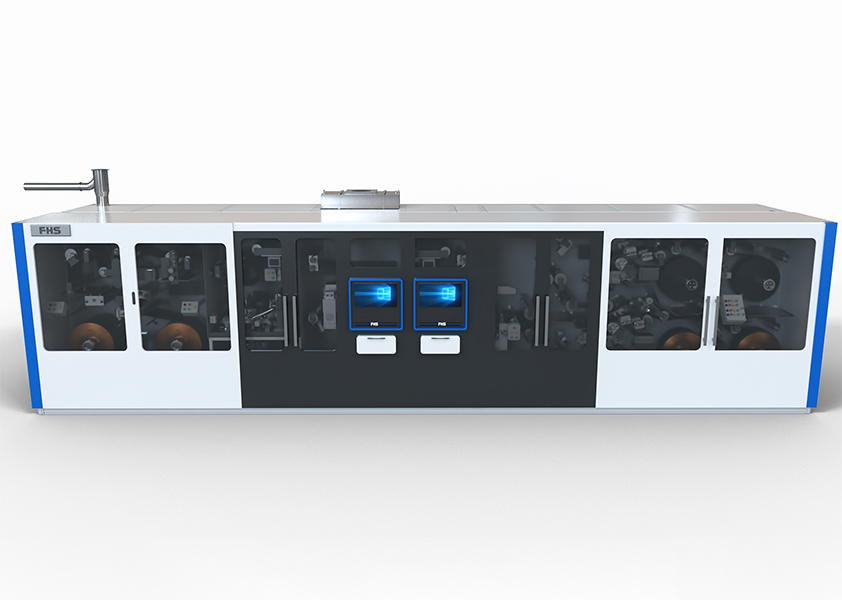
Data architecture and lifecycle: edge-store-forward vs cloud-native SIEM
Two patterns recur: keep time-series and trace data local (edge-store-forward) to guarantee millisecond responses and maintain availability inside dry rooms, or stream everything to cloud SIEM/analytics for cross-factory benchmarking. Use OPC UA aggregated at the edge, normalize to a canonical schema, then push delta payloads to cloud for long-term analytics and fleet-level KPIs. Encryption at rest and transit, deterministic timestamps and immutable test records are non-negotiable for auditability and warranty claims.
Common implementation pitfalls
Teams often pick one dominant stack and assume it covers downstream needs; integration debt shows up as manual data exports, mismatched timestamps and lost genealogy. Avoid these mistakes: skip a unified identifier for cells/packs; ignore deterministic timebase across devices; treat vision confidence as binary. Test the integration by running simulated fault injects and verifying that traceability and quarantine workflows complete without human intervention.
How to choose — a short decision rubric
Match technical constraints to business outcomes: if you require sub-millisecond motion sync and certified safety, favor PLC/robot stacks with certified motion controllers; if you need rapid algorithm iteration and cross-line analytics, favor an edge-native + MES architecture. Consider occupational safety rules and automotive functional safety standards; designs that account for ISO 26262-relevant interfaces reduce rework. Real-world learning: teams who visited the Tesla Gigafactory in Nevada report the operational emphasis on integrated traceability and formation-cycle control as a decisive factor when scaling production.
Final synthesis
Comparing solutions means trading control determinism against software agility, but both must deliver the same three concrete outcomes: accurate cell genealogy, reproducible formation cycles, and actionable fault isolation. Choose architectures that lock identifiers to hardware events, timestamp everything to a common clock, and couple deterministic interlocks with probabilistic inspection. Those choices compress warranty risk and downstream validation costs, which is where integrated partners and platform expertise matter—just as a pragmatic engineering partner like FHS demonstrates by aligning control, data and QA layers into coherent, auditable lines.