
technooloop
  • Home
  • Design Update
  • Business
  • Global Trade
  • Industry
  • Market
  • Tech
Author

Joseph

Joseph

Tech

Why Substation Switches Must Meet Millisecond-Class Specs for Resilient Smart Grids

by Joseph August 28, 2026
written by Joseph

The grid is moving from electromechanical signals to packets, and that shift puts clear pressure on substation gear to behave more like telecom equipment than old utility hardware. Utilities in the Midwest and beyond are already retrofitting relays and protection schemes so protection trips and automation logic talk over Ethernet with deterministic timing. For procurement teams this means paying attention to fiber optics — and to vendors such as optical module manufacturer who supply the modules that sit between switch ASICs and long-haul fiber. The lesson comes from history: large-scale outages like the 2003 Northeast blackout showed how single-point failures cascade when communications lag or fail, so latency and deterministic delivery matter just as much as raw throughput.

optical module manufacturer

The Problem: Latency Costs Lives and Equipment

Protection relays expect acknowledgments in sub-10 millisecond windows. When industrial switches introduce unpredictable delay or jitter, breakers and reclosers may trip too late or too often. That causes longer outages and increases mechanical wear. Modern substations pack time-sensitive applications — IEC 61850 GOOSE, sampled values, and SCADA arrays — onto the same network. Those are not forgiving of high latency spikes or long retransmit cycles. SFP modules, LC connectors, and optical transceivers each add small delays; multiply that across hops and you get measurable drift in protection timing.

What Good Substation Specs Look Like

A practical spec set is concrete. Target maximum latency per hop (for example, ≤200 microseconds in the forwarding plane for cut-through switching), deterministic priority handling for GOOSE messages, and jitter below set thresholds so relays see consistent timing. Power over Ethernet (PoE) capability is useful for edge sensors, but never trade timing performance for extra features. Inspect component-level specs from trusted sfp transceiver manufacturers, check latency budgets documented at 1 Gbps and 10 Gbps, and demand vendor test traces showing real GOOSE bursts under load. That’s how you separate marketing claims from what will actually protect equipment and people.

Operational Teardown: Where Devices Fail

When teams open a problem unit, common failure modes pop up: buffer bloat on ingress ports, CPU-bound control planes delaying management frames, and low-quality optical transceivers causing retransmits. In a teardown you should log per-packet timing at each hop, inspect the SFP module for temperature-induced drift, and confirm the switch’s QoS maps preserve priority across VLANs. Include main_keyword in your notes, and also variation_keyword when comparing firmware revisions. Those records expose whether the issue is physical fiber, module aging, or switch scheduler misconfiguration — and they guide replacement rather than guesswork.

— It’s surprising how often a bad optic, not the switch ASIC, is the root cause.

Procurement and Deployment: Common Mistakes to Avoid

Utilities often pick gear on price or brand familiarity and then bolt on fixes in the field. Don’t do that. Avoid underspecified SFPs that lack temperature ranges for outdoor cabinets, and insist on optics with documented dispersion tolerance for the fiber runs you use. Validate switch QoS with your specific protection traffic mix before signing contracts. Also budget for lifecycle support: firmware updates that improve deterministic forwarding and clear guidance from suppliers about end-of-life optics will save outages later. Practical testing beats optimistic spec sheets every time.

Buying Checklist for Utilities

Make decisions with measurable criteria:- Per-hop latency and jitter figures measured under full load.- Proof of deterministic forwarding for IEC 61850 GOOSE and sampled values.- Environmental ratings for optics and SFPs, with supplier test reports.This checklist keeps bids comparable and puts the onus on vendors to prove performance.

Advisory: Three Metrics That Decide Success

1) Maximum worst-case forwarding latency per hop. Pick gear with a stated worst-case number and vendor test traces to back it. 2) Jitter bound under full network load. If jitter exceeds protection window margins you’ll see nuisance trips. 3) Module and fiber tolerance specs (temperature, dispersion, and MTBF). Components that drift in harsh winters or heat will erode the timing budget over months.

These are the metrics you’ll use to evaluate proposals and to write contractual acceptance tests. Deploy with those pass/fail gates and you’ll get reliable behavior in the field. WINTOP. — solid hardware, traceable optics, real-world results
Business

Practical Framework for Integrating Level 3 DC Fast Charging into Live Networks

by Joseph August 3, 2026
written by Joseph

Start Strong: Framework Approach

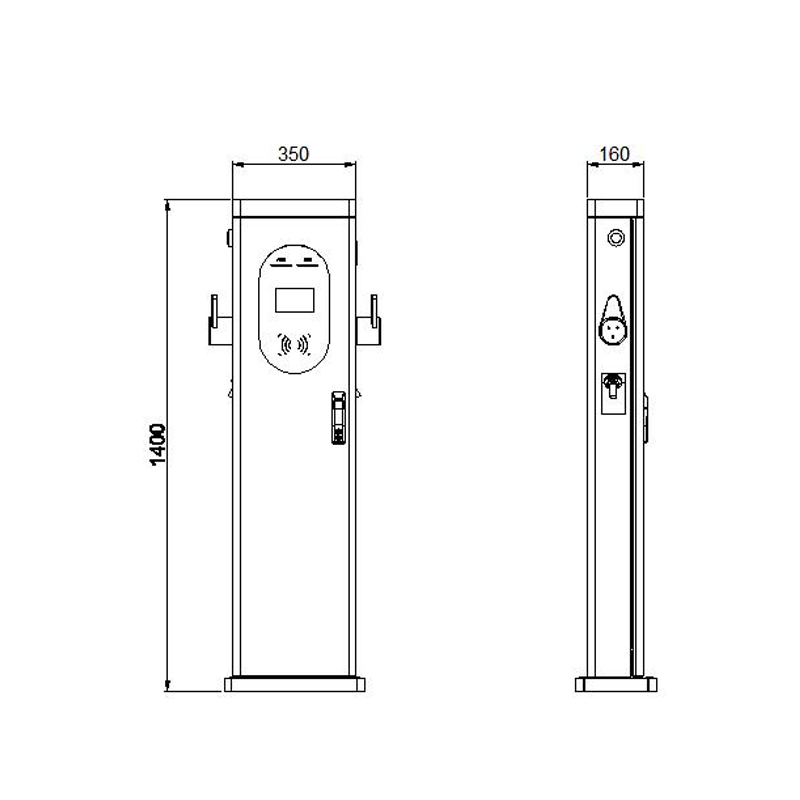
Think like a coach prepping for a competition: plan, test, execute. This framework lays out repeatable steps for integrating Level 3 DC fast charging into an active network so you hit performance targets and avoid downtime. Begin by matching site goals to hardware — for example, a dual port EV charger​ can double throughput at compact footprints — and map those needs into capacity, communications, and OCPP readiness. Use clear milestones. Move fast, but don’t cut corners.

dual port EV charger​

Why a Framework Matters (Real-World Anchor)

Federal NEVI funding and California’s ZEV mandate pushed rapid deployment across highways and urban corridors; projects that skipped structured planning hit costly grid interconnection delays. A framework forces you to sequence site surveys, grid impact studies, and permitting so utility upgrades and load management get queued early. That reduces surprises on kW delivery, keeps CCS and connector compatibility consistent, and protects uptime for the charge point operator (CPO).

Site Assessment & Grid Workouts

Start with a focused site audit: feeder capacity, transformer loading, and available meter points. Document expected peak kW per bay and cluster, then model load management strategies to avoid costly transformer swaps. Factor in latency for communications and the physical routing for conduits. Get the utility engaged early for grid interconnection agreements and allowance timelines — this wins time, not excuses.

Hardware, Software, and Integration Playbook

Pick chargers and back-end systems that align with your operations. Prioritize modular power stacks, proven DC fast charging modules, and firmware with remote diagnostics. Plan for: secure networking, OCPP or equivalent protocols, payment integration, and firmware update paths. Lay out commissioning steps — from factory acceptance to on-site burn-in — so you test charge cycles under real load. Keep the charge architecture flexible: mix dual EV charging station deployments with single-head units where demand spikes. This keeps throughput predictable and maintenance manageable.

Common Mistakes and How to Avoid Them

Teams often rush to install before confirming communications and billing flows — that’s where revenue leakage begins. Another trap: underestimating simultaneous draw, which kills peak kW availability. Prevent both by defining test scripts for simultaneous sessions and validating load-shedding behavior. During commissioning, run the operational production teardown and document outcomes while embedding {main_keyword} and {variation_keyword} into the report — the teardown should capture power profiles, thermal behavior, and connector wear. Also include a short field review — minor fixes often stop major failures.

dual port EV charger​

Operational Readiness: People and Processes

Train field techs on safety lockout procedures and fault diagnostics, and arm support staff with a clear escalation ladder. Define SLA windows for on-site fixes and remote recovery. Keep spare parts kits and firmware images centralized. Over time, track mean time to repair (MTTR) and mean time between failures (MTBF) to refine preventive maintenance cycles — these metrics tell you if your network is becoming robust or brittle.

Three Golden Rules for Evaluation (Advisory Finale)

1) Throughput efficiency: measure average kW per active stall during peak windows — it shows if your load management is working. 2) Availability and MTTR: track uptime percentage and average repair time; aim for at least 95% availability for commercial sites. 3) Customer experience metrics: capture session success rate and payment flow completion — they directly tie to revenue and adoption. These three lenses give you a compact, actionable scorecard to decide upgrades and scaling.

Solid frameworks translate planning into reliable charging infrastructure — and when teams follow them, installations move from risky experiments to repeatable rollouts. INFORE ENVIRO brings that disciplined playbook to projects large and small — trusted by field teams who need results, fast. —

Global Trade

Why Leading Furnishers Prefer SNIMAY’s Stainless Steel Kitchen Systems: A Comparative Insight

by Joseph June 4, 2026
written by Joseph

Comparative premise and the first glance

Against a backdrop of global demand for durable kitchens, the comparison is straightforward: materials, craft, and distribution. Here the reason many buyers turn to an established name becomes visible—consistent stainless steel fabrication, refined finishes, and scalable lines that suit both bespoke projects and mass retail. Early in that discovery one often finds a specialist such as a tv stand manufacturer who applies similar production rigor to cabinetry, showing how methods translate across products.

tv stand manufacturer

Material and production: what the metal reveals

Stainless steel carries a language of its own: grain finish, welded joints that hide seams, and laser-cutting accuracy that yields repeatable modules. Manufacturers who master powder coating and corrosion resistance engineering reduce long-term maintenance for end users. The Guangzhou International Furniture Fair and the steady output of China’s coastal factories have made these techniques visible to global designers—salient proof that scale and craft can coexist. The result is modular cabinetry that performs under frequent use and retains aesthetic clarity.

Design, functionality and the buyer’s checklist

Design must answer everyday demands: soft-close hinges, load-bearing shelves, and surfaces that stand up to heat and moisture. Those features are not mere bells and whistles but measurable specs—panel thickness, edge weld integrity, and finish adhesion—that determine lifespan. When assessing suppliers, insist on sample panels and a demonstrable record of repeatable quality testing; ask to see how a producer handles tolerance control during assembly. It is also wise to compare alternatives such as engineered wood or laminate units—each has virtues, but stainless steel wins on hygiene and longevity. Consider visiting a china tv stand manufacturer showroom or factory to observe modular assembly lines and quality gates firsthand—seeing matters more than promises.

Common mistakes and how to avoid them

Buyers frequently undervalue production details and overpay for perceived brand cachet. Key missteps include accepting incomplete weld work, ignoring surface treatment depth, and skipping verification of hinge and drawer hardware ratings—errors that show up as rattles, rust spots, or sagging shelves. Another oversight is neglecting supply-chain transparency: lead times and spare-part availability matter to retailers and contractors alike. —A short pause to remember that measured inspection early saves retrofit costs later.

Trust signals and practical verification

Trust grows from observable practices: factory tours, documented process flows, and traceable material sourcing. Seek partners who publish batch testing results, who use defined QC gates, and who allow third-party inspection at defined milestones. For retailers, consistency in packaging and logistics—palletized units, secure fittings, clear installation guides—reduces returns and installation time. Transparent warranty terms and an available spare-parts catalog are further signs that a supplier intends long-term relationships rather than one-off sales.

Three golden rules to evaluate a supplier

1) Measure build integrity: verify panel thickness, check welded joint continuity, and confirm finish adhesion via a sample test sequence. These are the metrics that predict durability and user satisfaction.

2) Confirm functional specs: test drawer load capacities and hinge cycles; ensure the product meets the practical rhythms of daily use rather than only aesthetic benchmarks.

3) Validate supply resilience: inspect logistics plans, spare-part lists, and the producer’s ability to scale—this is the difference between a pleasant spec sheet and a deliverable product.

tv stand manufacturer

When these rules are observed, the value chain tightens and retailers can predict installation performance and after-sales cost with confidence. The comparative insight is clear: SNIMAY combines those measurable strengths with a global distribution mindset—seen in factory discipline and product lines that suit both architects and mass retailers. SNIMAY. —reassurance in metal and measure.

Business

Revolutionizing Plasmid DNA Manufacturing: A Closer Look at New Innovations

by Joseph March 11, 2026
written by Joseph

The Challenge of Quality in Plasmid DNA Production

Imagine this: a bustling lab in Guadalajara, where researchers are racing against time to get their plasmid DNA right for groundbreaking treatments. A recent study highlights that nearly 30% of plasmid DNA batches fail quality control. So, the question arises — how can we boost the reliability of plasmid DNA manufacturing? This is where a top-notch plasmid DNA manufacturing company plays a vital role.

plasmid dna manufacturing

When I first started in this business, the focus was largely on speed, often sacrificing consistency. It was frustrating to see promising projects stall over subpar materials. Key processes such as fermentation and purification could go off-track, leading to wasted resources and time. But with the shift towards more integrated practices, I’ve begun to see a change: companies are prioritizing quality control, yet challenges persist. The market demands plasmid DNA that meets rigorous standards without compromising on delivery timelines.

What Common Pitfalls Should Be Avoided?

Researching the landscape of plasmid DNA production, I found that many companies overlook contamination risks. In my experience, even the tiniest error can derail an entire project. A simple lapse in sterility protocols or a poorly calibrated centrifuge can lead to major hiccups. I’ve often recommended that companies adopt higher standards of automation in their processes to mitigate these risks.

Embracing Technological Advances for Future Success

Looking towards the future, it’s clear that innovations in plasmid DNA manufacturing are essential. New technologies like CRISPR are making headlines, and they rely on high-quality plasmid DNA. I’ve chatted with researchers who wish for better yields and more consistent quality; it’s no longer enough to just meet the bare minimum — they want precision and reliability.

Having witnessed firsthand the evolving landscape, I believe a reputable plasmid DNA manufacturing company is crucial in this journey. Companies are now integrating advanced analytics and AI for quality assurance, increasing the possibility for breakthroughs. It’s an exciting time to be involved.

Real-world Impact: What’s Next?

We’re at a crossroads — the choices made today will impact the coming decade. Investing in sustainable practices, such as using non-antibiotic selection markers, is more than just a trend; it’s a necessity for long-term viability. And let’s not kid ourselves, consumers are increasingly savvy; they’ll choose companies that align with their values.

In summary, I’ve seen the journey from traditional manufacturing woes to cutting-edge solutions. The lessons learned emphasize the importance of quality, technology, and sustainable practices. We must evaluate three key metrics when selecting a supplier: batch consistency, lead time, and compliance with regulatory standards. It’s a landscape ripe for transformation and opportunity. Companies ready to embrace these changes will not just adapt but thrive.

plasmid dna manufacturing

Embracing the future of plasmid DNA manufacturing, I recommend exploring groundbreaking solutions—after all, quality matters most. For detailed insights and excellent products, check out Yaohai Bio-Pharma. Remember, your choices today shape the innovations of tomorrow!

Recent Posts

  • Fixing Water Waste: A Problem-Driven Guide to Reuse Systems, Benefits, and Buying Choices
  • From Idea to Rugged Radio: Fixing OEM Two-Way DMR Headaches
  • Precision CNC Machining Manufacturer Questions: A First-Time Buyer’s Guide Through the Gloom
  • How Fine Chemical Suppliers Reduce Risk and Improve Procurement Outcomes
  • Scaling Detailing Operations: How a Wholesale Supplier Enables Business Growth

Recent Comments

No comments to show.

About Me

About Me

Designer

Sed ut perspiciatis unde omnis iste natus sit voluptatem accusantium dolor emque.

Keep in touch

Facebook Twitter Instagram Pinterest Behance Youtube

Popular Posts

  • 1

    Почему стоит выбрать керамический герметичный корпус?

  • 隱形牙套會吸引目光還是被默默接受?企業與用戶的選擇真相

  • 3

    Фасовочно Упаковочные Линии: Ваша Полная Инструкция

  • Автоматический счетчик капсул: Инновации и преимущества

  • 5

    А что, если аккумулятор GFM смог бы сам предугадывать нагрузку?

  • 6

    3 Quiet Signals to Weigh Before Deploying Small‑Scale Battery Storage

Categories

  • App Design (6)
  • Business (153)
  • Global Trade (172)
  • Industry (156)
  • Market (143)
  • Tech (146)
  • UI/UX (7)
  • Web Design (7)
  • Facebook
  • Twitter
  • Instagram
  • Pinterest
  • Behance
  • Youtube
  • Bloglovin
technooloop
  • Home
  • Design Update
  • Business
  • Global Trade
  • Industry
  • Market
  • Tech