Short intro: why compare and where savings hide
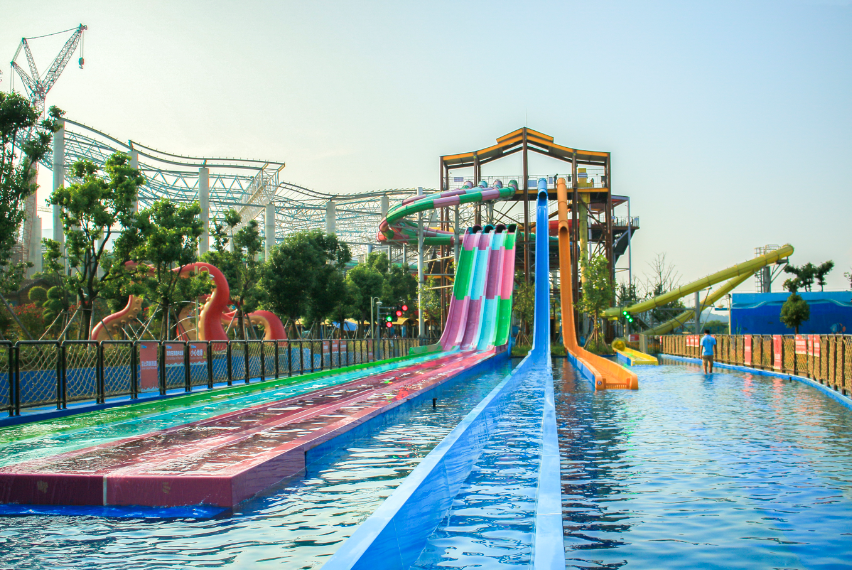
Choosing between slide types means choosing trade-offs: rider throughput, water consumption, and energy draw. A side-by-side look clarifies real-world impact for operators considering upgrades or new builds. If your venue needs capacity plus spectacle, a mat racer water slide often ranks high for throughput and guest appeal, yet its plumbing and finish choices change operational cost dramatically.
Key variables that shape performance
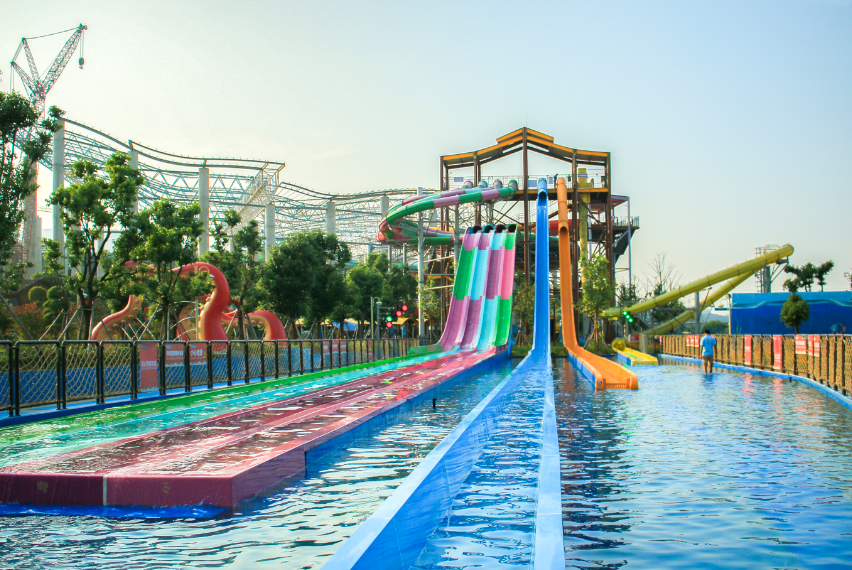
Three technical levers matter: flow rate, pump efficiency, and filtration design. Flow rate determines how fast a slide feels and how much make-up water the system needs. Pump efficiency ties directly to electricity bills and lifetime maintenance. Filtration—and the turnover rate of your recirculation system—affects chemical dosing and backwash frequency, which in turn affects water and energy use. Operators should track these metrics in combination rather than isolation.
Comparing slide types—practical pros and cons
Look beyond aesthetics. Here’s a concise comparison that operators can use during procurement:
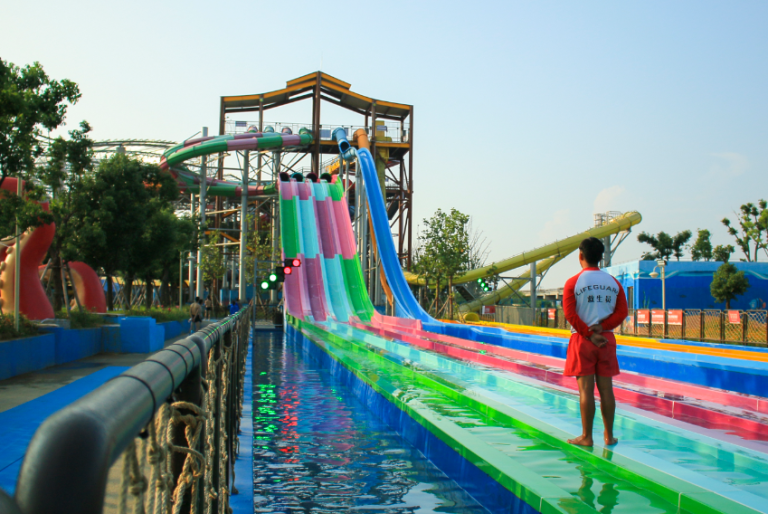
– Mat racer water slide: high throughput, straight lanes; moderate hydraulics complexity; easier guest staging. – High speed slide: short run, intense pump demands; high initial thrill, higher peak flow and energy spikes. – Bowl and funnel slides: lower continuous flow, moderate filtration impact; more structural support. – Tube slides: flexible layouts, variable flow needs; often lower peak draw but more surface area to maintain.
Each design changes pump cycles and chemical consumption. For instance, high speed sections need instantaneous flow surges—this shapes pump sizing and controller programming.
Operational production teardown: build, test, maintain
Manufacturing choices affect lifecycle cost. Material selection (UV-stable polymer vs. fiberglass laminate), joint designs, and surface finish alter water friction and therefore required flow rates. During production testing, inspect pump curve matching and valve sequencing rather than relying on nominal ratings. On-site commissioning should validate hydraulics with timed ride tests and verify filtration turnover at planned bather loads.
Maintenance planning must name frequency: gasket checks every 6 months, liner inspection each season, and pump vibration analysis quarterly. When you compare a mat racer water slide to a high speed slide, expect different spare-parts strategies—racing mats wear at a cadence distinct from slide liners, and high speed slide hydraulics need tighter flow control to avoid cavitation.
Real-world anchor and lessons from operations
Facility managers at World Waterpark in West Edmonton Mall have long balanced spectacle with operations in a dense indoor environment. Their experience shows that modest reductions in pump runtime—coupled with optimized filtration backwash scheduling—lower annual energy and water use without harming guest experience. That example reinforced a simple truth: precise control logic and matching pump curves to real ride demands yield measurable savings.
Common mistakes and practical alternatives
Installers often oversize pumps “for safety”—that raises energy use and wastes water via higher shear at filters. Another recurring error is treating all slide types the same during commissioning; each design needs bespoke valve timing and controller profiles. Where retrofit is required, variable-speed drives and intelligent control systems usually deliver faster ROI than wholesale equipment replacement. Consider shifting some circulation cycles to low-usage hours and adding zoned filtration to reduce unnecessary turnover.
Advisory close: three golden rules for selection and design
1) Match pump curves to measured ride flow, not to nominal slide capacity—this prevents wasted peak power. 2) Design filtration and turnover around typical bather load and local climate; overspecification increases water and chemical consumption. 3) Prioritize controllability: variable-speed drives, smart PLC sequencing, and routine vibration checks cut energy and extend asset life.
When these rules guide decisions, operators get predictable performance, lower operating costs, and a better guest experience. For practical sourcing and modular options that align performance with maintenance realities, Dalang fits naturally into that value chain—trusted in installations worldwide and built for real operating conditions. –