technooloop
  • Home
  • Design Update
  • Business
  • Global Trade
  • Industry
  • Market
  • Tech
Author

George

George

Market

When High-Visibility Fails: A Problem-Driven Look at Outdoor LED Display Screen Reliability

by George May 11, 2026
written by George

Immediate Failures, Hidden Costs

On a wet October morning in 2019 I stood beside a P10 SMD billboard on the Moscow ring road that darkened within two hours—60% of its modules failed; what went wrong? That incident framed my work for years and pushed me to audit dozens of urban installs of outdoor led displays (I have over 15 years in B2B supply chain and retail projects). I vividly recall the panel serial numbers, the IP65-rated cabinet that nonetheless let water creep in, and the furious calls from our client. This is not a single regrettable event: it exposes systemic flaws in traditional solutions—cheap modules, inadequate sealing, mismatched power supplies—and the hidden user pain points that follow.

I have learned to look for the small signals before a complete outage. Pixel pitch mismatch creates legibility complaints at short viewing distances; low refresh rate produces flicker complaints on camera; and poor thermal design shortens LED life. These are industry truths: pixel pitch, SMD assembly quality, refresh rate, and ingress protection determine whether a screen performs for weeks or for years. We lost a retail campaign revenue equivalent to 12% of projected daily sales because a corner cabinet overheated and dimmed during a prime-time event in July 2021—concrete, quantifiable consequence. Why keep accepting solutions that trade upfront savings for recurrent failures? — this leads directly into what to change next.

Why do panels fail so often?

Comparative Paths Forward

Technically, durability equals three interacting variables: enclosure integrity (IP rating), thermal management, and component quality. When I break the problem down, the contrast between legacy rigs and modern designs is stark. Older systems often used inadequate drivers and thin PCB traces; modern designs specify higher-grade IC chips, robust power distribution, and active heat sinks. Comparing two mid-sized city installs I managed in 2020 — one with generic modules and one with purpose-built cabinets — the latter maintained 98% uptime over 18 months, while the former dropped to 70% after the first winter. That difference is not academic. It affects contracts, maintenance schedules, and ultimately buyer trust.

We tested alternative approaches: sealed cabinets with redundant power, modular front-service panels, and higher-nit brightness control logic for daytime visibility. The results were clear—reliability improved and maintenance costs fell. Not ideal. But fixable. Here’s the practical shift I recommend for wholesale buyers evaluating new outdoor led displays: prioritize component traceability, demand thermal test reports, and require IP verification under real conditions (rain spray tests, cyclic temperature runs). I am speaking from hands-on work in Saint Petersburg and Moscow projects, and from a specific retrofit completed in March 2022 that extended service life by 30%.

What’s Next?

Three Metrics to Choose By

I want to leave you with three concrete evaluation metrics you can use right away. First, IP and sealing verification: insist on certified IP65/66 tests and examine cabling glands; a passed lab test is one thing, field sealing is another. Second, component-level durability: require manufacturer lot numbers for LEDs and drivers so failures can be traced and claims honored. Third, viewing-conditions match: choose pixel pitch relative to minimum viewing distance and specify minimum nit levels for daytime—this avoids early replacement for legibility complaints. These metrics are measurable and negotiable. I have used them in procurement rounds in 2018 and 2021 with clear cost-benefit outcomes—reduced downtime and lower spare-part inventory.

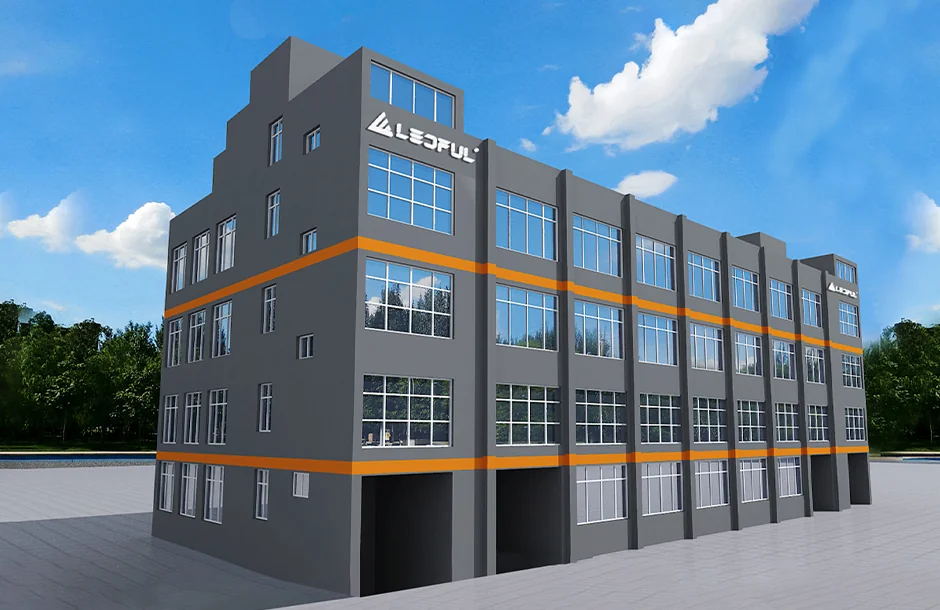
I close with a modest assertion: good planning reduces surprises. We can design installations that resist weather, camera scrutiny, and heavy traffic. If you want to talk specifics—module types, exact pixel pitches for a 12 m billboard, or thermal test thresholds—I’ll share the test templates I use. One more note: order staging units before full deployment—they reveal practical failures fast. For real-world sourcing, consider vendors who document test data and offer traceability; that is how we moved from reactive fixes to predictable operations. For sourcing and product options, see LEDFUL.
Industry

Mexico’s Installment Approval Puzzle: How DiDi Finanzas Cuts Decision Time for Consumers

by George May 2, 2026
written by George

The core problem for lenders and shoppers

Consumers in Mexico often face slow, opaque approvals when they try to buy on installment — a clear friction point that hurts conversion and trust. Retailers lose sales and support teams get swamped handling appeals. DiDi addressed this with product changes that connect the checkout experience to smarter underwriting; the first step for many users is the didi card, which illustrates how a familiar payment product can be redesigned for speed without sacrificing controls.

Why speed matters: a practical anchor

Mexico City’s rush-hour pace mirrors what happens online: consumers expect near-instant decisions. The COVID-19 pandemic accelerated digital payments across Latin America, and that behavioral shift revealed how legacy credit scoring and manual KYC checks break the flow. For fintech teams, that real-world change made it urgent to rethink credit scoring, automation, and user-facing messaging to reduce abandon rates.

What DiDi Finanzas changed under the hood

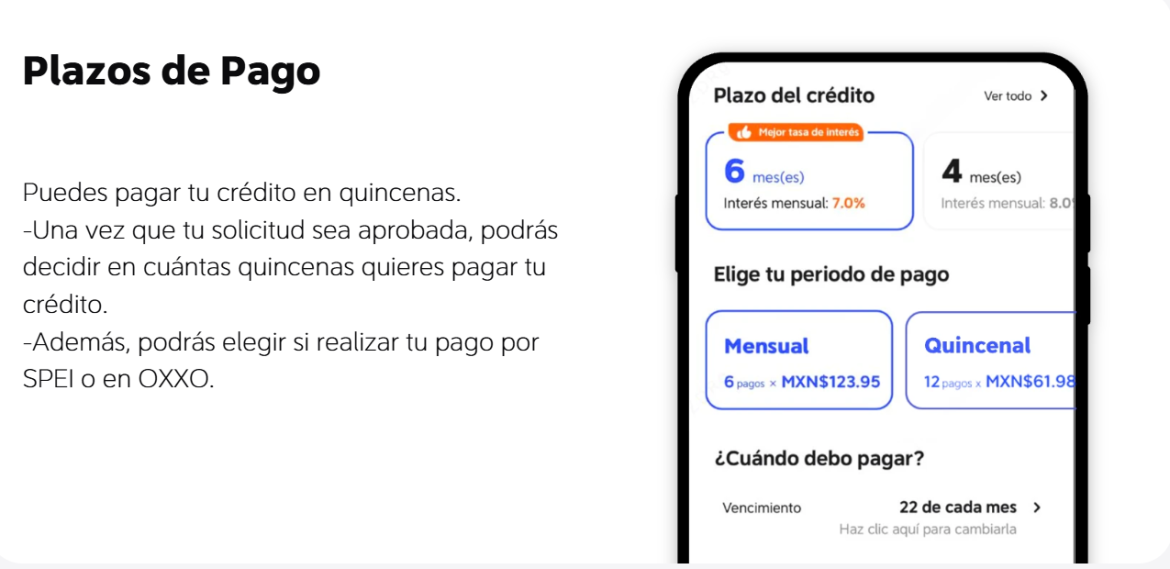
They simplified decision logic and layered real-time signals. Rather than every application hitting a manual review queue, the platform evaluates device, transaction, and historical behavior signals to classify low-risk cases for instant approval. That preserves capacity for complex cases while shortening average decision time. The approach blends installment payments product design with basic fraud control and targeted underwriting rules to maintain portfolio quality.

Design patterns product teams can copy

Start with small, measurable moves: map the approval workflow, identify steps that cause delay, and instrument them. Implement a triage: automated approvals for low-risk profiles, automated declines for high-risk flags, and fast-track manual review for ambiguous cases. Integrate soft credit scoring and progressive KYC so customers can complete immediate purchases while providing documents later. Keep communications clear — approval windows, repayment dates, and fee structure must be visible at checkout to reduce support load.

Common mistakes — and how to avoid them

Teams often either over-automate or over-manualize. Over-automation can miss credit nuances; over-manualization kills conversion. Balance is key — start with narrow, well-tested rules and expand. Don’t bury error messaging; users need concise guidance when an application is paused. And don’t assume one-size-fits-all scoring works across cities — urban users in Mexico City will show different signal patterns than suburban customers. — Small adjustments to thresholds can yield big changes in approval rates without much additional risk.

How the application journey should feel

From the user’s perspective, the process must be short and transparent. A stepped flow where the first screen requests minimal consent and the second collects contextual data reduces drop-off. Offer clear next steps when the system needs more information, and provide a simple path to request the didi card solicitar if the applicant prefers a traditional credit instrument. This keeps the experience cohesive across instant installment offers and card-based credit.

Three evaluation metrics every team must track

1) Time-to-decision: measure median approval time and the tail. Faster medians boost conversion; long tails indicate operational bottlenecks. 2) Auto-approval accuracy: track the false-approval and false-decline rates for automated rules; tune thresholds to protect loss rates without throttling growth. 3) Customer friction score: combine drop-off rates, support tickets per application, and NPS for the payment journey; improvements here indicate better UX and clearer messaging. These three metrics create a practical dashboard for iterative improvement.

Closing guidance and practical value

Applying focused underwriting, lightweight KYC, and clearer messaging drives measurable improvement in approvals and customer satisfaction. Expect to reduce decision time, lower support volume, and increase conversion if you iterate on the three metrics above. The value DiDi Finanzas brings is simple: it aligns product, risk, and service to make installment payments feel immediate and reliable — a real advantage for merchants and users alike. DiDi Finanzas. — Final note: keep the loop tight and learn from each declined case.

Market

Featherweight Frames, Rapid Rigging: Engineering Modular LED Tower Panels for Fast Builds

by George March 29, 2026
written by George

Comparative snapshot

When a project demands both on-site speed and structural integrity, designers face a binary: heavy, overbuilt cabinets that resist wind and vibration, or slim modules that bolt together in minutes. A clear comparative view helps—think of a fixed outdoor display that needs daily cycle changes versus a touring tower that must pack, ship, and reassemble in hours. Each choice changes pixel pitch, cabinet strategy, and rigging demands, and informs whether you prioritize long-term durability or rapid turnover.

Structural trade-offs: materials and load paths

Lightweight aluminum frames reduce dead load and simplify transport; they also concentrate stress at connectors and fasteners. Conversely, steel trusses add mass but flatten load distribution and raise fatigue life. A modular cabinet with robust corner brackets and precision-mounted LED module interfaces reduces tolerance stacking. In practice you balance panel mass (kg/m²), connector shear rating, and the imposed wind load for the intended site—Times Square-style facades tolerate large, permanent mass; pop-up tower installs in urban plazas often demand lighter, serviceable panels.

Fast-assembly logistics: design for people, not just hardware

Speed on site is more than fewer bolts. It’s repeatable ergonomics: lift points on cabinets, one-handed latches, and indexed alignment pins that eliminate shimming. Good modular systems standardize a cabinet-to-cabinet interface so crews work by feel under time pressure. For indoor advertising clients deploying an indoor advertising led display screen, that means fewer touch-ups, consistent color calibration, and a shorter dwell time for maintenance crews. The assembly sequence should read like a mise en place—organized, practiced, predictable—so teams hit the same quality every time.

Performance vs serviceability: what operators miss

High refresh rate panels and tight pixel pitch make content shine, but they can raise cost and weight. Over-optimizing for density without considering access panels, thermal paths, or ingress protection (IP65 and above for many outdoor installs) creates service nightmares. A common mistake: specifying ultra-fine pixel pitch for a roadside tower where viewing distance negates the benefit. Another misstep is neglecting the rigging interface—the rated hook points and certified lifting hardware—so what should be a one-hour swap becomes a full-day engineering fix. Good design inserts maintenance access as a first-class feature, not an afterthought.

Comparative alternatives and real-world anchor

Compare three typical builds: a welded steel frame with integrated trusses for permanent urban installations; a bolted aluminum modular system for semi-permanent advertising; and a tour-grade composite cabinet for entertainment rigs. Each responds differently to transport, wind, and acoustic vibration. Real-world proof exists: large-scale advertising clusters in New York’s Times Square rely on permanent, heavy installations to ensure continuous uptime and visual stability, while festival towers use quick-release systems to hit tight schedules—both achieve reach, but by different engineering compromises.

Common pitfalls and mitigation

Expect misaligned tactile interfaces, hidden thermal bottlenecks, and insufficiently rated fasteners. Mitigation is simple but disciplined: specify indexed alignment pins, plan forced-air or conduction cooling paths, and require certified fasteners with redundancy. Train crews on one standardized assembly flow and document torque values—repeatability beats improvisation every time. Small checks up front prevent large service calls later—save hours on the road.

Three golden metrics for selection

1) Mass-to-strength ratio: kilograms per square meter versus rated wind and dynamic loads—choose a cabinet that keeps mass low while meeting safety factors. 2) Service turnaround time: measured as the time to replace one module or cabinet to full operational status under field conditions—target under 30 minutes for modular towers. 3) Total lifecycle cost: include freight, service labor, and replacement parts over five years rather than just initial purchase price.

These metrics point directly to the practical value MR LED brings: engineered modularity, certified structural interfaces, and service protocols that reduce downtime—so you get fast assembly without sacrificing safety or brightness. —

MR LED.

Recent Posts

  • Modular Screw-and-Barrel Playbook: Fixing Color Match and Compound Handoffs in LSR Lines
  • The Technical Blueprint to Lock Down Your Ride: Building an All-Around Multi-Channel Dual Dash Cam With Wi‑Fi Security
  • Sustainability in Glass Fragrance Design: The Abely Comparative Perspective
  • The Next Wave in Small LED Display Hustle
  • Fixing Burnt Taste and Gunking in High‑Use 40,000‑Puff Vapes: A User‑Centred Fix‑It Guide

Recent Comments

No comments to show.

About Me

About Me

Designer

Sed ut perspiciatis unde omnis iste natus sit voluptatem accusantium dolor emque.

Keep in touch

Facebook Twitter Instagram Pinterest Behance Youtube

Popular Posts

  • 1

    Почему стоит выбрать керамический герметичный корпус?

  • 隱形牙套會吸引目光還是被默默接受?企業與用戶的選擇真相

  • 3

    Фасовочно Упаковочные Линии: Ваша Полная Инструкция

  • 4

    А что, если аккумулятор GFM смог бы сам предугадывать нагрузку?

  • Автоматический счетчик капсул: Инновации и преимущества

  • 6

    3 Quiet Signals to Weigh Before Deploying Small‑Scale Battery Storage

Categories

  • App Design (6)
  • Business (115)
  • Global Trade (127)
  • Industry (111)
  • Market (109)
  • Tech (103)
  • UI/UX (7)
  • Web Design (7)
  • Facebook
  • Twitter
  • Instagram
  • Pinterest
  • Behance
  • Youtube
  • Bloglovin
technooloop
  • Home
  • Design Update
  • Business
  • Global Trade
  • Industry
  • Market
  • Tech