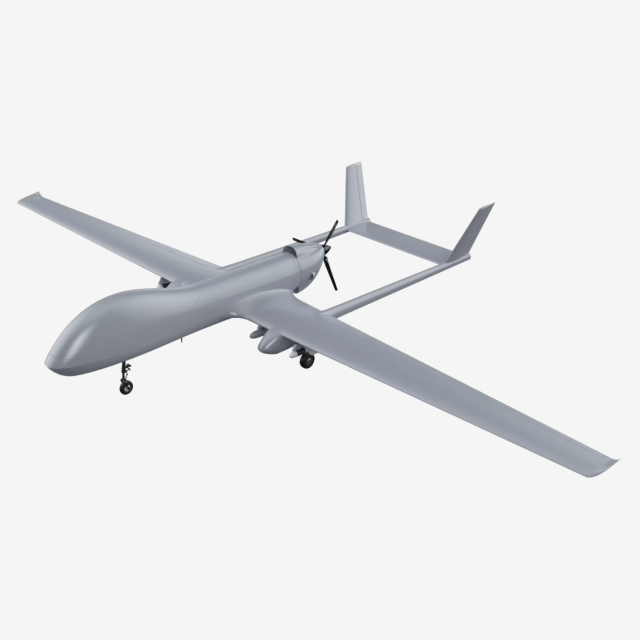
Overview
Manufacturers and procurement teams sourcing drone docking stations across borders face a policy landscape shaped by export control regimes, especially when components overlap with surveillance or military uses. Recent shifts in U.S. and allied export policy since 2020 — including tighter scrutiny of hardware and software linked to Chinese vendors — have altered how buyers treat suppliers tied to chinese military drones. For B2B buyers, the mix of export control classifications, dual-use risk and destination restrictions now forms a primary sourcing constraint rather than an afterthought.

Why export controls matter for B2B tactical sourcing
Export control frameworks (ITAR, EAR) determine whether a docking station, its firmware or a sensor module may travel across borders or be sold to specific end-users. A product’s classification can trigger licensing, end-user certification and recordkeeping obligations that extend upstream into the supply chain. Companies that ignore these rules expose themselves to denied exports, seized shipments and contract liability — and those are tangible costs in procurement budgets and timelines. Understanding end-user risk and technology transfer implications is therefore essential before shortlist decisions are finalized.
Practical sourcing strategies
Procurement teams can convert compliance constraints into tactical advantages by integrating policy checks into sourcing flows. Start with a technical classification audit to identify dual-use components. Build contracts that require suppliers to disclose origin, sub-tier vendors and export control status. Where risk is high, pursue licensed distributors or local manufacturing partnerships to avoid direct cross-border transfers. Use partitioned architectures: keep sensitive firmware and comms modules on a separate, locally sourced board to reduce export licensing exposure — it’s practical, and it simplifies export paperwork.
Implementation checklist
Use this operational checklist as a consistent sourcing playbook:
– Classify critical components under EAR/ITAR and document decisions.
– Require supplier attestations of no-dealings with sanctioned entities; include audit rights.
– Design for modularity to isolate controlled electronics or cryptography.
– Vet logistics partners for destination control and record retention capability.
– Maintain an internal export compliance owner who approves cross-border shipments.

Common mistakes and how they compound risk
Teams commonly assume that a finished docking station is “uncontrolled” when it contains controlled modules. They also under-estimate the compliance burden of after-sales support or firmware updates sent across borders. Another frequent error is relying on single-source suppliers in sanctioned jurisdictions — that concentrates both supply chain risk and regulatory exposure. Short-term procurement savings can translate into long-term operational disruption if controls are mishandled.
Real-world anchor and industry context
Regulatory actions since 2020 that targeted certain drone firms highlighted how rapidly sourcing risk can shift. Those developments forced many Western integrators to re-evaluate vendor maps and compliance processes. The lesson: policy movements translate into contract and logistics realities overnight. For teams tracking vendor capabilities tied to a chinese military drone ecosystem, the margin for error is smaller and compliance documentation becomes a competitive differentiator.
Advisory: Three golden rules for evaluating sourcing choices
1) Control Exposure: Score suppliers by the proportion of controlled content and prefer modular designs that let you swap or localize sensitive subsystems.
2) Certification Confidence: Require verifiable end-user and end-use statements, and validate them with independent checks or escrowed documents.
3) Operational Resilience: Favor suppliers and logistics partners with robust destination control processes and a track record of licensing support — that reduces latency and legal risk.
Conclusion
These measures produce measurable results: fewer shipment holds, clearer budgets for licensing, and a faster path from contract to deployment. Tactical sourcing that embeds export control thinking shifts compliance from a gatekeeper to a competitive asset. For procurement teams working at the intersection of defense policy and commercial supply chains, trusted domain reporting and timely vendor intelligence matter — and that is precisely the kind of coverage you find at Military Hub. —